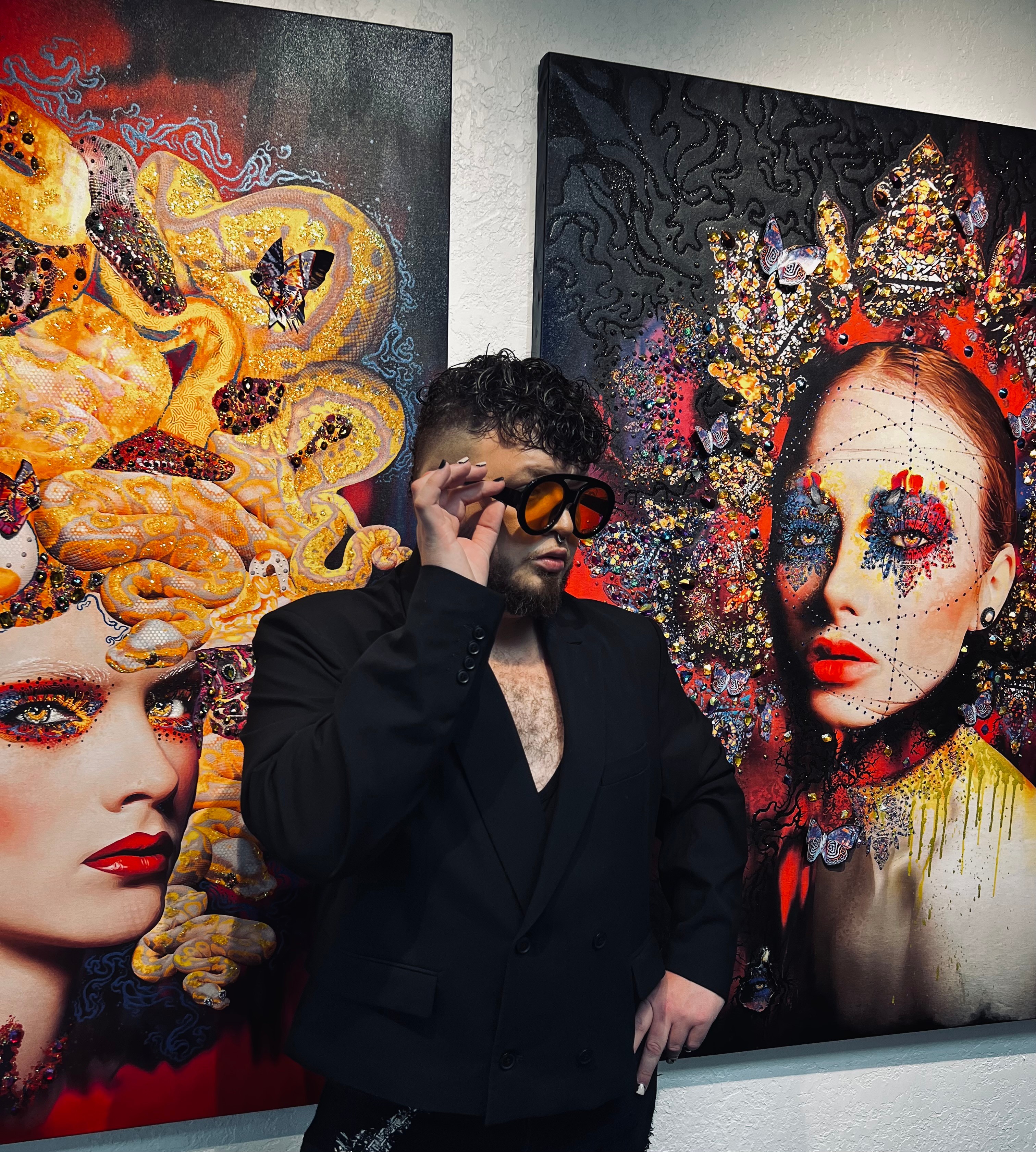




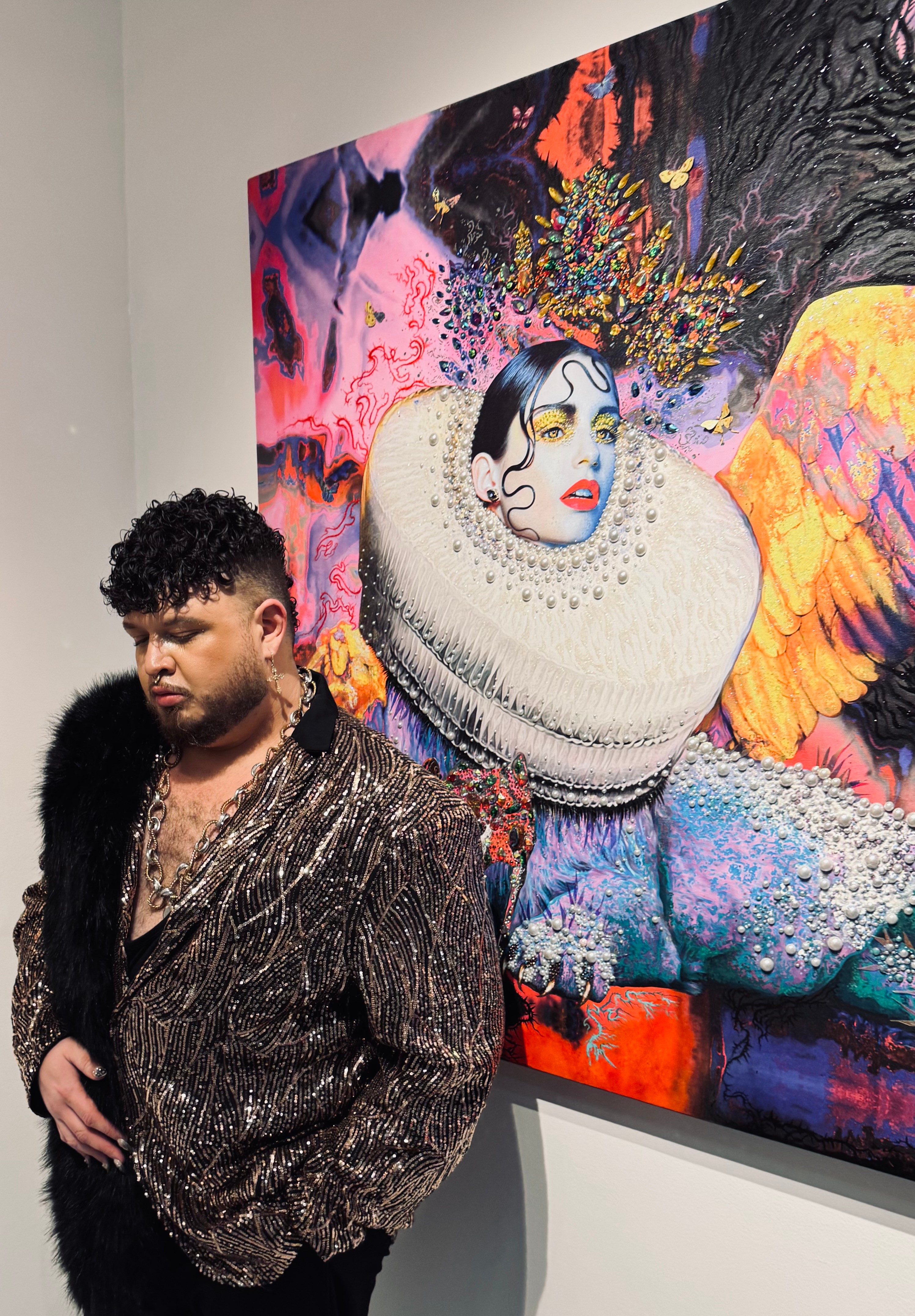
Sir Nicholas Lucius shared their story and experiences with us recently and you can find our conversation below.
Sir Nicholas, a huge thanks to you for investing the time to share your wisdom with those who are seeking it. We think it’s so important for us to share stories with our neighbors, friends and community because knowledge multiples when we share with each other. Let’s jump in: What are you most proud of building — that nobody sees?
Honestly? The thing I’m most proud of building that nobody really sees is my inner world.
Everyone gets the crystals, the chaos, the couture energy on the canvas—but what they don’t see is the universe I’ve been quietly constructing in my head since I was a kid. It’s this whole mental kingdom where every weird idea, every “too much” feeling, every misfit moment has somewhere glamorous to live. That’s where my courage comes from, my style, my sense of humor.
I’ve had to build a version of myself that exists beyond algorithms and opinions—a kind of emotional architecture. The rituals, the resilience, the self-talk, the ability to start over without losing the magic… none of that is Instagrammable, but it’s the only reason I can show up as “Lucius” in such a loud, unapologetic way.
So, yes, I love the art, I love the spectacle—but the thing I’m most proud of is the backstage version of me that keeps choosing wonder over burnout, reinvention over fear, and play over perfection. That’s the real masterpiece nobody sees.
Can you briefly introduce yourself and share what makes you or your brand unique?
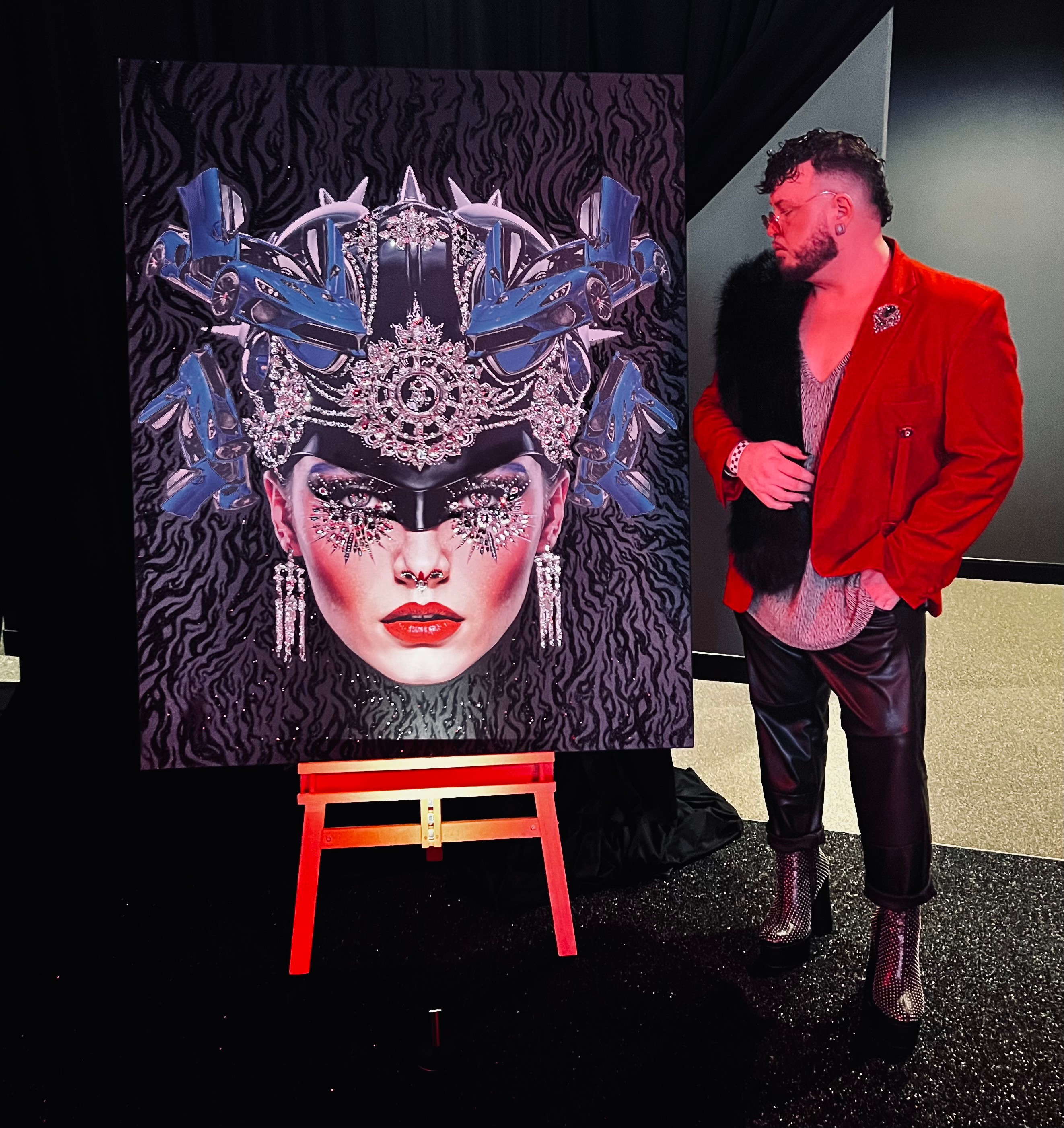
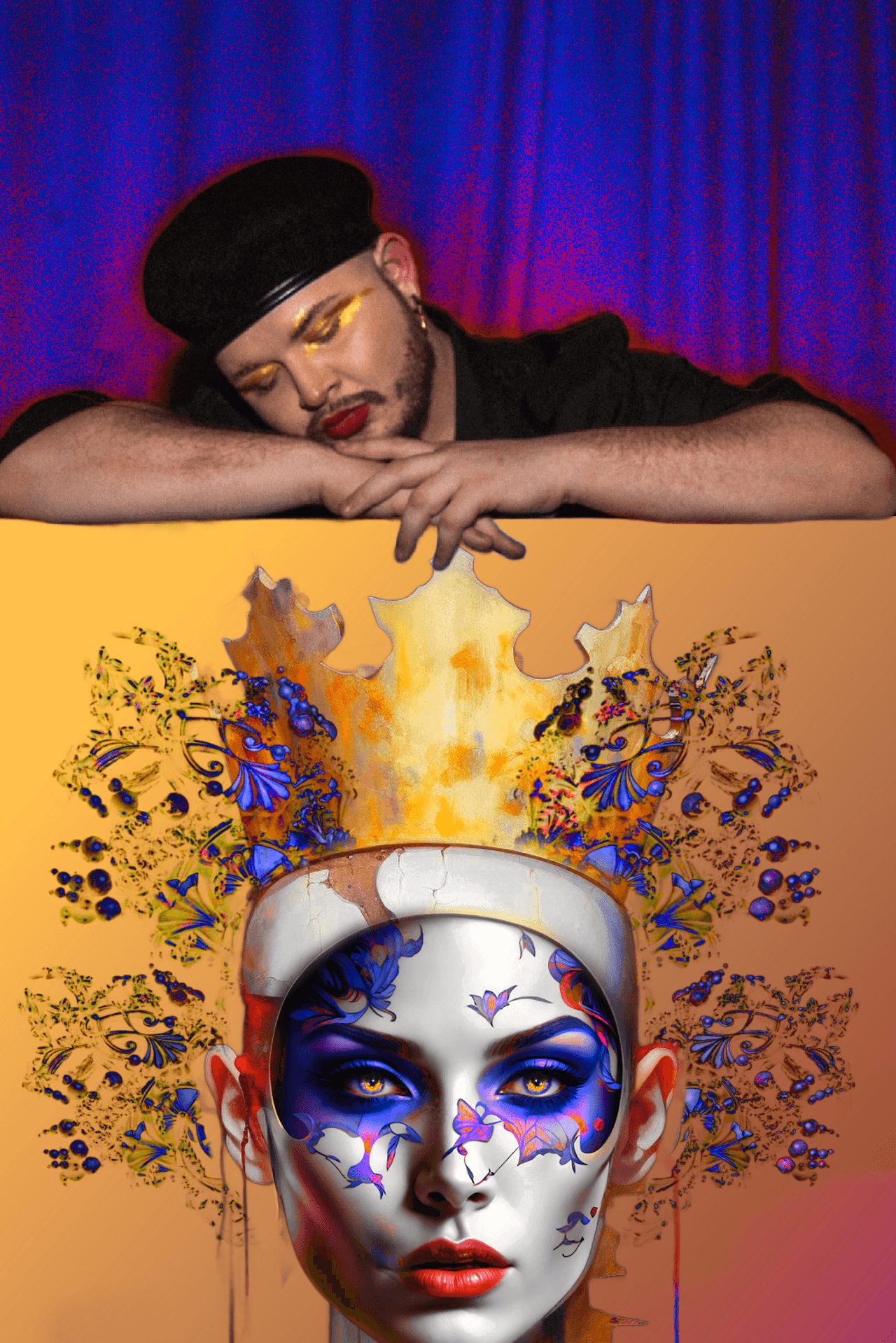
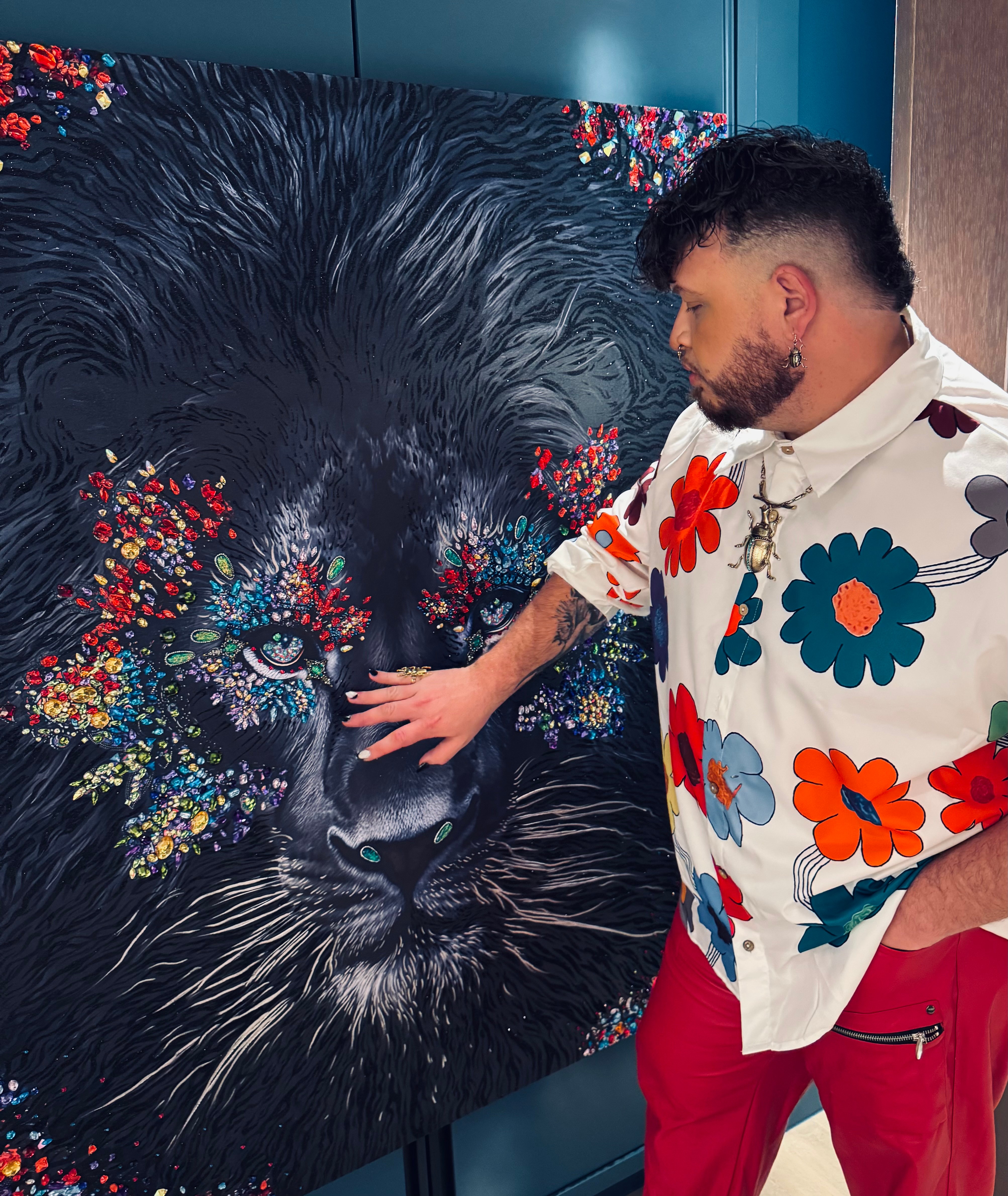
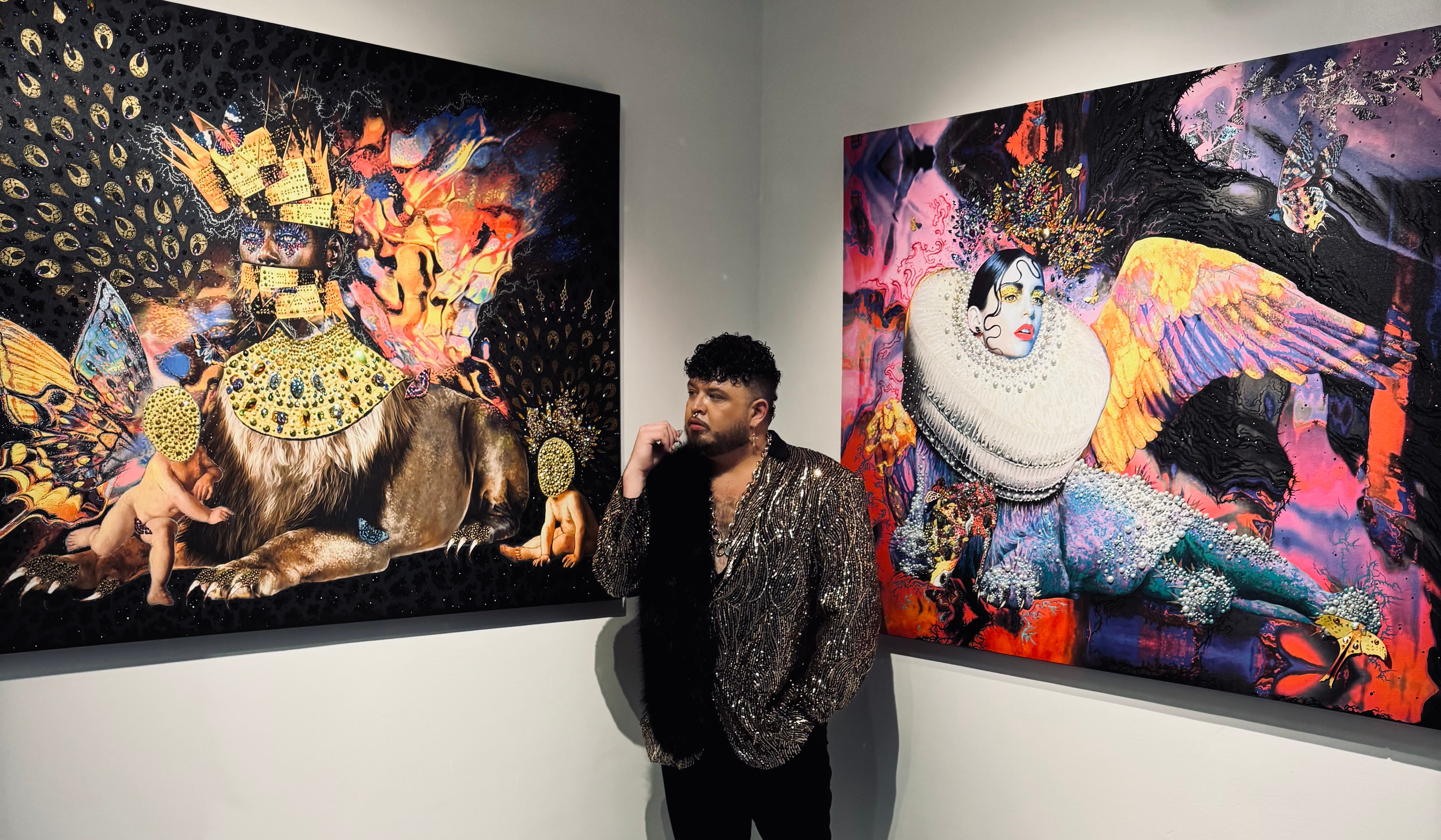
I’m Sir Nicholas Lucius — think of me as a visual alchemist with a couture obsession. I’m a mixed-media contemporary artist who treats canvases like an Opera House: Think paint, crystals, metal leaf, textiles, found objects… if it shines, screams, or tells a story, it probably ends up in my work.
My brand is really a universe. It lives somewhere between fine art, high fashion, mythology, and pop culture — where mermaids wear couture, lions are crowned in jewels, and everything feels a little too decadent in the best way. I’m not interested in “decor”; I’m interested in building worlds people can emotionally move into, even if just for a night.
Right now, I’m deep in the decadence era and expanding my practice into full-blown experiences: exhibitions that feel like events, visuals and collections that feel like fantasies, and collaborations that blur the line between gallery, theater, and a fever dream. At the heart of it, though, it’s simple: I make work for the versions of us that refuse to shrink — the ones who want color, texture, story, and a little bit of chaos, all turned up to eleven… or two million 🙂
Amazing, so let’s take a moment to go back in time. Who were you before the world told you who you had to be?
Before the world tried to hand me a script, I was that weird little kid building universes on the living room floor.
I was the one staging operas with dolls and mermaid Barbies, turning blankets into oceans and lamp light into moonlight. I talked to imaginary kingdoms, assigned personalities to colors, and genuinely believed my bedroom ceiling was a portal if I stared at it long enough. There was no “brand” yet — just pure impulse: draw it, glue it, bedazzle it, make it bigger.
I wasn’t worried about being “too much” or “not enough.” I was just… in it — in the fantasy, in the story, in the feeling. I think before the world told me who I had to be, I was simply a creator without an audience. And now, as Lucius, I’m basically trying to protect that kid, give him better materials, a louder stage, and permission to keep going.
When did you stop hiding your pain and start using it as power?
I don’t think it was one dramatic movie moment — it was more like a slow costume change.
For a long time, I tried to decorate over my pain. Be “fine,” be funny, be palatable. I’d pour everything into the work, but pretend it was just aesthetics… “Oh, it’s just sparkles and fantasy.” But at some point, the cracks got too loud. The things I’d been through, the failures, the heartbreak, the feeling of being “too much” and “not enough” at the same time — it all started leaking into the art, whether I liked it or not.
I stopped hiding it when I realized people weren’t just drawn to the shine — they were responding to the honesty underneath it. The bruises disguised as brushstrokes, the anxiety hiding under all that glitter. Once I saw that my vulnerability was the thing making the work hit harder, I decided to lean in. If I’m going to hurt, it may as well be useful.
Now I treat my pain like raw material. It doesn’t run the show, but it definitely funds the budget. I alchemize it — into color, into texture, into these loud, defiant pieces that say, “Yes, I’ve been through it… and look what I made out of it.”
Next, maybe we can discuss some of your foundational philosophies and views? What truths are so foundational in your life that you rarely articulate them?
There are a few truths that sit so deep in me, they almost feel like wallpaper — always there, rarely mentioned.
First: Too much is my natural setting.
I spent years trying to edit myself down — be quieter, simpler, “easier to understand.” It never worked. The truth is, Maximalism isn’t just a style choice for me; it’s how I process the world. When I try to shrink, everything dies a little. When I lean into “too much,” everything comes alive.
Second: Art is not a hobby; it’s how I stay alive.
I know that sounds dramatic, but it’s real. Creating is the way I metabolize everything — joy, grief, confusion, anxiety, desire. If I’m not making something, I’m not okay. The paintings, the concepts, the shows… they’re all just receipts from me doing emotional inventory and trying to turn it into something beautiful.
Third: Reinvention is a love language to myself.
I don’t believe in staying one version of me to keep other people comfortable. I’ve shed skins, names, aesthetics, locations, relationships — not because I’m flaky, but because I refuse to abandon my evolution. The truth is, I’m always going to choose the next chapter, even if it means letting go of people who only loved the last one.
And finally: tenderness is not the opposite of strength.
Under all the crystals and chaos, I’m incredibly sensitive. I feel everything. For a long time, I thought that made me weak. Now I know it’s actually the engine behind all of this. The work only works because I let myself feel deeply — and then I dare to show it, dressed up in color and couture. That’s the quiet truth holding everything up.
Before we go, we’d love to hear your thoughts on some longer-run, legacy type questions. What is the story you hope people tell about you when you’re gone?
I hope they don’t just say, “He made pretty art.”
I hope they say, “He made worlds — and he made us feel brave enough to live in them.”
I want the story to be that I was a little unhinged in the best way — the artist who refused to tone it down, who mixed pain with glitter and turned childhood daydreams into full-scale realities. Someone who took mermaids, passion, chaos, fashion, and fantasy and said, “All of this belongs. All of this is allowed.”
I hope people say I made them feel seen — the loud ones, the sensitive ones, the “too much” ones… That coming to my shows or living with my work wasn’t just decor, it was permission. Permission to be bigger. Wilder. Softer. Stranger. More themselves.
And if I’m lucky, the story is simple:
He loved hard, he was a visual genius, he built a universe out of nothing, was fearless, and he left behind proof that you can be both a complete disaster and a masterpiece at the exact same time — and still call it art.
Contact Info:
- Website: https://NicholasLuciusArt.com
- Instagram: @NicholasLuciusArt
- Facebook: @NicholasLuciusArt
- Other: NicholasLuciusArt@gmail.com