


Today we’d like to introduce you to Diane Chencharick.
Hi Diane, thanks for sharing your story with us. To start, maybe you can tell our readers some of your backstory.
I have been an artist my entire life in one form or another. For more than 30 years, I enjoyed a successful career in advertising as a graphic designer, art director and creative director. I experienced the transition from hand drawing to digital and took up watercolor as a form of creative expression beyond the computer. I instantly fell in love with the medium. There are things you
can do in watercolor that you can’t in any other medium. I began entering exhibitions around 2005 and won my first of many awards in 2007. I began teaching in 2017 at the Venice Art Center in Venice, FL and received my Signature Membership in the National Watercolor Society in 2018. I regularly exhibit in many exhibitions both internationally and regionally, and have been a solo juror for a number of exhibitions along the gulf coast from Bradenton to Punta Gorda.
Besides being an accomplished watercolor artist, I actively work to promote the medium. I served on the Board of Directors of the Michigan Watercolor Society for nearly 15 years (where I am originally from) and am currently on the Board of the National Watercolor Society, which has thousands of members throughout the world.
Would you say it’s been a smooth road, and if not what are some of the biggest challenges you’ve faced along the way?
I began, like most artists do, painting realistically. Mostly things from nature: trees, rocks, flowers, etc. It’s really all part of the learning process, as we try and master the medium and make things look like they are in real life. But after I became accomplished at this, and had some success in exhibitions and sales, I became bored. I felt my work lacked soul. Like I was rendering, not really creating, if you know what I mean. I tried some new things, but struggled terribly, so I kept going back to what I knew. Eventually, I did the only thing I could think of to get out of that rut – I stopped painting. And I didn’t go back for 3 years.
In that time I began meditating. I learned a lot about myself, but most importantly, that fear was my biggest problem in my art – fear of ruining a painting, fear of trying something new and having it look like shit, fear of failure. But I was determined to let it loose its grip on me. So I signed up for a workshop with an experimental artist by the name of Pat Dews. It was like the light bulb suddenly came back on! She opened up new doors for me. I began having fun again and loved working in the abstract. A new and fresh style from me emerged, and I have never gone back to realism since.
Appreciate you sharing that. What else should we know about what you do?
I have loved drawing and painting since I was a little girl. There was no “Aha!” moment for me. I just knew I liked to do it and I was better than most kids my age. But if there was one pivotal time for me and art, it was what I described earlier when I took my first abstract workshop after a long break in painting. When I finally said to myself, “I don’t care if I fail miserably at this, I’m going to go for it and give it my all!” That was a major shift for me. When you stare down your own fears of failure or not being good enough, fear loses its grip on you and boundless possibilities open up. It’s why I began teaching. I knew I wasn’t the only one who let fear keep them small. I wanted to share what I had learned and help others become unstuck. And as a teacher, it’s something you can really see happen. It’s the most rewarding part of the job.
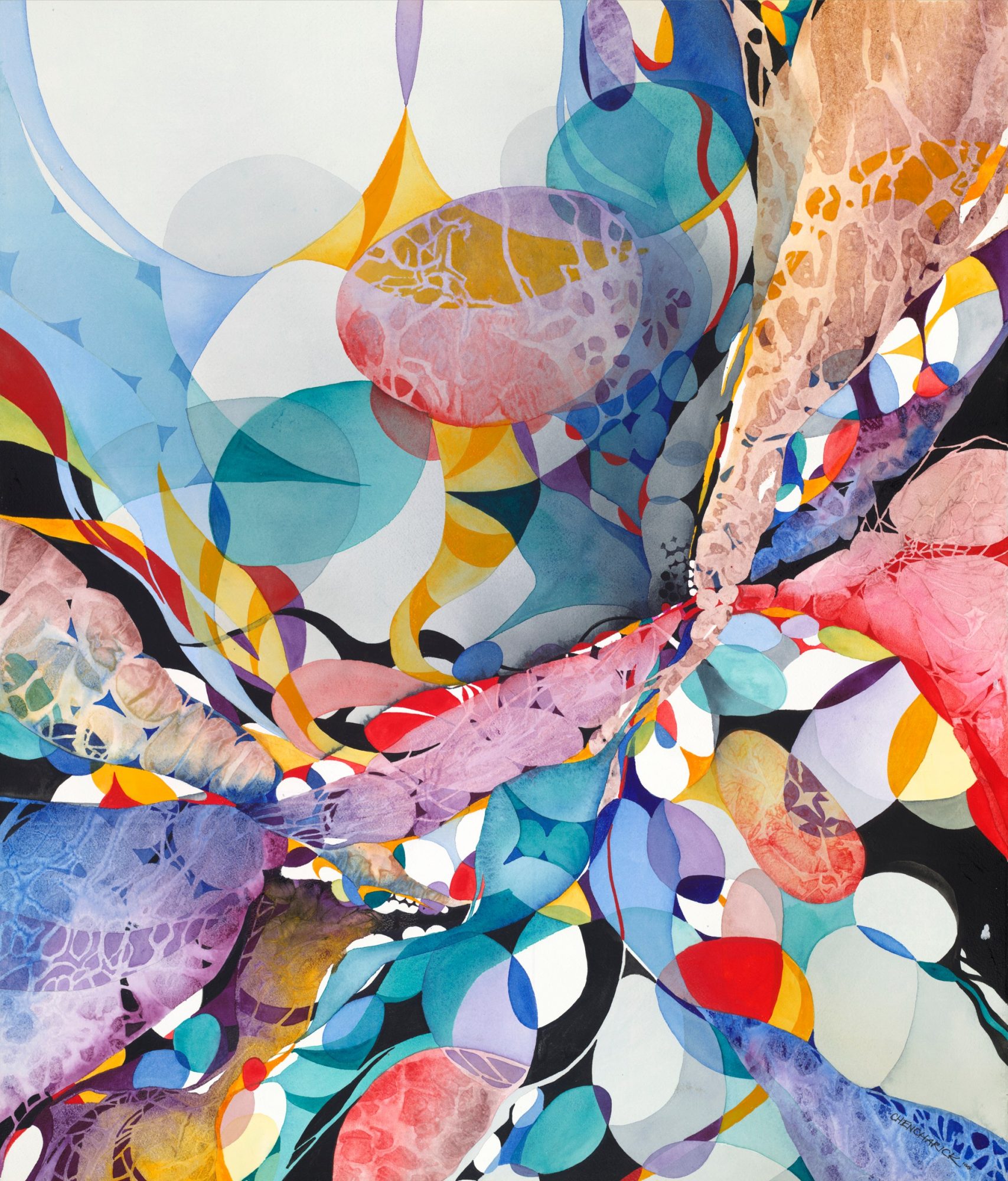
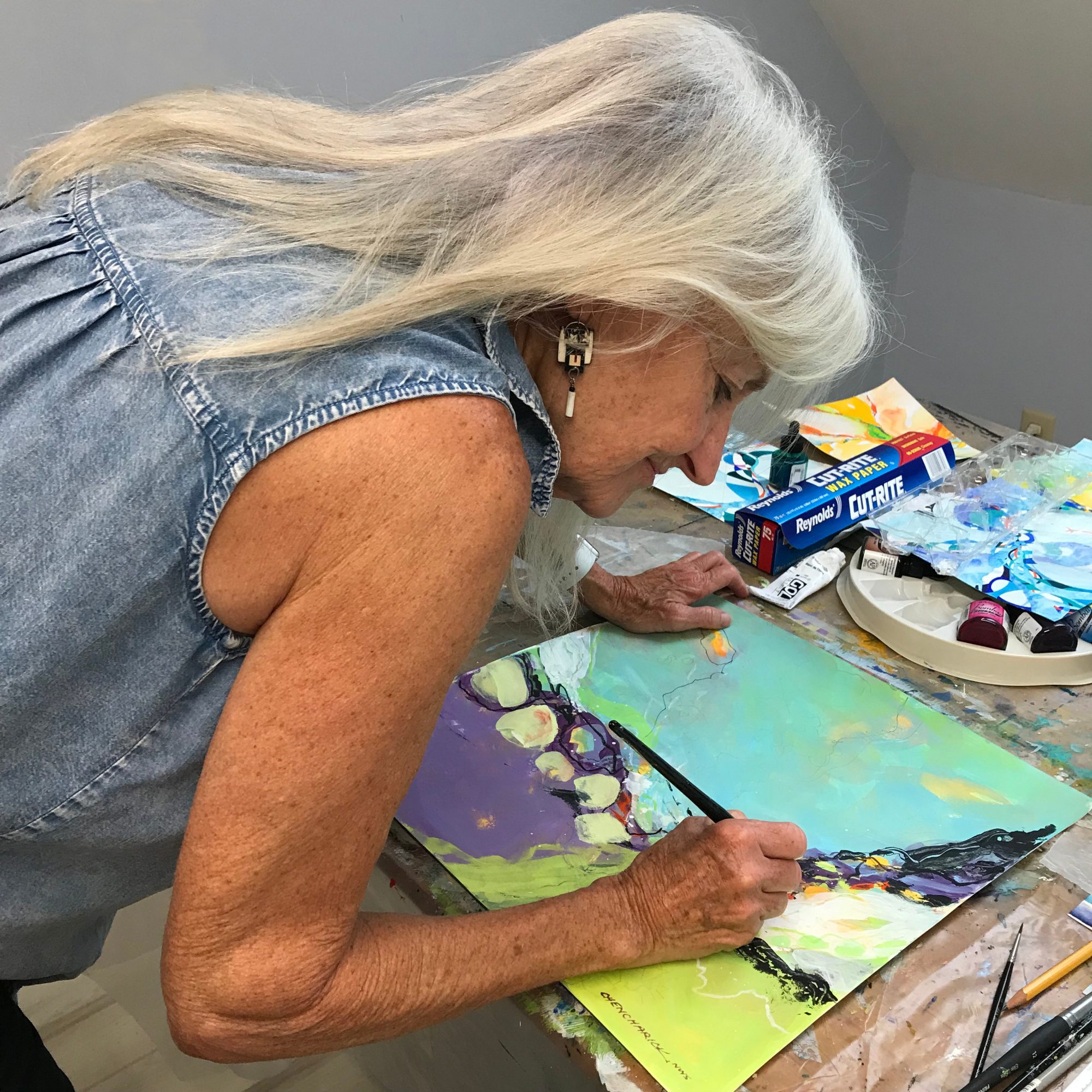
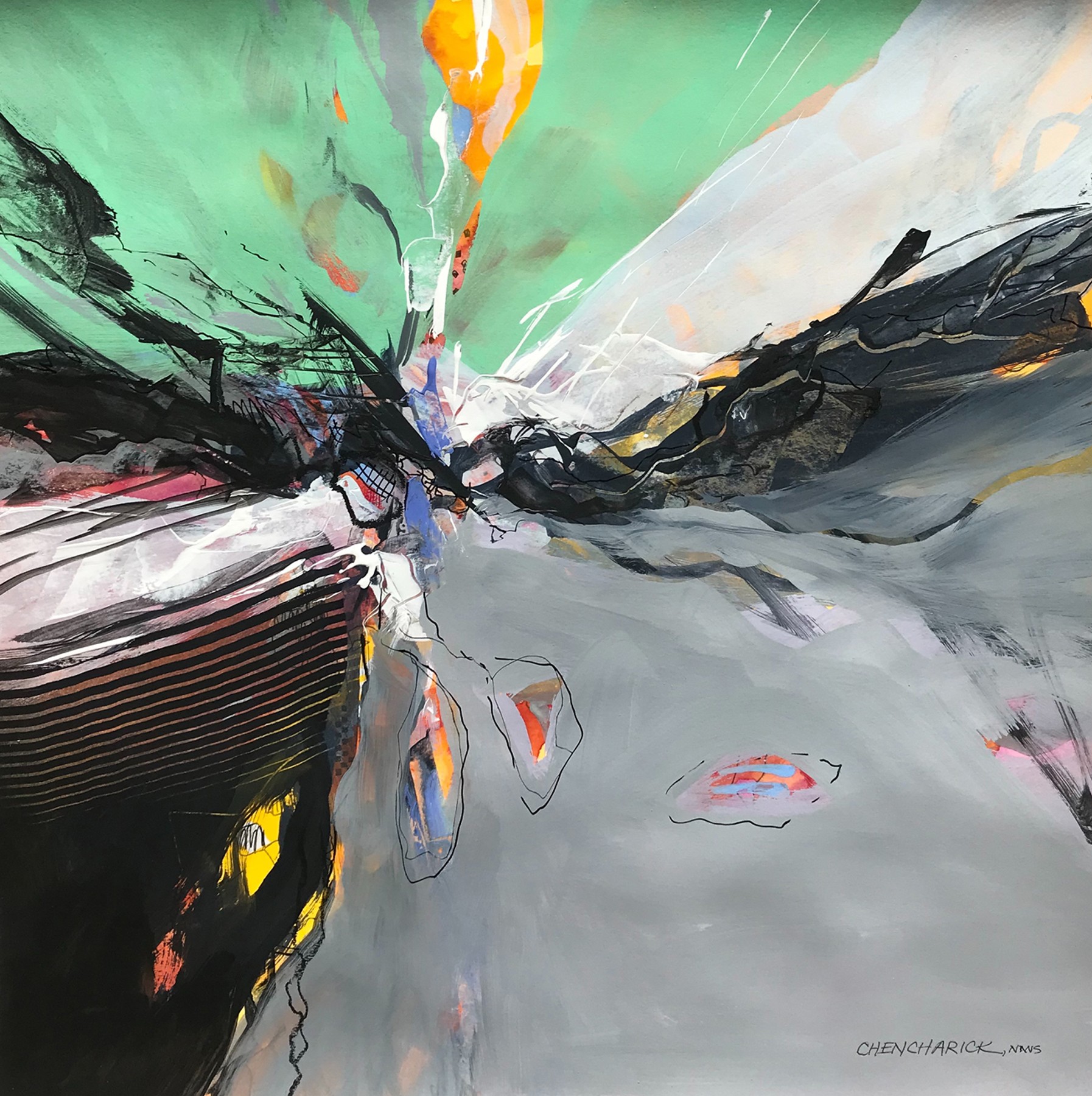
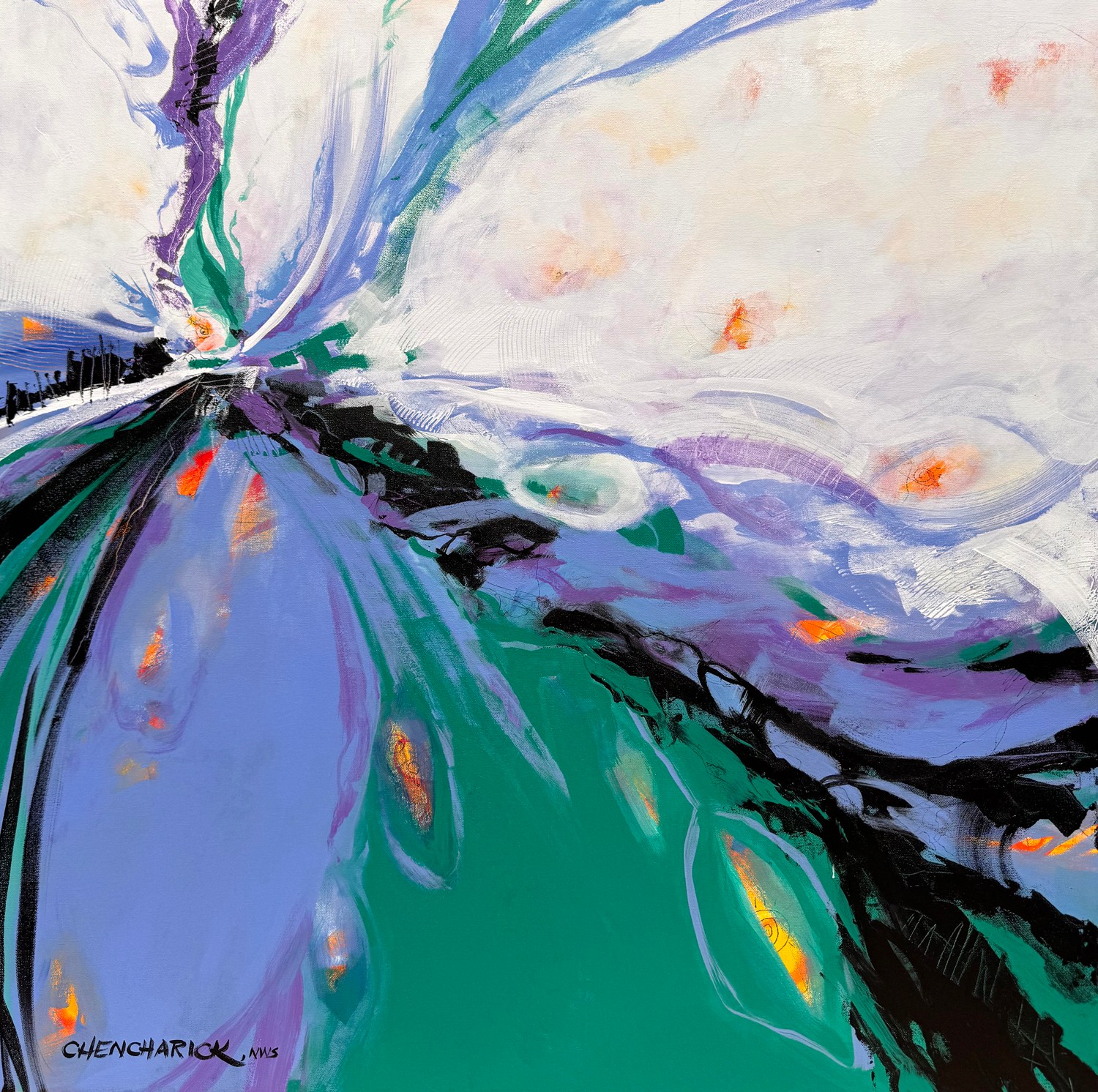
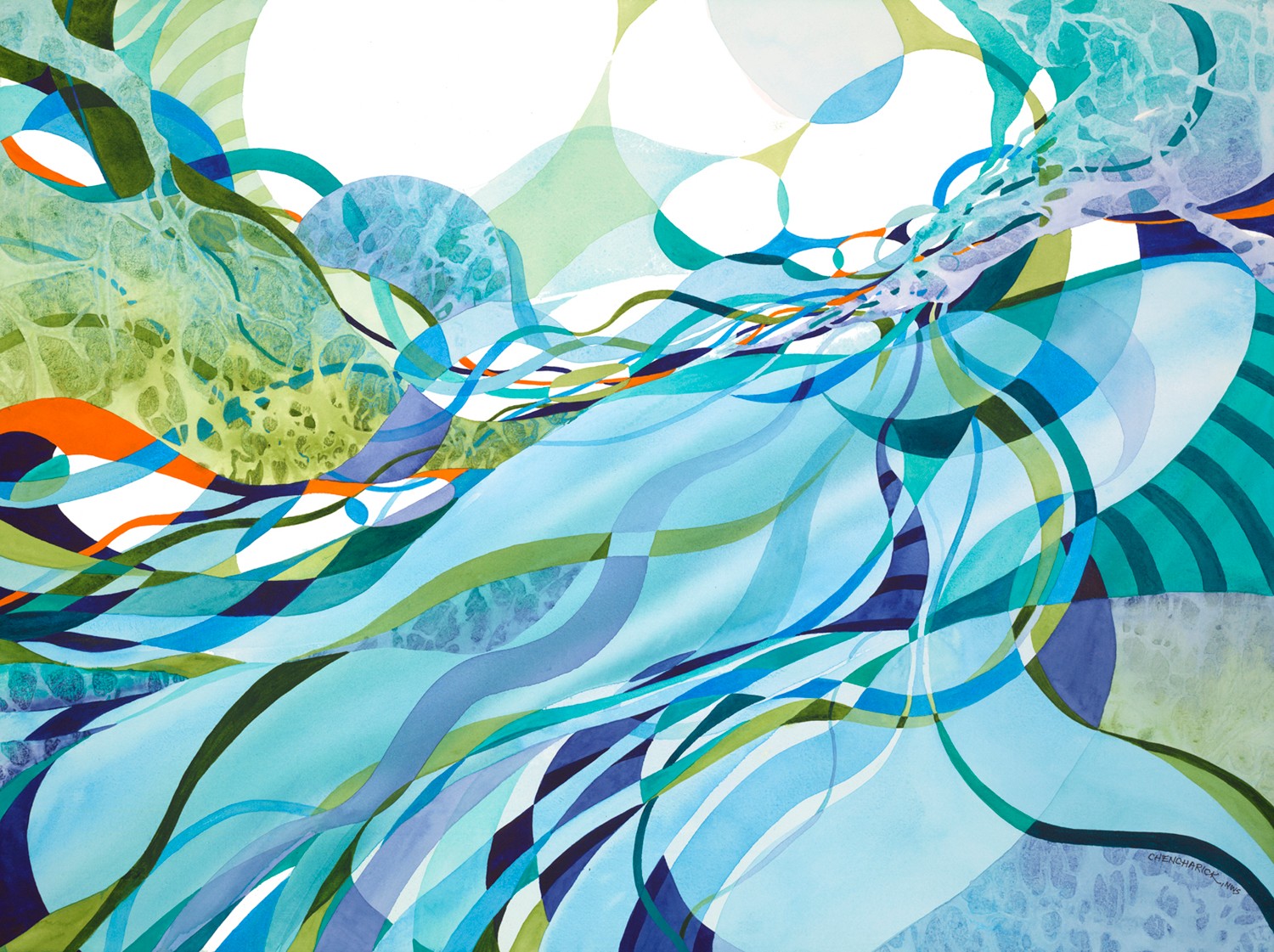
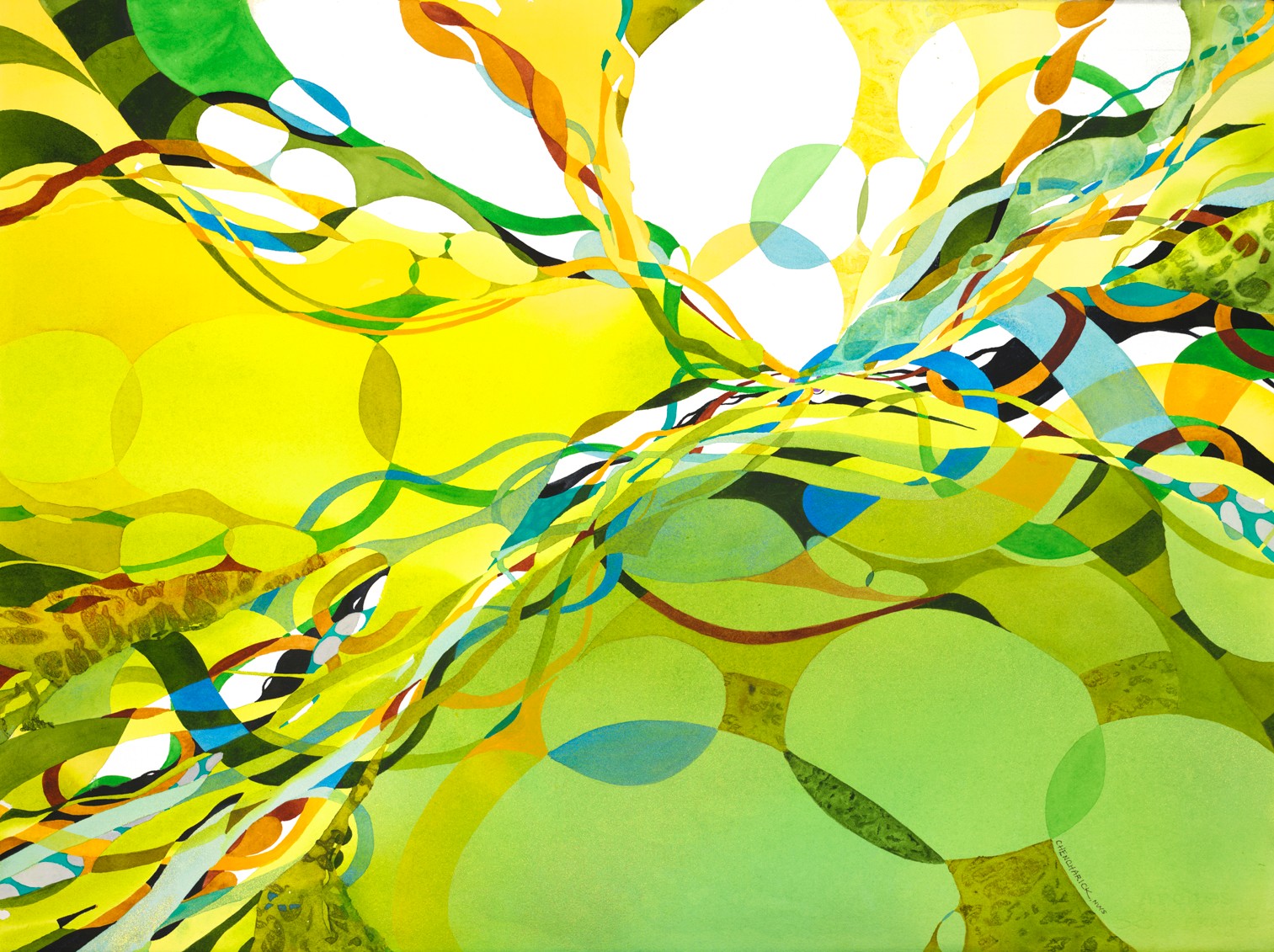
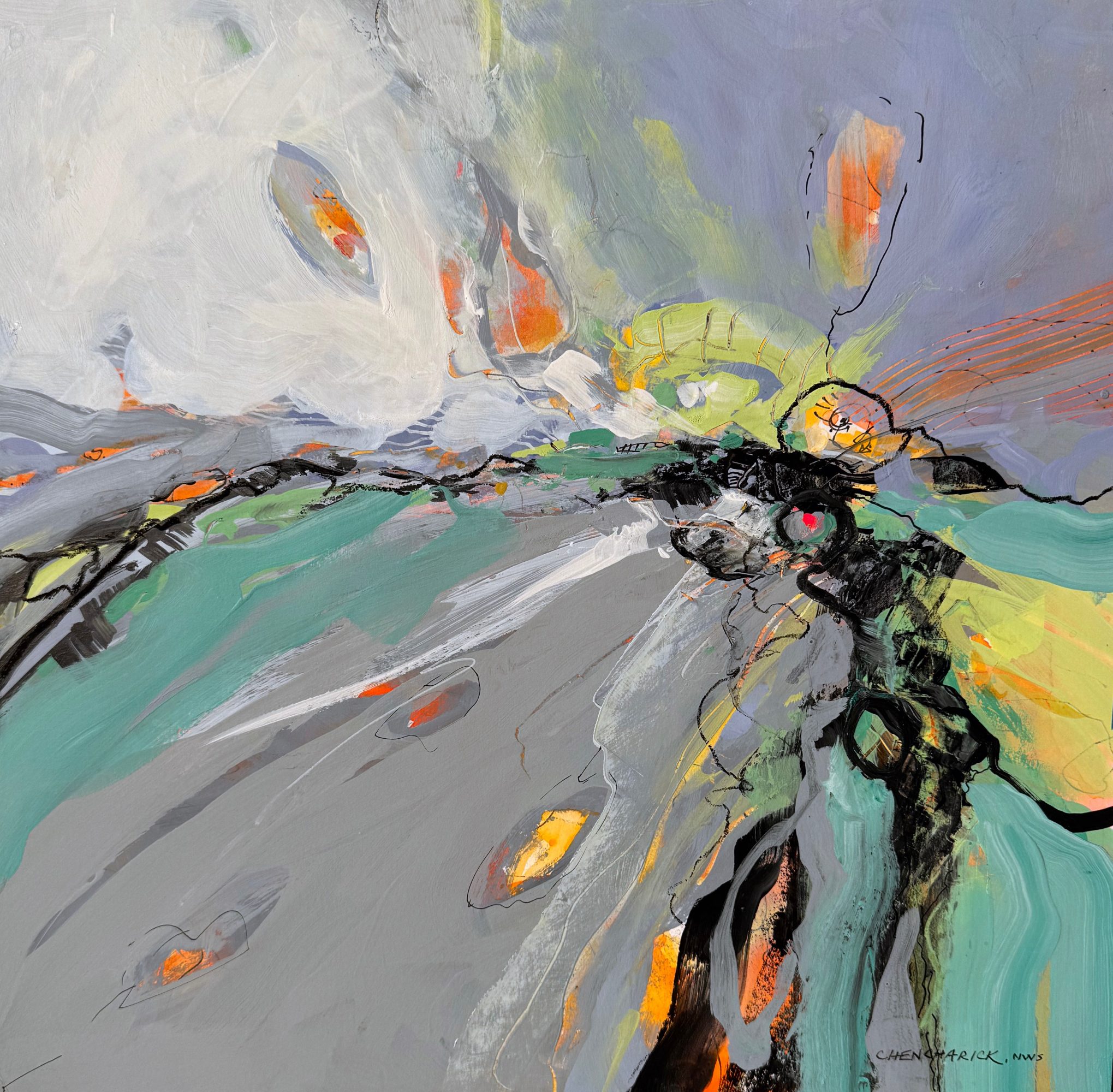
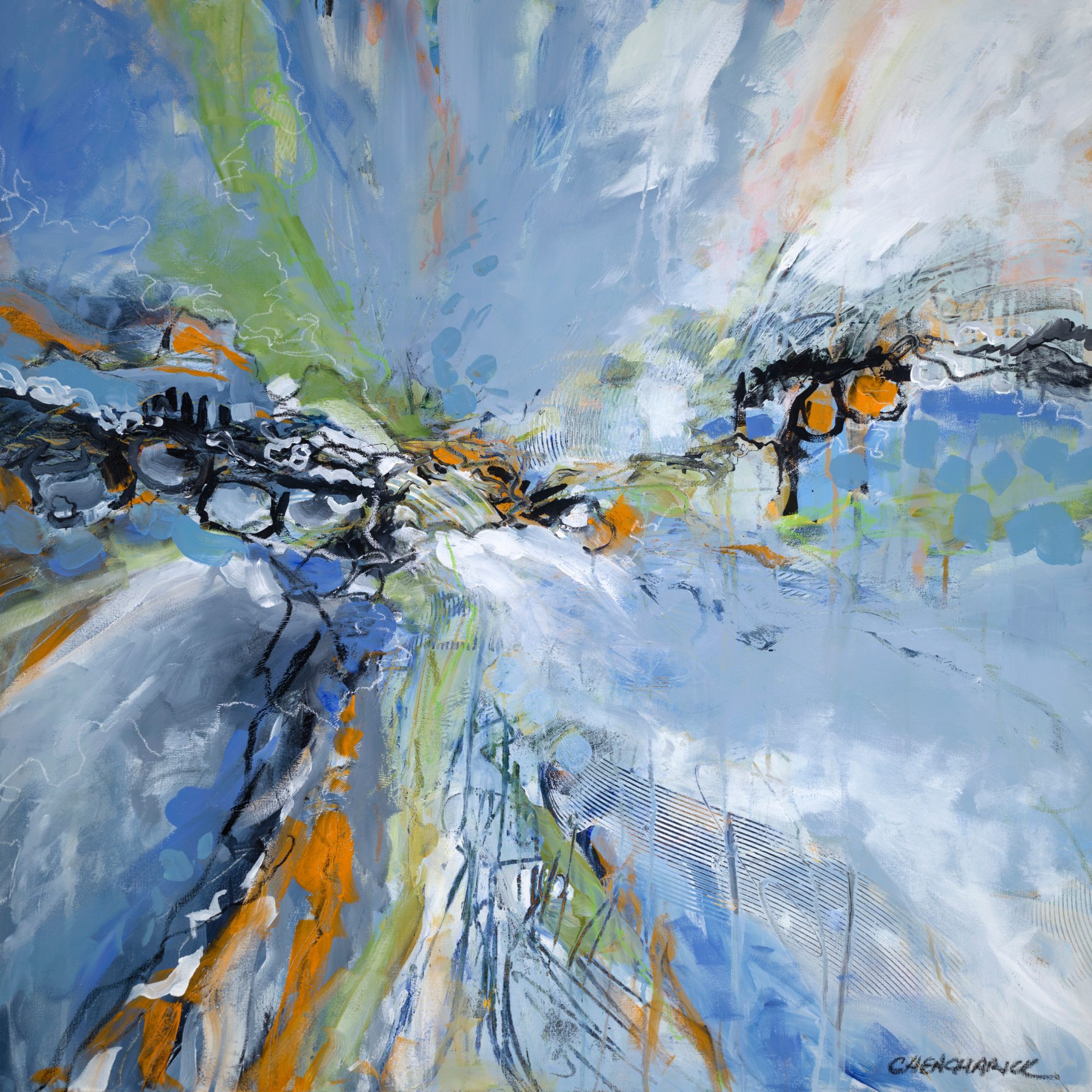
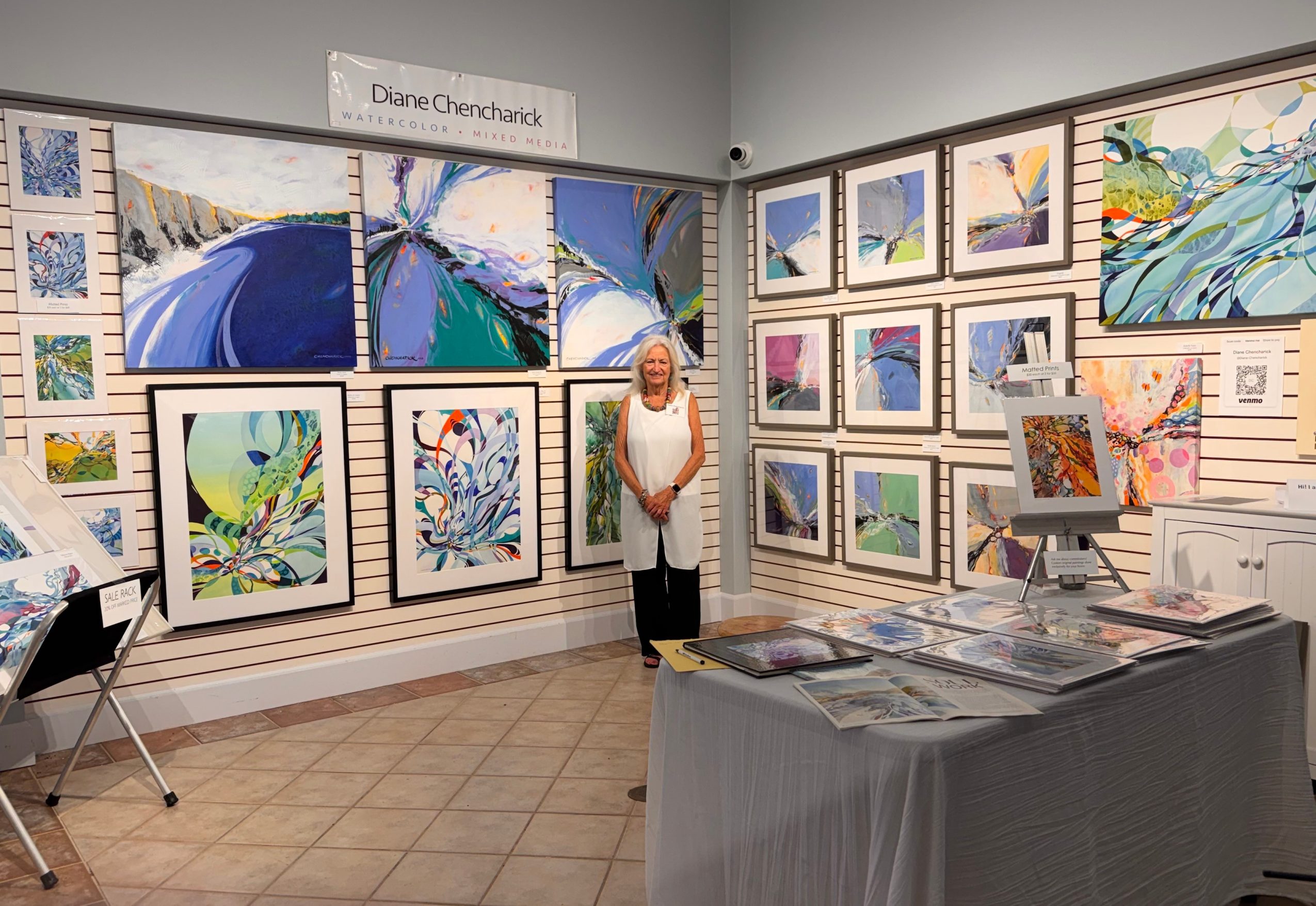
I am known for my bold, colorful, abstract watercolors. My painting style is intuitive, as I draw out nothing in advance and let the panting evolve on its own. I create statement pieces that use shape and flow to build tons of movement and there is no denying my graphic background in these works. Once I finish one of these, it’s time to really loosen up. My transparent watercolor and gouache (which is a more opaque form of watercolor) give me great freedom and a totally different look to play with. Going back and forth between these 2 styles is what keeps me fresh and spontaneous.
By far, my biggest accomplishment (and a goal I had set earlier in life when I was setting goals) was gaining Signature Membership in the National Watercolor Society. In 2018, I took the top abstract award in the NWS International Open Exhibition and was juried into Signature Membership by a panel of the best of the best in watercolor. What an honor! I think we all set benchmarks for ourselves of what it would be like to “really make it.” That was mine. To be included in that group of the top watercolor artists in the world and be able to put those initials after my name, Diane Chencharick, NWS, now THAT was something! I’ve won lots of awards. And I still like it when others recognize and appreciate my work, but that day will always be special.
I love that art can instantly change the energy in a room. I am constantly told that my paintings make people feel “happy,” ”uplifted” and have “positive energy.” It doesn’t take a psychologist to tell you what that can do for your psyche. Most especially today when there’s so much anger and division. I view my little contribution in all of this is to help put people in a good, healthy place, so they can go out into the world and do better work, be better people, create better solutions that look at the whole not just the part. Art heals. Art also transforms. What joy to be a part of all that!
What quality or characteristic do you feel is most important to your success?
There are 2 characteristics that I think are equal in importance as we develop as artists. This is what I tell all my students:
1) Keep learning. Try new things, new teachers, new techniques. I still take workshops with artists I admire, just to shake things up a bit. This is how I learned to use gouache. When you stop learning, it’s too easy to become stagnant. I have taken away something from every teacher I have ever had. It’s how you grow and evolve as an artist.
2) Be fearless. Fear has no place in art. Use big brushes, Dare to make sweeping, calligraphic strokes. Make bold color choices. Don’t be afraid of using darks, including black. Stop worrying about making a mistake. You will learn far more from your mistakes than your successes.
Contact Info:
- Website: https://deepwatergallery.com
- Instagram: dianechencharick
- Facebook: Diane Chencharick