




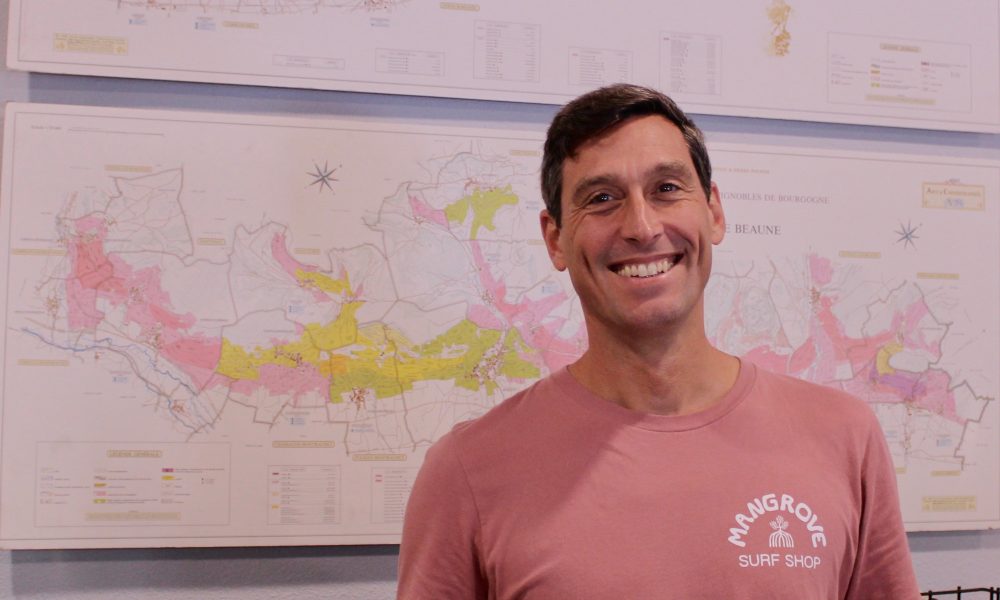
Today we’d like to introduce you to Thomas Morgan.
Hi Thomas, so excited to have you on the platform. So before we get into questions about your work life, maybe you can bring our readers up to speed on your story and how you got to where you are today.
In the late ’90s, I was living in Gainesville, FL, and enrolled in the College of Agriculture at the University of Florida.
My friend Jeff and I were trying to rent an existing 100 acres of certified organic, high-bush blueberries from a gentleman named Tom Dorn, and as it turned out, Dorn was primarily in the wine business. I started out just working in the warehouse, delivering to his then 12 stores around the state. But I was very quickly fascinated by the history, diversity, and overall economy surrounding wine. Farmers are always looking for ways to preserve shelf life and value add so that they can actually make a profit rather than just survive. Wine is arguably the most successful value-added agriculture product in human history and I wanted to get involved. Although Florida is not a state that grows grapes, we are a very large consumer of wine, ranking 3rd in the US for per capita consumption.
After spending 10 years with Dorn’s company Wine Warehouse learning the wine world through retail, I took a job with famed American importer Kermit Lynch. Kermit has been importing small production estate wines from France and Italy for 5 years and is still highly regarded for avoiding the easy money of the ‘drinks business’ in favor of supporting his hard-working vigneron despite the vagaries of wine fashion and trend over the decades.
I worked for Kermit in the southeast US for eight years and traveled to Europe for several weeks each year. This work and travel cemented my love for the old world’s wine and food culture and history but was difficult on my family life.
So in 2018 I took a leap of faith and opened up my own retail shop just two miles from my home.
Would you say it’s been a smooth road, and if not what are some of the biggest challenges you’ve faced along the way?
Given that there are so many places to buy wine, the risk of going into small-scale retail was palpable. But given that most of the big box stores and many of the other independent shops sell what I call ‘drinks business wine’ rather than farm wine, I felt there was an open niche for my focus on handmade wines of integrity. (as opposed to wines of chemistry which make up a much larger portion of what is commonly available than most folks know).
The biggest challenge is gently and politely re-educating the public about what wine truly is. The marketing from big box retailers and grocery chains is that price is the most important factor and taste/style is second. But in my view, and a classically held belief among wine professionals historically is that where a wine is from and who made it is of utmost importance. Of course price matters, so we are nationally competitive in our prices. That way we are able to get people to explore less famous or less heavily promoted wines and regions without having to step outside of their economic comfort zone.
Great, so let’s talk business. Can you tell our readers more about what you do and what you think sets you apart from others?
Although I have never made wine and did not continue farming, my passion remains growing and cooking food. I see wine as one part of a healthy diet and a happy life in general so I continue to be intensely curious about food culture around the world and environmental food production as part of a stable community.
I also feel strongly that retail, when done with intent and care, is a creative act. There is a lot of personal satisfaction in developing and managing a space where folks can discuss their differing subjective opinions, learn a little new information without feeling intimidated, and generally enjoy each other’s company.
In this highly subjective field, the customer’s personal taste is of utmost importance. We focus on our customer’s interests, tastes, desires, and budgets. The shop is focused on you, not on our bottom line or any industry hype.
What matters most to you? Why?
Provenance. Who, what, and where in wine is so important but typically overshadowed by marketing departments at big conglomerate alcoholic drinks companies.
Wine is food which means the farmer and producer are most important. If a person cares about what they eat, they owe it to themself to look more closely at what they drink. We do our best to support organic and biodynamic producers.
Contact Info:
- Website: sgwineco.com
- Instagram: @sgwineco
- Facebook: @sgwineco