




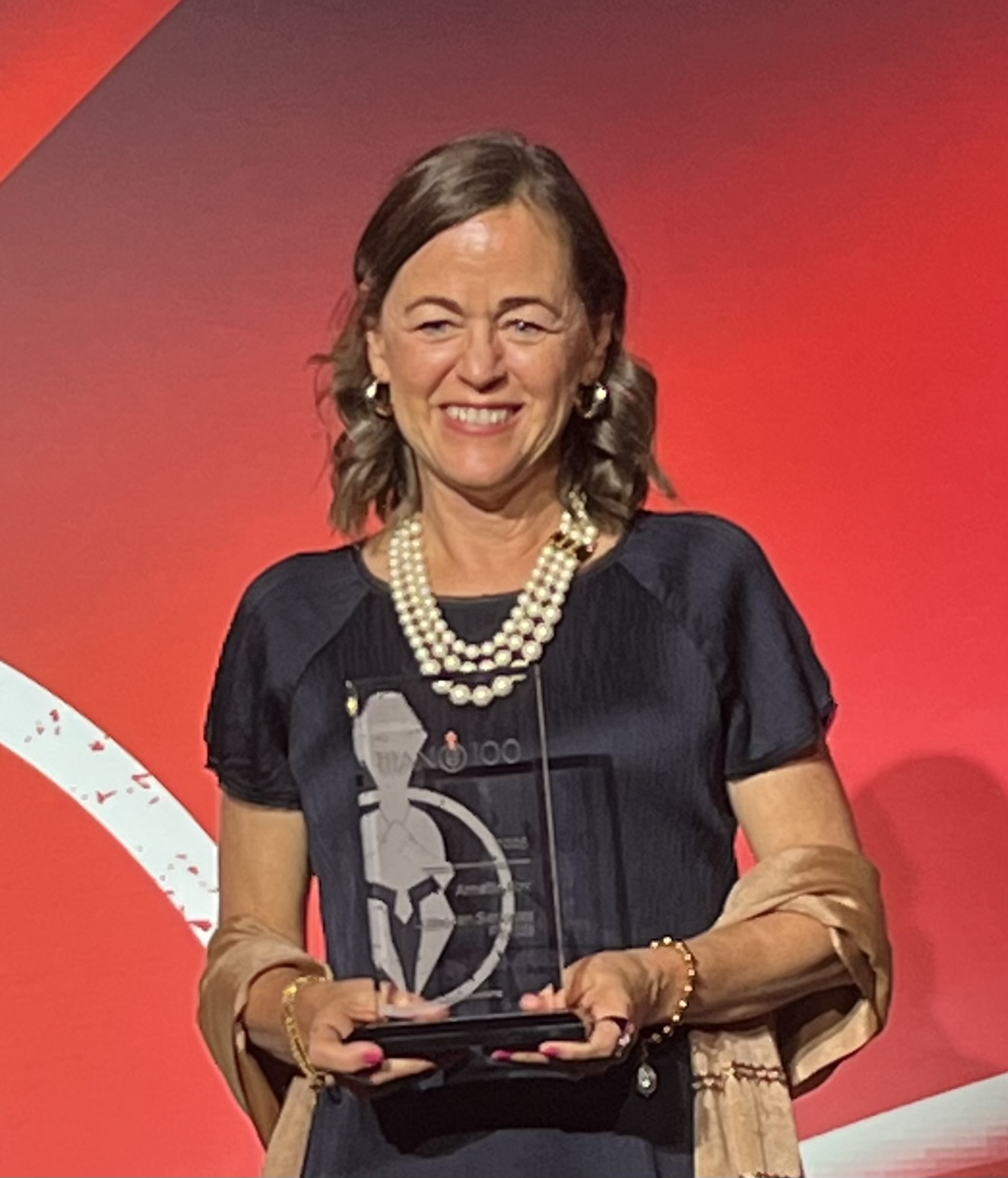
Today we’d like to introduce you to Amelia Fox.
Hi Amelia, we’re thrilled to have a chance to learn your story today. So, before we get into specifics, maybe you can briefly walk us through how you got to where you are today?
I grew up on a modest dirt road in Georgia, in a family where hard work, humility, and personal responsibility were simply part of everyday life. Those early lessons didn’t define my career, but they shaped how I lead – with focus, consistency, and a genuine respect for people.
My professional journey began in Washington, D.C., working with high-risk and homeless youth. I was drawn to the mission and the work itself, but it didn’t take long for a deeper realization to emerge: frontline teams were doing extraordinary things, yet the systems designed to support them were fragmented, inefficient, and often limiting their impact. I wasn’t just interested in serving people, I became deeply interested in strengthening the organizations that serve them.
That insight led me to Yale, where I earned my MBA, and into a 25-year career spanning consulting, corporate strategy, education technology, and nonprofit leadership. Across sectors and roles, I became known as the person brought in to untangle complexity, build alignment, and turn “back-of-the-napkin” ideas into clear, executable strategies. My work has always focused on building structures that allow people and organizations to operate at their best.
In 2016, that path brought me to Lutheran Services Florida (LSF), where I served as Chief Strategy Officer during a period of extraordinary growth. Over more than nine years – including a brief summer as Acting CEO – I reshaped the organization’s mission, vision, and values; revitalized leadership and operational systems; and expanded LSF’s capacity to serve Floridians at scale. It was work that blended strategy, culture, communication, and change management – and it was some of the most meaningful work of my career.
Through that experience, however, one truth became increasingly clear: nonprofits are being asked to meet rising community needs with business models that have not kept pace. Funding is volatile. Needs continue to grow. Cross-sector collaboration is inconsistent at best. And too many organizations are still operating within structures designed for a different era.
That realization led me to launch J29 Strategies. J29 is the answer to help nonprofits and businesses build the partnerships, capabilities, and strategic frameworks necessary for long-term sustainability. It brings together everything I’ve learned across sectors – how to design systems that scale, how to align teams behind a shared vision, and how to strengthen mission-driven organizations to amplify their influence and impact.
My story has never been about titles. It has always been about transformation – of organizations, of leaders, and now, through J29 Strategies, of the sector itself. I am committed to helping nonprofits not just survive the future but lead it.
Alright, so let’s dig a little deeper into the story – has it been an easy path overall and if not, what were the challenges you’ve had to overcome?
Every entrepreneur has inflection points — moments when the challenges you’ve lived through crystallize into clarity about the problem you’re meant to solve. For me, those moments came repeatedly in large nonprofits and fast-moving organizations where the stakes were high, the missions were urgent, and the systems designed to support the scale of impact required failed.
One of the biggest challenges I faced was stepping into organizations expected to deliver massive social impact while operating with structures built for much smaller enterprises. At LSF, for example, we were serving tens of thousands of Floridians, yet our processes, decision-making frameworks, and cultural norms were remnants of an organization a fraction of its size. Leading transformation in a mission-heavy, resource-tight environment requires persistence, diplomacy, and a willingness to confront deeply ingrained norms. It also requires a steady belief that change is not only possible — it’s necessary.
Another recurring challenge stemmed from the reality that nonprofits are often asked to operate like businesses but are not funded like businesses. Government-funded organizations in particular function under razor-thin margins and rigid grant structures that limit innovation and inhibit long-term planning. I watched extraordinarily talented teams do heroic work inside a business model not built to support them. That tension was a turning point for me — it revealed a gap in the sector that no one was addressing at scale.
Layered on top of these operational challenges were the human ones. Like many women leaders, I learned early that influence wasn’t always granted — it had to be earned, protected, and used with intention. I found my voice in boardrooms where I was the only woman. I pushed back when I was encouraged to dim my competence. And I developed the ability to lead change without formal authority. Those experiences sharpened my instincts and strengthened my conviction that strong leadership is both strategic and deeply human.
And then there were the personal challenges — the ones that don’t show up on a resume but shape a leader from the inside out. The loss of a parent. A marriage that ended. The tension between ambition and motherhood. And the quiet, universal fear of not being enough. These moments deepened my empathy, softened my edges where they needed softening, and strengthened the muscles of resilience and perspective.
Together, these obstacles clarified an opportunity: nonprofits need partners who understand both mission and business — people who can help them build sustainable models, strengthen organizational infrastructure, and create the cross-sector collaborations essential for long-term success.
These challenges didn’t just shape my leadership; they shaped J29 Strategies. They gave me the conviction that the sector is hungry for a new approach — one grounded in strategic rigor, entrepreneurial thinking, and deep respect for the people doing the work every day.
Appreciate you sharing that. What should we know about J29 Strategies?
What We Do
J29 Strategies brings together nonprofits and private sector companies into collaborative cohorts, fostering partnerships that drive meaningful change. We believe in the power of cross-sector collaboration to solve complex challenges and create lasting impact.
How We Do It
We create structured environments where organizations can learn from each other, share resources, and develop innovative solutions. Our cohort-based approach ensures that participants benefit from diverse perspectives while working toward common goals.
What It Looks Like
* Curated cohorts that bring together complementary organizations
* Facilitated collaboration sessions focused on strategic outcomes
* Shared learning experiences that build capacity across sectors
* Long-term partnerships that extend beyond the cohort experience
Are there any books, apps, podcasts or blogs that help you do your best?
Books I often recommend or send to others:
* The One Thing by Gary Keller – best vision & organization primer I’ve read
* Searching For and Maintaining Peace, by Fr. Jacques Philippe – read it slowly….you’ll gain deep insights and perspective on the value of patience and letting go of worry
* A Billion Hours of Good by Chris Field – motivation to do good every day!
* Theo of Golden – a new book by Alan Levi – sweet reminder of the power of connection
Podcasts in my rotation:
* Outthinkers, Kaihan Krippendorff
* Anything by Brene Brown!
* Andy Stanley, Leadership Series
Apps I love:
* I’m an NYT Wordle and Sudoko junkie….
* LinkedIn – the connections and insights are great
* Life360 (I have a teenage son!)
* And Bobby Approved Yuka for clean eating & household items
Contact Info:
- Website: https://www.J29Strategies.com
- Instagram: amelia_J29Strategies
- LinkedIn: https://www.linkedin.com/in/ameliafox/
- Other: https://www.amelia-fox.com/about-me

Image Credits
all my own