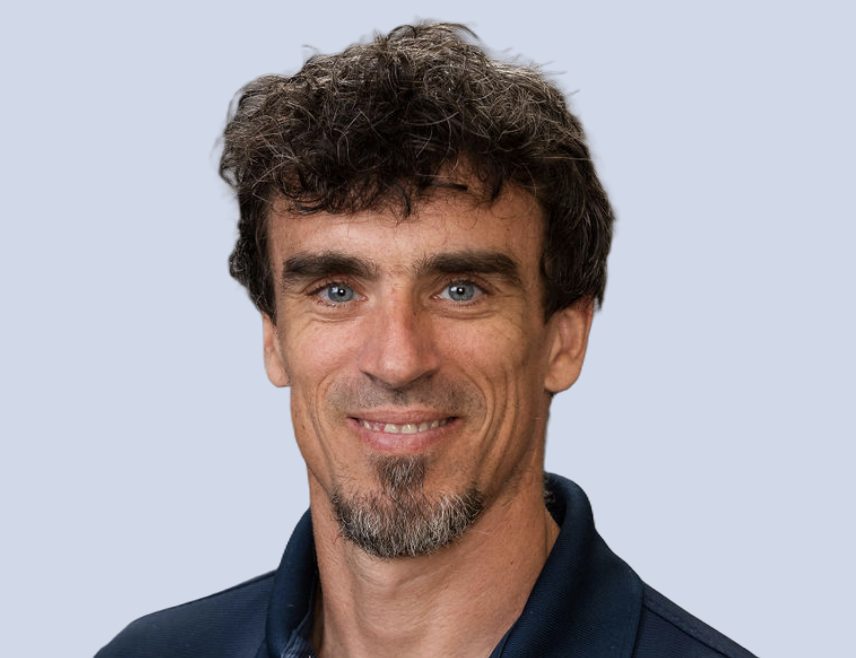




Today we’d like to introduce you to Olivier Guilhem.
Hi Olivier, thanks for joining us today. We’d love for you to start by introducing yourself.
I was born on March 17, 1978, in Carcassonne, married, and a father of two children, Louison (16) and Jean (14). My grandparents were winemakers in a small village in southern France near Carcassonne. My parents were a teacher and an office worker, but later they took over the vineyards.
From a very young age, I did many extracurricular activities: dance, gymnastics, volleyball, and judo. I specialized in judo while discovering athletics around age 12. At 16, after earning my black belt, I broke my wrist and focused solely on athletics, training 12 hours a week.
In parallel, my father, an organist, made me take music theory and trumpet lessons. I didn’t enjoy it much, but he insisted it was important. At 15, we started organizing parties with friends, and I began DJing at them. It suited me because I was very shy and didn’t like to dance. A passion for mixing music was born, and I started equipping myself and becoming more professional at these parties.
Between ages 15 and 18, I wasn’t a top student, but my parents, seeing me thrive in sports and music, didn’t pressure me about academics. I was shy, rarely participating in class, and didn’t raise my hand once in high school. My real life was outside school. Thanks to a friend who helped me review math and physics three weeks before the exam, I earned my French baccalauréat with honors.
When it was time for college, I chose sports, aiming to become a PE teacher. The university was in Montpellier, two hours from home, and my parents rented an apartment for me. Meanwhile, I had become a technically skilled DJ and was noticed by a club owner in my town who auditioned me. I didn’t tell my parents—they didn’t like nightlife. One week before leaving for Montpellier, they received a phone call informing them I was the new DJ at “Le Ranch” club, starting a week later! After lively discussions, I explained that instead of staying in Montpellier, I would return home every weekend to work Friday and Saturday nights. They were ultimately satisfied.
So I started university for sports, working weekends to support myself financially. I didn’t stop athletics; I became French champion in a quadrathlon team and placed 4th in the French championships in high jump and long jump.
I knew the time of choice was approaching, that I couldn’t manage everything—studies, work, and sports. I attempted it: working Friday night, finishing at 6 a.m., competing in the first five events of a decathlon, working again at night, then competing in the remaining five events the next day. My will was strong, but my body said no.
I made the choice to give up elite sports. I continued athletics a few hours per week plus university sports. This rhythm continued for the next four years: school during the week, work on weekends.
At 19, I met Magali, an artist studying at the Fine Arts School in Nîmes. We were a bit opposites, but nightlife, travel, and love of the sea brought us together. We lived together, she worked as a barmaid at the club where I DJed, and she became my wife. From that moment on, even when I say “I,” it is always “we.” We would never separate.
Magali pursued a master’s in fine arts and anthropology, while I finished my sports degree. When it came time to prepare for the PE teacher exam, there were very few positions in France, so I chose to take the primary school teaching exam. At that time, we worked in a large club in Béziers, 2,000 people, me as DJ, Magali at the bar—we earned well with little effort. But again, it was a moment of choice: day or night? We chose day. Magali became a teacher of applied arts in a higher art school, and I taught a nursery class near Montpellier.
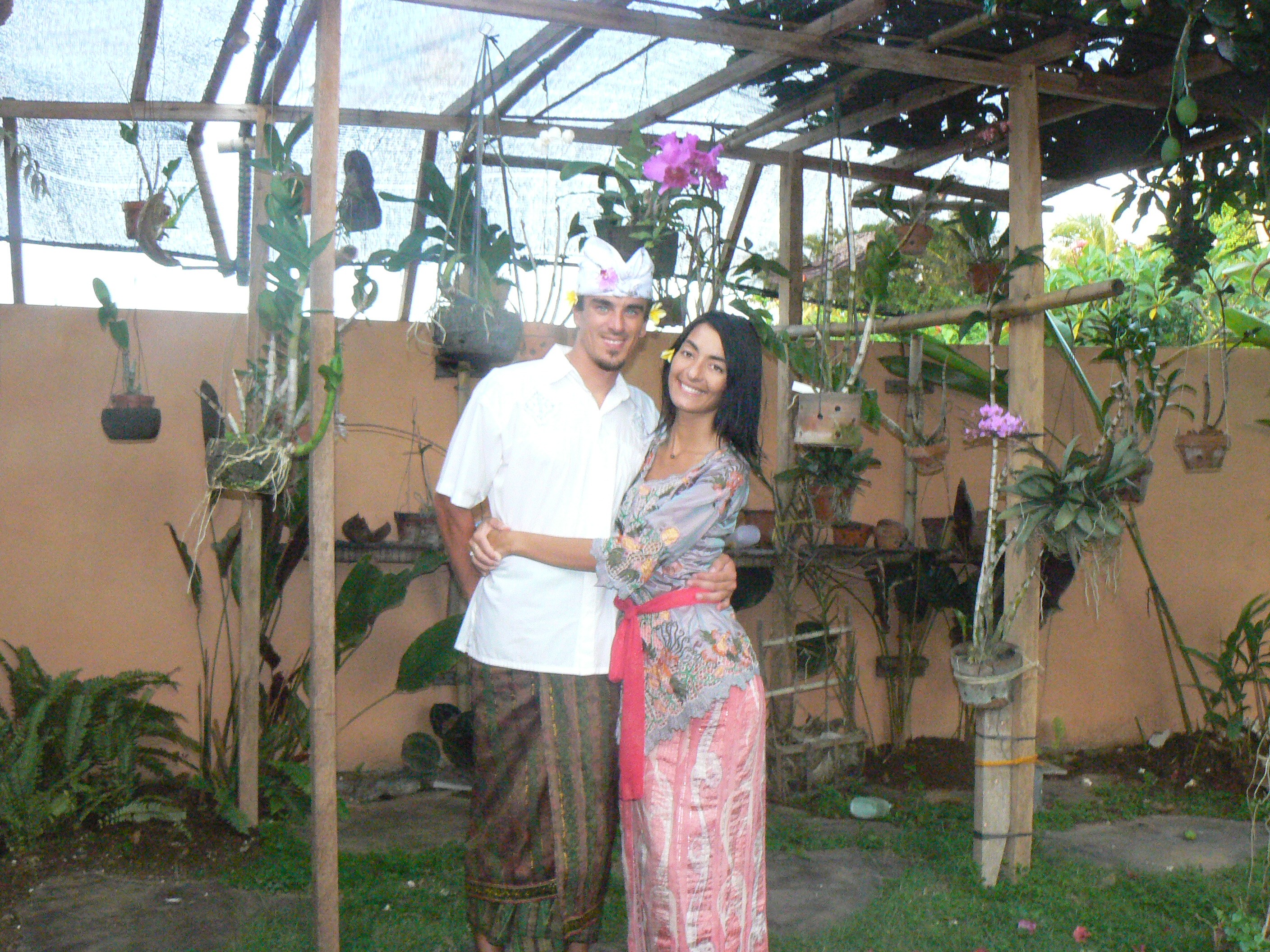
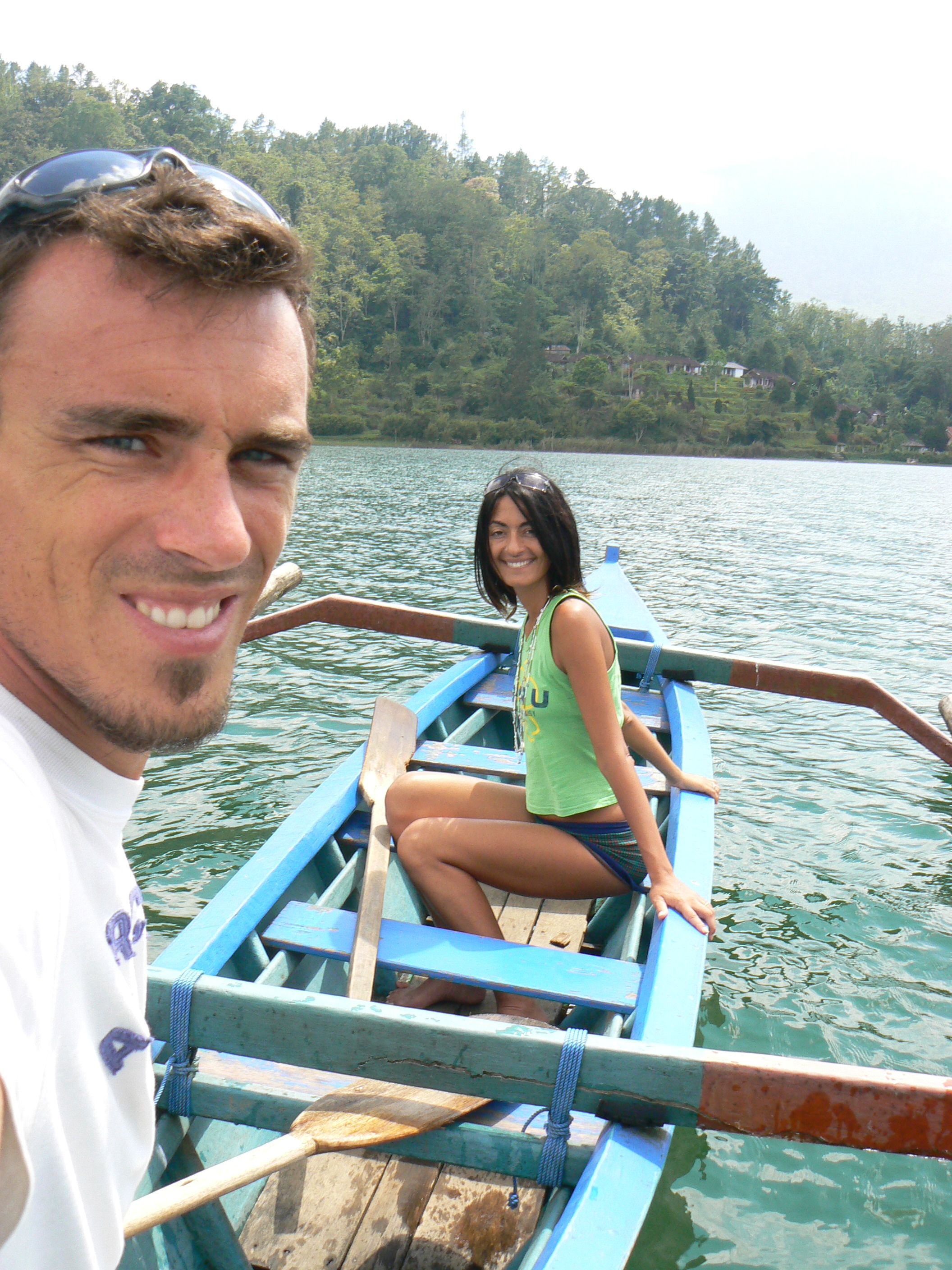
For several years, we traveled whenever we could, loving it, sometimes surfing. Life at home had become too routine, and we craved adventure. I decided to apply to teach at a French school abroad, sending about twenty applications. I knew it was hard to find a school outside Africa to start. Ultimately, the French school in Bali offered me a position. A dream! Surf paradise! We jumped at the opportunity, and four months later, we were in Bali. Three years of happiness. Louison, our daughter, was born in the third year.
Routine settled, and I thought of creating an art business: 40 painters ready to paint your pets from photos. I created a collapsible frame to ship paintings, even filed a patent but didn’t pursue it. I felt the need to develop something of my own, but ultimately I helped develop the Bali school. We were very happy in Bali. Too happy? Time of choice. Do we settle permanently here, ready in 20 years to be satisfied with spending 20 years on this island? No, we weren’t ready. We didn’t renew our contract and decided to return to France.
Certainly the worst year of my life. I worked 100 km from Montpellier in difficult classrooms, while Magali was expecting a boy in April. Too bad, he would be a newborn, but we had to move again. We sent applications, had several choices, and chose Vanuatu, a small archipelago east of Australia, a former French colony. We left with Jean, 3 months, and Louison, 2 years, to a place with no doctors, wondering why there was still a French school. Vanuatu was really the end of the world, with regular cyclones and earthquakes every two weeks. Still, it was a beautiful year, and we met extraordinary people.
We were contacted by a school in Mauritius, a small paradise in the Indian Ocean. New choice: this time, for once, the choice of reason—to regain proper medical care. We arrived in Mauritius in 2012. The children grew up among fish and coral. The school was amazing, and life was beautiful. I taught and coordinated the school’s digital environment. After three years teaching the 5th grade, parents asked me to create a middle school. The project was well-prepared; I even met the education minister at the time. Unfortunately, laws required a science lab too expensive for our budget. I was close to creating my own school, but it didn’t happen. We could have stayed, but I urged Magali to move; I couldn’t remain near a place representing failure.
Applications, offers, choice, and off to Qatar!
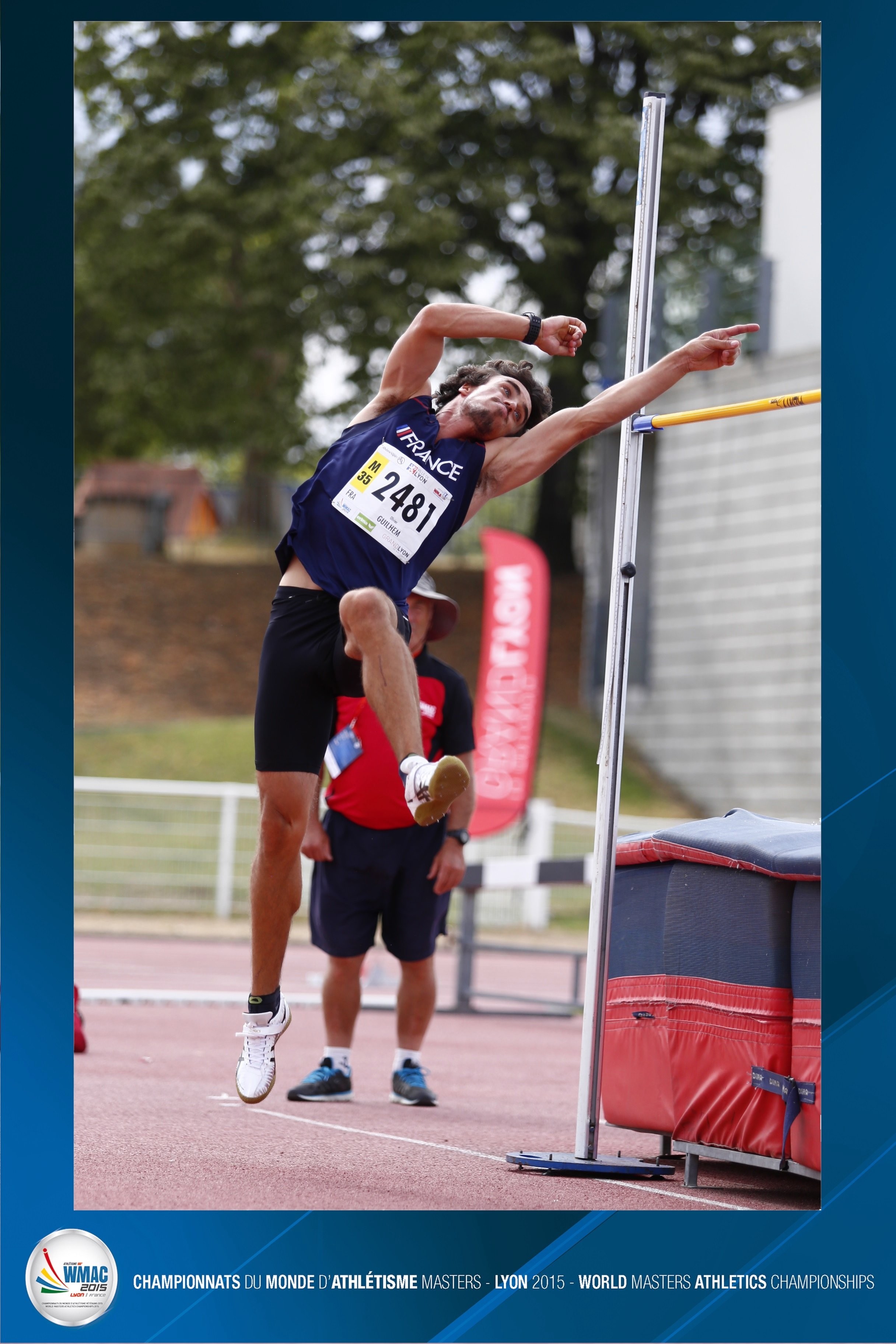
I return quickly to sports. Since Vanuatu, encouraged by a colleague, I had started running again. He’s from Réunion and does trail running. It’s not my passion, but I enjoy challenges and staying in shape. I ran short races, then 10ks, and more. I got hooked and reached a decent level (34 min for 10k). In Mauritius, I ran 80–100 km per week. A friend told me about the Mauritian Masters Championships (+35) on track, including all my youth events. I’ve always felt unfinished with athletics. It didn’t take two hints; I started training again in sprint, long jump, high jump, javelin. At 35, is it reasonable? Yes. I’ve long learned it’s better to live with remorse than regret. I won almost everything and qualified for the Masters World Championships two months later in France. I trained, competed, and finished 10th in the M35-40 category.
I didn’t stop there. I discovered a new discipline, the icosathlon—20 events over two days, the ultratrail of track! Hammer throw, 3000m steeplechase, and 10000m last. The World Championships were a month later in Estonia. Thanks to trail running, I had endurance. It was perfect. I finished 2nd with a French record.
School began again, Doha, Qatar, and all the preconceptions about the country. Four beautiful years awaited us; all prejudices vanished, and the family was happy. We traveled every vacation. But my 10th place haunted me; I had to close the loop. World championships are every two years; the next was in Perth, Australia. I trained almost every night from 10 p.m. to midnight to avoid heat, impacting the family. I thank Magali for taking care of everything.
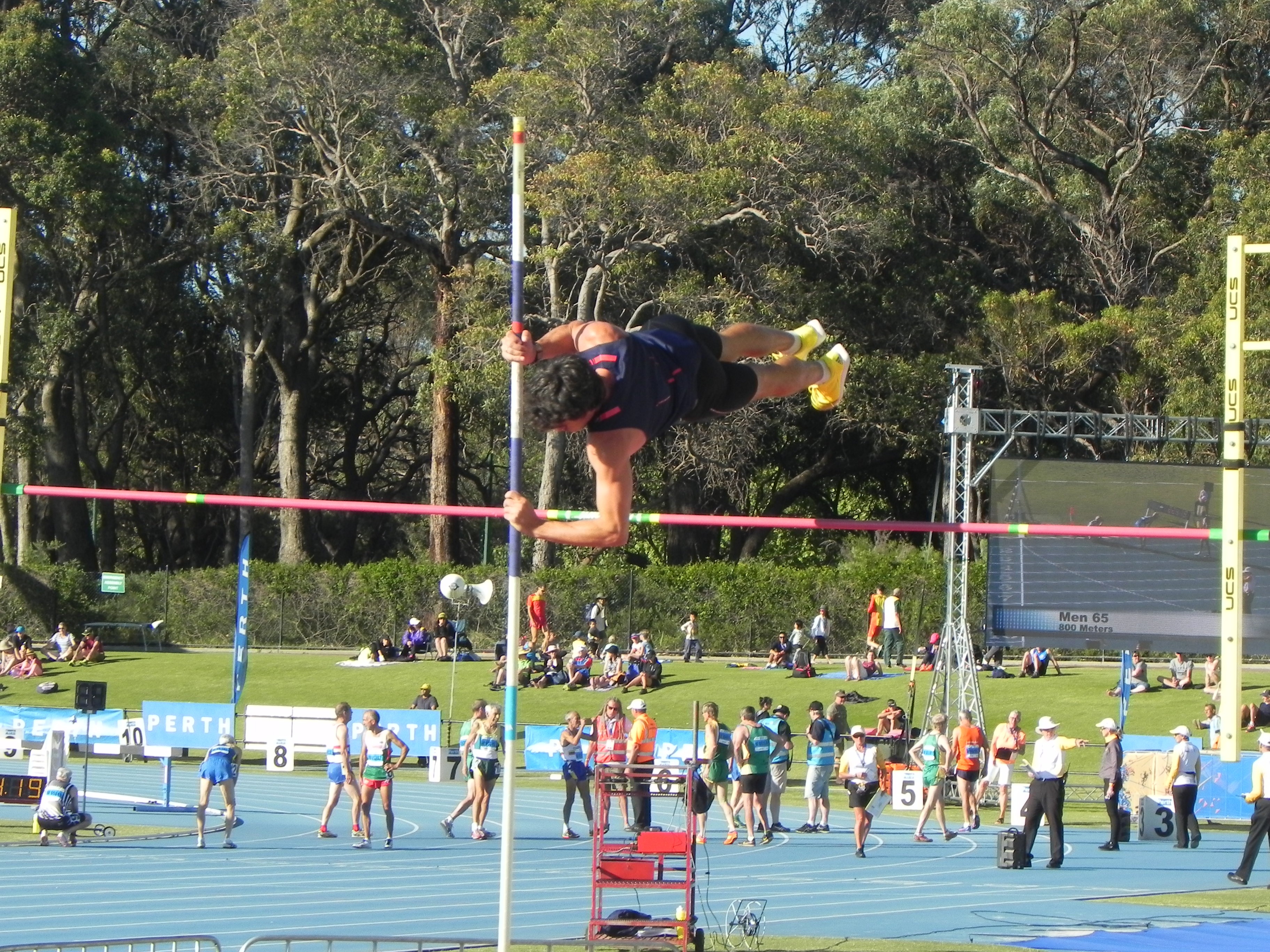
I flew alone to Perth in October 2016 and won the Masters Decathlon M35 World Championship. A triumphant return to school led to being asked to become the PE teacher. I returned to the path I’d chosen at 18. I loved teaching PE but had gained extensive global experience and still needed to grow. The next year, I was offered deputy director of a 700-student campus, and I loved it. I created an Art Week with 300+ workshops, international artists, and chefs cooking with students. A professional highlight year.
But I wanted more. Friends in Bali told me a second French school was needed northwards due to traffic. I created the project over my last months in Qatar. We planned a few months in France to sell an apartment to fund the school. Months passed, the apartment didn’t sell; in September, we started homeschooling the children. In October, Magali asked me to find foreign school positions. Savings were gone; the apartment still ours. The Bali school project fell through. Applications again: Uruguay, Cuba, Turkey, and a new small school in St. Petersburg. Talking to the founder, I understood my mission: to accredit the school with the French Ministry of Education. I loved it.
We arrived in St. Petersburg to replace two resigned teachers. Over four years, I gave all my energy to the school, counting no hours, impacting the family again—Magali handled the children almost entirely—reaching goals. She accused me daily of ruining my health and neglecting the kids for work. I told her I can’t do it differently.
In 2023, our J1 visas were almost expired. A new choice awaited. We love Florida; the kids adore it. There are no “wow” moments like previous expatriations, but no negatives. I needed a solution. In December 2022, the school announced no sixth-grade class for 2023. I had the 5th grade class, and parents began urging me to create a middle school. I didn’t forget… remorse yes, regret no! Magali struggled but followed me. A small challenge began: managing part of a school and creating mine in six months. I persisted to the last day of my contract, at the same time refining the project at night. I told myself: this time, I’ll have my school, I must hold on and continue working hard.
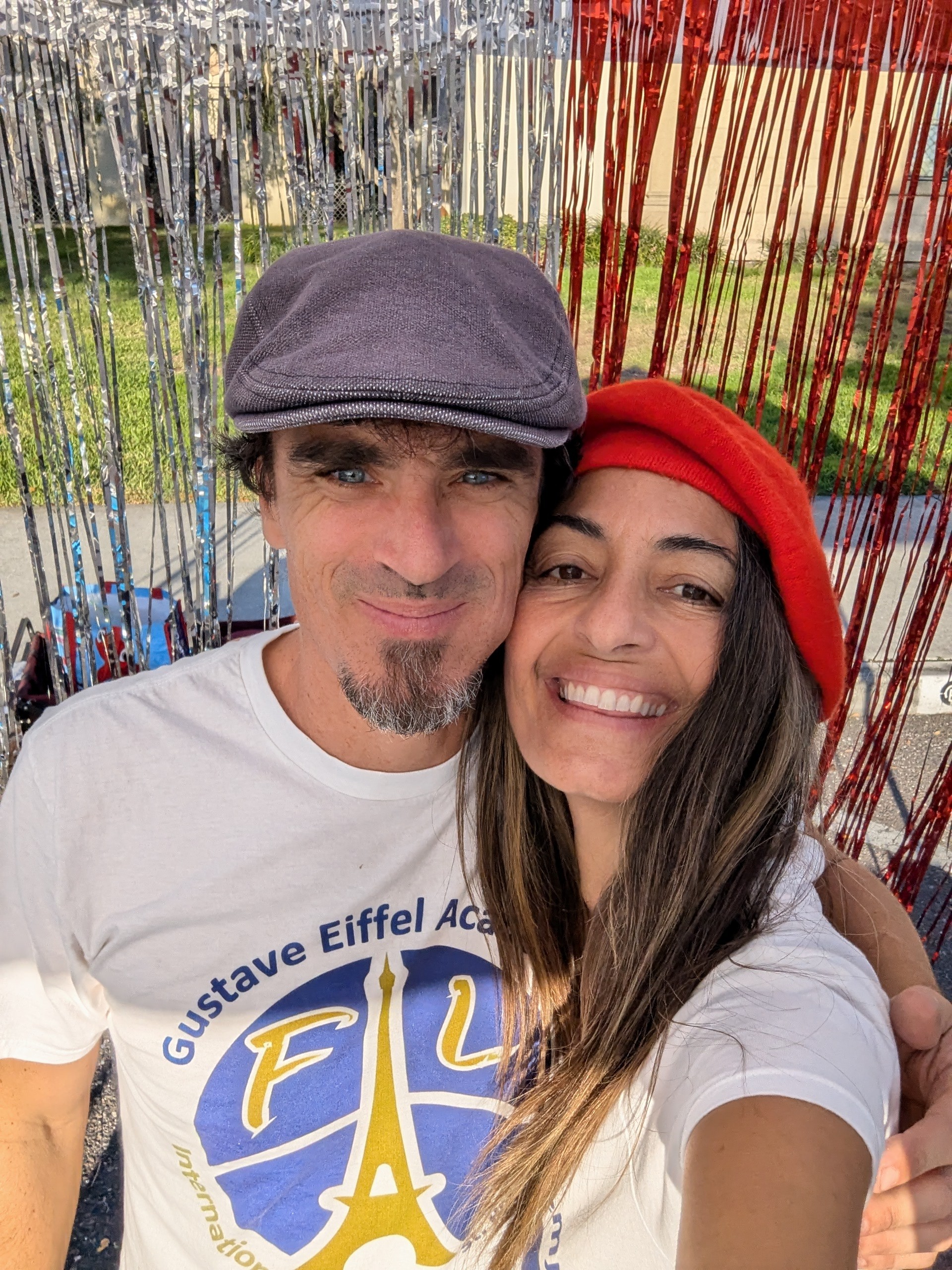
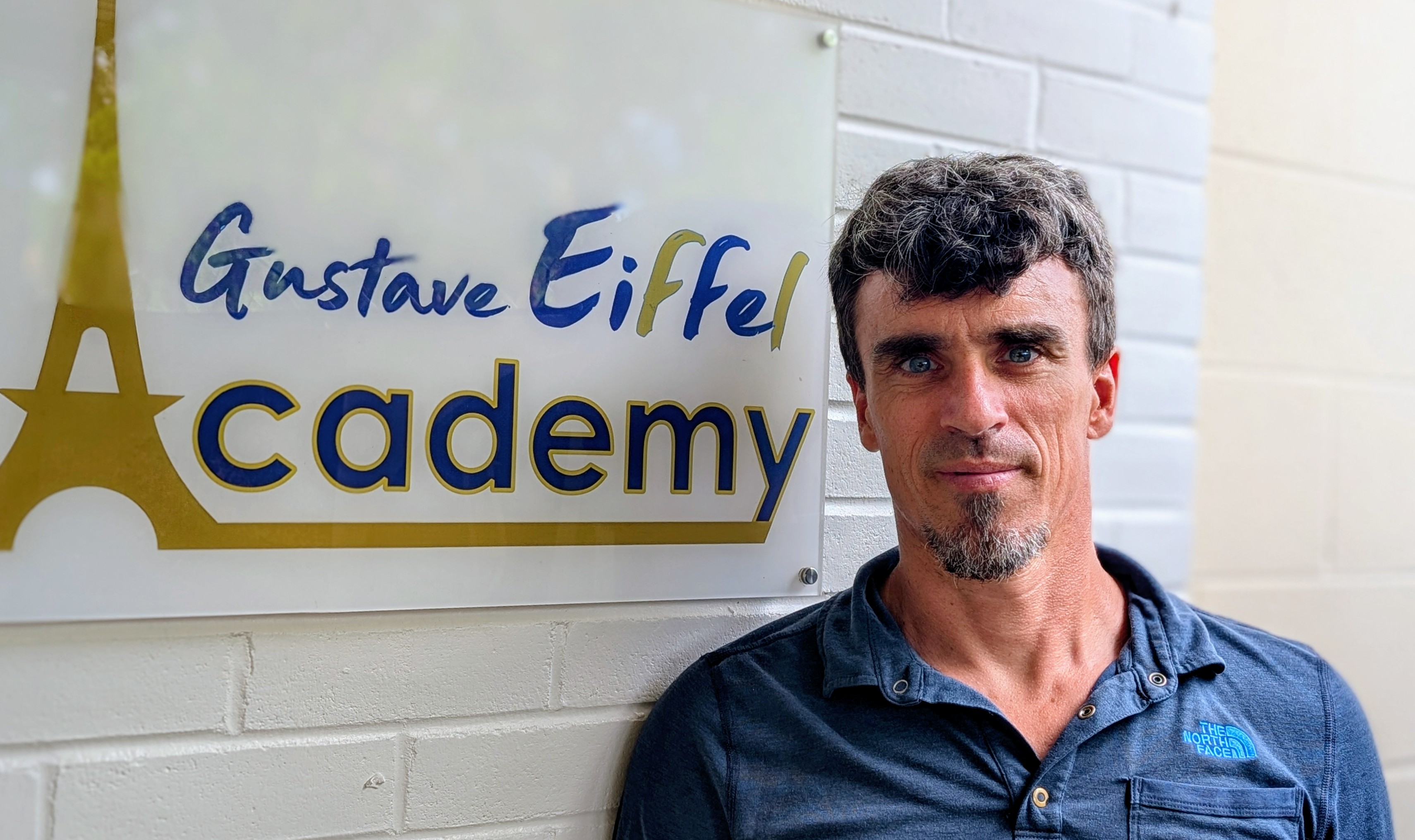
With moral support from six families plus my own family here and in France, the school welcomed its first eight students on August 12, 2023, then 22 in 2024, and now 36 in 2025.
Over these three years, investors approached me with proposals to expand. Without refusing, I said it wasn’t yet the time. I didn’t want to lose the freedom to see it develop as I dreamed.
I know that one day I will have to give up some control. France pushes toward accreditation with French programs, which for now would compromise the project.
We want to teach both French and American programs, running them side by side, and add Spanish. French accreditation would force us to switch entirely to the French curriculum, while the France Éducation label would require teaching only the American curriculum in French. Our school doesn’t fit into any boxes today.
Yes, in the near future, when we have enough students to create separate sections, we will move toward accreditation, but not yet.
This school is pragmatic. It doesn’t aim to educate today’s adult but the adult of 2030. A generation who will live with AI as a partner and must control it, not be enslaved by it.
Six core principles guide our teaching: multilingualism, multiculturalism, knowledge, creativity, physical and mental mastery of the body, and oral communication. The last point highlights the others: the best students, the most listened-to people, are those who can communicate live, without a medium, without a filter, without AI.
So now you know much more about me. But as I said before, it’s a “we.” Nothing exists without Magali’s support and help—she manages, in addition to everything else, most of the family’s balance.
The future is simple. Once routine settles in, there will be a new athletic goal—the 2026 World Decathlon Championships—and then a new project. The Tampa Bay area is large.
I’m sure it wasn’t obstacle-free, but would you say the journey has been fairly smooth so far?
It’s never a simple road. Everyone experiences the difficulty of obstacles differently. Obstacles must be part of the journey. As Corneille wrote in Le Cid: “To conquer without risk is to triumph without glory.”
Can you tell our readers more about what you do and what you think sets you apart from others?
I am proud of my entire journey. I have always stayed true to myself, reaching my goals without ever cheating, stepping on others, or lying. That is my greatest pride.
Can you talk to us a bit about happiness and what makes you happy?
What makes me happy is seeing my children succeed in sports and Magali in the arts. I believe you have to live your passions to the fullest.
Contact Info:
- Website: www.eiffel.academy
- Instagram: gustave_eiffel_academy
- Facebook: https://www.facebook.com/profile.php?id=100091762023871