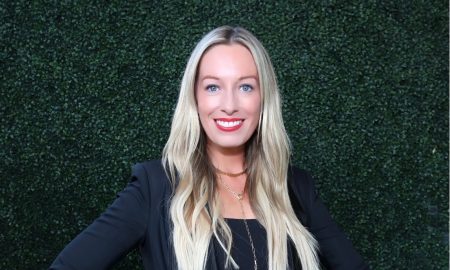




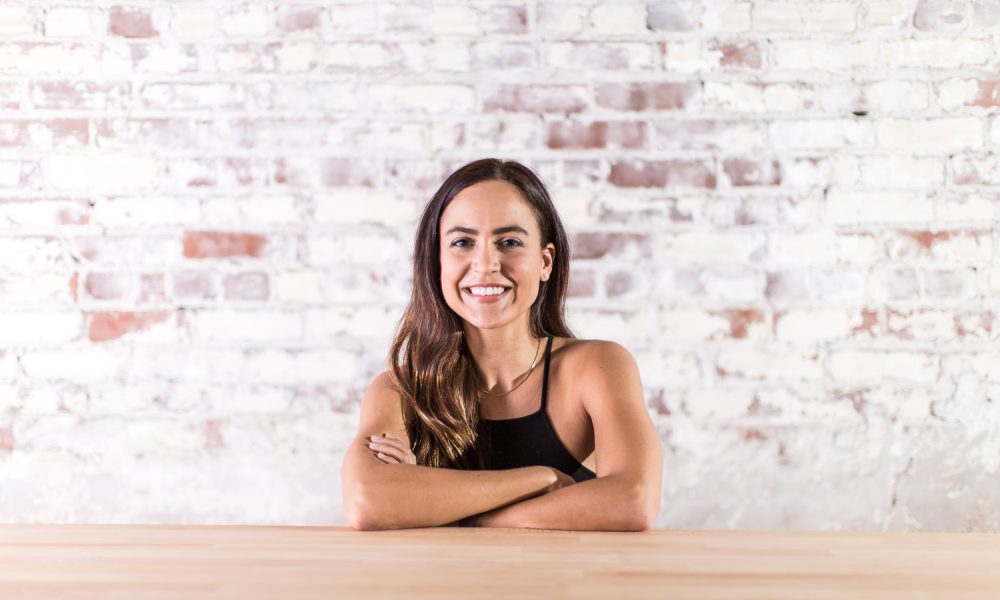
Today we’d like to introduce you to Corinne Colon.
Hi Corinne, thanks for sharing your story with us. To start, maybe you can tell our readers some of your backstory.
Dance has always been a part of my life. I started taking ballet classes at age four, but some of my earliest memories are of my sister and I dancing at home to Michael Jackson, Janet Jackson and Paula Abdul. I continued dancing through high school, college and danced professionally for the Tampa Bay Buccaneers Cheerleaders. I never really considered dance as a career path and was really burnt out after dancing for four years in college and two years for the Bucs. I took about a year off from dance and I realized just how integral dance was to my identity and well-being. I started teaching at a small local studio and LOVED it. I decided to go back to school for dance education with the goal of opening a studio. I attended NYU Steinhardt and had the opportunity to train with some of the most highly respected dance educators of our time, and cut my teeth teaching at the 92Y, Ballet Hispanico and Frank Sinatra School of the Arts. I graduated in 2013 with an M.A. in Dance Education, moved back to Tampa and began teaching dance as an adjunct professor at the University of Tampa.
In 2015, I opened Dancebox Studio. The studio scene in Tampa is pretty saturated and heavily focused on competition. I wanted Dancebox to be different. All of our faculty have degrees in dance and/or childhood education. We incorporate brain-compatible education into our training and have a strong emphasis on injury prevention and technique. I’ve sustained so many injuries from dance and believe it is critical that young dancers have a strong understanding of their physical anatomy so they can work within their range of motion and possibility, versus putting tremendous strain on their bodies to achieve a certain aesthetic or “trick.” We keep our classes intentionally small, so we can give every dancer the personal attention needed to help them excel as dancers, grow as individuals, and most importantly, we can get to know them personally. This helps us make the most of their training and is a big part of what makes our dance community special.
Can you talk to us a bit about the challenges and lessons you’ve learned along the way. Looking back would you say it’s been easy or smooth in retrospect?
Starting a studio from scratch is no small feat, especially when there are studios in the area celebrating 20, 25, even 30+ years in business. It takes time to grow deep roots in a community. As a business owner, it takes patience because building a studio is a slow burn – it’s not a business that is going to explode overnight. Most students start to dance at a young age and “grow up” in their studio and changing studios is a pretty big deal. Students who are really passionate about dance spend a ton of time at their studio – it is such a significant part of growing up because, in dance, you learn so much about yourself, your body, and what you are capable of – mentally and physically. We celebrated five years of Dancebox this year, and 2020 has definitely been our most challenging year due to COVID. In true dancer style, though, we adapted and muscled through all that 2020 has thrown at us.
Thanks for sharing that. So, maybe next you can tell us a bit more about your work?
Traditional teaching methods in dance often encourage a “monkey-see, monkey-do” type of approach, vs. encouraging critical thinking and decision making/creative expression from a young age. Typically dancers are not introduced to improvisation until much later in their training. We encourage improv from the beginning through our creative dance classes. As a teacher, I like to encourage my dancers to embrace the idea of constant movement – in dance and in life. When we can transition from one movement to the next smoothly, using breath, instead of anticipating what’s next or fixating on what’s already happened, we can move in a way that is more connected and intentional. Building the mind-body connection takes time, diligence, and trust – dance and movement can be scary and make us feel really vulnerable. So, as a teacher and choreographer, it is my job to create a space that is conducive to that exploration and growth. I am also very interested in the dancers’ POV and often include them in the choreographic process. Learning how to replicate movement exactly and also how to create movement/ develop personal style are equally important skillsets in training young artists/dancers.
What does success mean to you?
I think of success as a mindset, almost like a daily practice. For me, there is no ultimate success benchmark or achievement. It’s an ongoing pursuit. As long as I’m working towards my goals in a tangible way and experiencing growth, I believe that is a success.
Contact Info:
- Email: hello@danceboxtampa.com
- Website: www.danceboxtampa.com
- Instagram: http://instagram.com/danceboxtampa
- Facebook: https://www.facebook.com/danceboxtampa/


 Image Credits
Mebane Media Studio