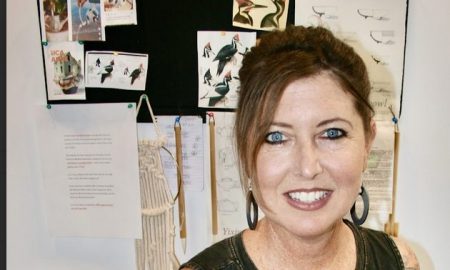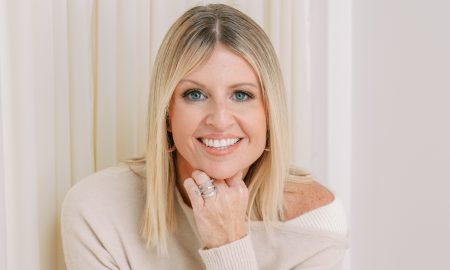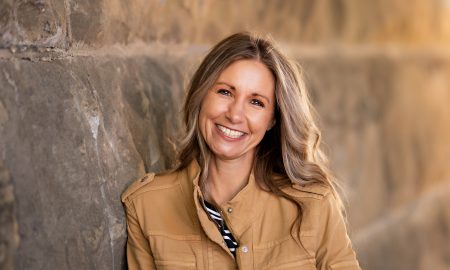





Today we’d like to introduce you to Debbie Yones.
Hi Debbie, we’d love for you to start by introducing yourself.
Thank you. I am a Speech-Language Pathologist and the I am proud to be the Executive Director of Voices of Hope for Aphasia, a community-based non-profit in Tampa Bay. If you don’t know what “aphasia” is, you are not alone.
You probably remember the ice bucket challenge and the awareness it raised for ALS research. You may know someone with Parkinson’s Disease. But did you know there is a disorder that affects twice as many people as Parkinson’s and 150 times more people than ALS? That disorder is aphasia. And as much as it affects so many of our friends, neighbors, and community members – many of us have no idea what it is.
To help people understand a little bit what it might be like to live with aphasia, I like to use this (admittedly simplified) analogy : Take a minute to imagine…. You open your eyes and find yourself in a foreign country. You can’t speak the language. You approach a woman and ask a question, but she shakes her head. She says something back, but you don’t understand. You’re scared, confused, and feel alone. Now imagine you’re sitting on your own bed, in your own home, having the same experience. Your spouse says something to you, but you don’t understand. You respond, but it doesn’t sound the way you want it to, the way you know it should. You can’t find the words… That’s a little like what it feel to have aphasia. And it affects 40% of all stroke survivors, as well as individuals with traumatic brain injury.
More specifically, aphasia is a language disorder that happens due to damage to the parts of the brain that processes language. It is the loss of language, but not intellect, and it affects 23,000 people in Tampa Bay alone. Aphasia limits a person’s ability to participate in activities that the rest of us take or granted: having a voice in discussions with doctors about our own care, staying connected to friends and family by phone or email, or participating in everyday activities that make up a full and engaging life: book clubs, spiritual services, even the joy of writing a birthday card to a grandchild. As prevalent as this life-altering disorder is, few resources exist for people living with aphasia.
Voices of Hope for Aphasia was formed to provide people with aphasia and their families the support, engagement, and education to continue to thrive despite the disorder. We only community-based organization in the Tampa Bay area and we partner with local hospitals, universities, and Speech-Language Pathologists to provide these services. At VOH, we believe that an aphasia diagnosis does not mean the end of a full, engaging, and hope-filled life. Our purpose is to help build back what those with aphasia have lost because of their stroke or injury: a community of understanding and acceptance, the ability to interact with their world in this new normal, and a sense of hope for life ahead.
Founded by a person with aphasia, Mike Caputo, and his wife, Kathy, they gathered a small group and created a grassroots community for themselves – the first of its kind in Tampa Bay and one of only a handful across the country. What began as a volunteer-driven organization with a handful of members meeting twice a month has grown to serve a community of more than 320 individuals each year. Programs are now offered five days a week (in-person and online) in Dunedin, St. Petersburg, and Tampa and run by professional, licensed speech pathologists.
Alright, so let’s dig a little deeper into the story – has it been an easy path overall, and if not, what were the challenges you’ve had to overcome?
Despite the fact that it affects millions of Americans, aphasia is a little known word and misunderstood by many until it happens to them or to their loved ones. I talk to people all the time who say something along the lines of, “Oh…I had an uncle who had a stroke and had trouble speaking…I didn’t know it was aphasia,” or someone breaking into tears when they realized that their father could have had more opportunities if they just understood what was going on.
So, I think our biggest hurdles are tied to the fact that the word “aphasia” isn’t used. So people who need resources for it, don’t know what to look for and it has made it challenging for us to get the word out to families that we are here for them. As foundations and funders are beginning to get to know us, we are able to increase our capacity, so I am grateful for publications like yours to help us raise awareness of our services. We have recently committed to a dedicated space for our in-person meetings, which means we now have the space to expand our programs.
Great. Can you tell our readers more specifically what you do and what you think sets you apart from others?
People are diagnosed with aphasia every day, typically after a stroke or brain injury. They’ll carry this diagnosis with them for the rest of their lives. As devastating as the diagnosis can be, with long term support and language therapy, individuals with aphasia can make gains in their speech ability and, more importantly, their ability to meaningfully interact with their world. Long term support can help those with aphasia live with hope, excitement, and fun – rather than loneliness, isolation, and frustration.
Unfortunately, our insurance companies are not currently equipped to handle long-term support, so eventually coverage runs out or the deem that the progress on quantitative measures isn’t enough to continue to extend coverage. Private therapy can be expensive, $100+ for a 45 minute or hour session, and for aphasia, intensive and immersive language practice is the key (just like learning a foreign language).
VOH currently provides 3 to 4 hours of activities Monday through Friday. The activities are interactive, participation-based group activities and encourage the use of conversation – and laughter! Our online sessions are free because we will never turn anyone away due to a lack of ability to pay. Since we are a non-profit who depends on donations, if our members are able, we are grateful for a contribution towards the sessions.
Voices of Hope for Aphasia fills an urgent need in the aphasia community – a long-term, affordable community of support, education and resources for the families affected by this life-changing disorder. While not individualized therapy, the professionally credentialed staff and therapeutic nature of the community provide a long term, affordable resource for individuals living with aphasia. It offers people and their families a ray of hope, a source of support, and most of all, a lifelong community of others that understand exactly what they are going through.
2020 was a pivotal year for VOH. In addition to responding to needs presented by COVID 19, VOH is making its next big leap as an organization – as I mentioned before, we have committed to creating a permanent home for the aphasia community in Tampa Bay.
By putting down roots and creating a dedicated space for the aphasia community, both in-person and online, we are pledging to serve the aphasia community for decades to come. With this dedicated space, VOH has the opportunity to build a true community without bounds — the original vision of that small grassroots group that convened more than nine years ago. This space will equip us to offer more classes, serve more families, and grow visibility for aphasia and disability awareness here in Tampa Bay. Prior to this, we were constrained by the generosity of partners to open up their sites each week for our staff to host sessions. Now, we have exponentially expanded our opportunities for connection and engagement. Not only will weekly sessions expand, but there will also be a space for those with aphasia to come and be together. We have the space to hire additional staff to support our fast-growing community in need of services. Although 2020 has created obstacles, Voices of Hope for Aphasia is looking to the future.
Let’s talk about our city – what do you love? What do you not love?
I am proud that St. Petersburg is dedicated to being an inclusive and accessible city for all! It makes it a perfect place to highlight the specific needs of communication disabilities. Recently, I was appointed by the St Pete mayor to the Committee to Advocate for Persons with Impairments (CAPI). Together with other panelists representing visual disabilities, physical disabilities, hearing disabilities, I will have the opportunity to represent the many disorders that can impede a person’s ability to interact with our community due to communication disabilities and disadvantages (aphasia being just one: autism, Parkinson’s, functional illiteracy, Cerebral Palsy, and many more).
What do I not love? We live in a beautiful, vibrant, open, artistic city! There is nothing I don’t love! I am grateful to be living here! (except for the mosquitos – I don’t love the mosquitos!)
Contact Info:
- Email: info@vohaphasia.org
- Website: www.vohaphasia.org
- Facebook: /VoicesofHopeAphasia
- Twitter: /VOHAphasia
- Youtube: https://www.youtube.com/channel/UCM-HZSJbebxpJM4xrbRalyA


Image Credits
Voices of Hope for Aphasia