






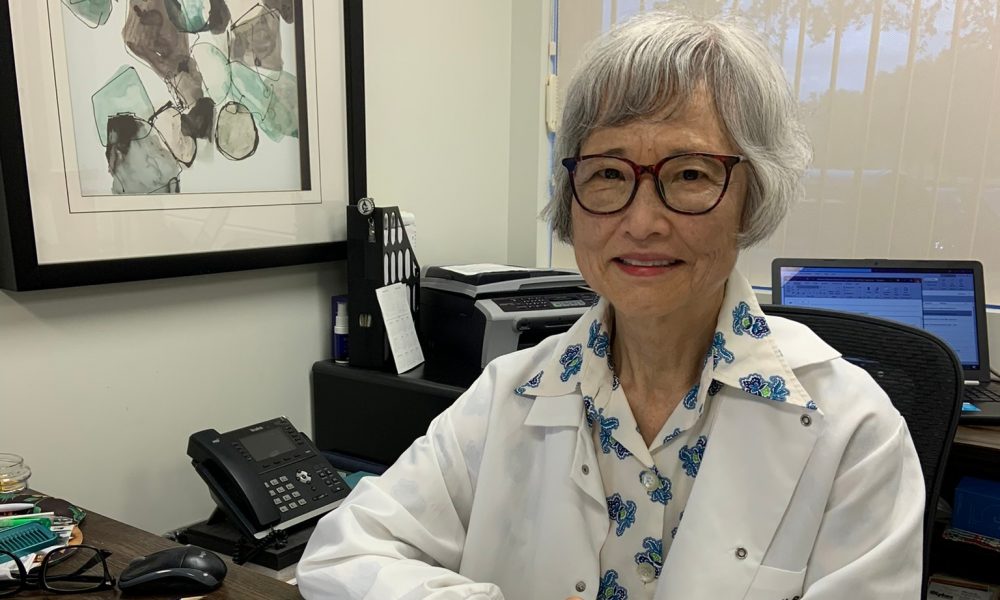
Today we’d like to introduce you to Akiko Tanaka.
Hi Akiko, thanks for sharing your story with us. To start, maybe you can tell our readers some of your backstories.
As a child living with 9 siblings in a Japanese house, my mother was extremely diligent in keeping us strong and healthy. Her toolbox for doing so consisted of many Japanese folk remedies. Folk remedies are non-prescription materials that exist in nature that have been found to work over many years–sometimes centuries.
During my education, we studied hundreds of herbs, learning Japanese and Latin names for them. We examined some dried leaves and bark and determined their chemical components. In Japan, the practice of using herbs has continued for centuries. Why? Because they work!
Here is a typical question I often receive: Can a combination of traditional folk remedies and Western medicine help build a strong immune system?
Yes, Western culture is adapting the lessons learned from other cultures that have a scientific basis for their effectiveness. For instance, in many cultures, green tea is a traditional beverage, a part of everyday rituals. We now know that green tea contains antioxidants that slow the aging process and have been known to lower cholesterol.
Much of Eastern tradition and culture is based on the search for simple, practical ways to promote health and prevent disease. Merging the concepts of Eastern and Western medicine is beginning to reveal the scientific basis for the usefulness of traditional plant extracts for healing. In ancient times, plants were often the only medicines readily available to the common person. The Greeks used an aspirin-like substance from the bark of willow trees to relieve pain and fever. The health benefits of pinecones were first documented in 500 AD by Greek physicians.
We began working with a pinecone extract (PPC) in the late 1980s when we obtained an NIH grant and received equipment funding from the State of Florida to investigate HIV/AIDS and the efficacy of the pinecone extract against this infection.
Stomach and indigestion problems are common among the Japanese people. Pinecones are traditionally boiled in water in a big kettle; the extract is then taken like tea. PPC as developed in our labs is extracted by chemicals and used for experiments to test its biological activities in vitro (cell culture) and in vivo (animal studies). TBRI has developed our pinecone extract into a dietary supplement, trade-named ImmunExtra (IE). Those using IE have reported remarkable success in recovery from cancer and infections (by supporting the immune system).
We have identified the chemical components in the pinecone extract that can promote the conversion of human peripheral blood mononuclear cells (PBMC) to mature dendritic cells (DC). Why is this important? DC are the most potent antigen-presenting cells of the immune system. As soon as the DC recognizes a foreign invader or abnormality (such as an infectious agent, cancer, or immune disorder), the DC instructs “troops” (other immune cells) to eradicate the problem.
The ability of DC to detect, process, and present foreign material (antigens) to other immune cells are of central importance in eliciting an effective response against cells infected with bacteria and viruses, and cancer cells. Scientists believe that harnessing the power of DC will be useful in developing new generations of more refined and effective vaccines and in fact many trials are underway.
We are now synthesizing unique molecules based on the extract. Some of the synthetic molecules that we have identified are being investigated by in vitro and in vivo studies to determine their efficacy. This will be followed by filing patent applications; hopefully, a big pharma company will eventually go on to develop new types of FDA-approved therapies.
Today, our research has never been more exciting, but at the same time, our greatest challenge has been the lack of funding. Like other non-profit organizations, we are literally working quarter-to-quarter financially. In my capacity as President, every day involves fundraising, as well as interacting with our Board members and our Science Alliance volunteers.
Would you say it’s been a smooth road, and if not what are some of the biggest challenges you’ve faced along the way?
A typical research institute often has the benefit of a substantial endowment. At our founding, TBRI had the noble idea of developing new types of medical therapies–but unfortunately without self-sustaining financial support. Thus, we constantly need to raise the necessary research and operational funds year after year.
In the earlier phases of our studies, we were successful in obtaining research grants from the NIH, USDA, NSF, and private foundations. The results of our research have made promising strides, and thus we must protect our intellectual property with Non-Disclosure Agreements (NDAs) signed by third parties.
In other words, we cannot disclose our recent findings to the public in order to secure patent protection in the future. This is where we now stand, and fundraising has become crucial.
Thanks – so what else should our readers know about Tampa Bay Research Institute?
TBRI was established in 1981 as the first 501 (c)(3) not-for-profit biomedical research organization of its kind in Florida.
Our mission is to unleash the power of the immune system to treat, cure and prevent cancer and debilitating diseases. Inherent in our responsibilities is the training of the next generation of scientists and educating the public about matters of immune health and science
Our scientists pioneered the discovery of the relationship between virus infections and cancer with TBRI being awarded a multitude of patents for its discoveries related to the immune system.
Our ultimate goal is to improve the health and longevity of those suffering from cancer and other life-altering diseases. To achieve this, we will focus our research on finding ways to engage the immune system to effectively prevent, ameliorate and cure such diseases. Inherent in our institutional responsibilities is training the next generation of scientists and educating the public about matters of immune health and science.
Do you have any advice for those just starting out?
A typical day in my life will include varying degrees of involvement with office and lab personnel, the board of trustees, fundraising, research, and reading, reading, and more reading of scientific articles! To follow your dream you must maintain a steady pace. It’s the only way to get everything done.
Contact Info:
- Website: www.tbri.org
- Facebook: https://www.facebook.com/Immunehealthresearch/


 Image Credits
TBRI Staff




Carleton L Weidemeyer
September 2, 2022 at 12:49 pm
This is a very interesting and informative article that should be of interest to everyone.
While other research labs are profit making Corporations, TBRI is a successful non profit
organization demonstrating promising results. It deserves Public support to accomplish it’s mission.