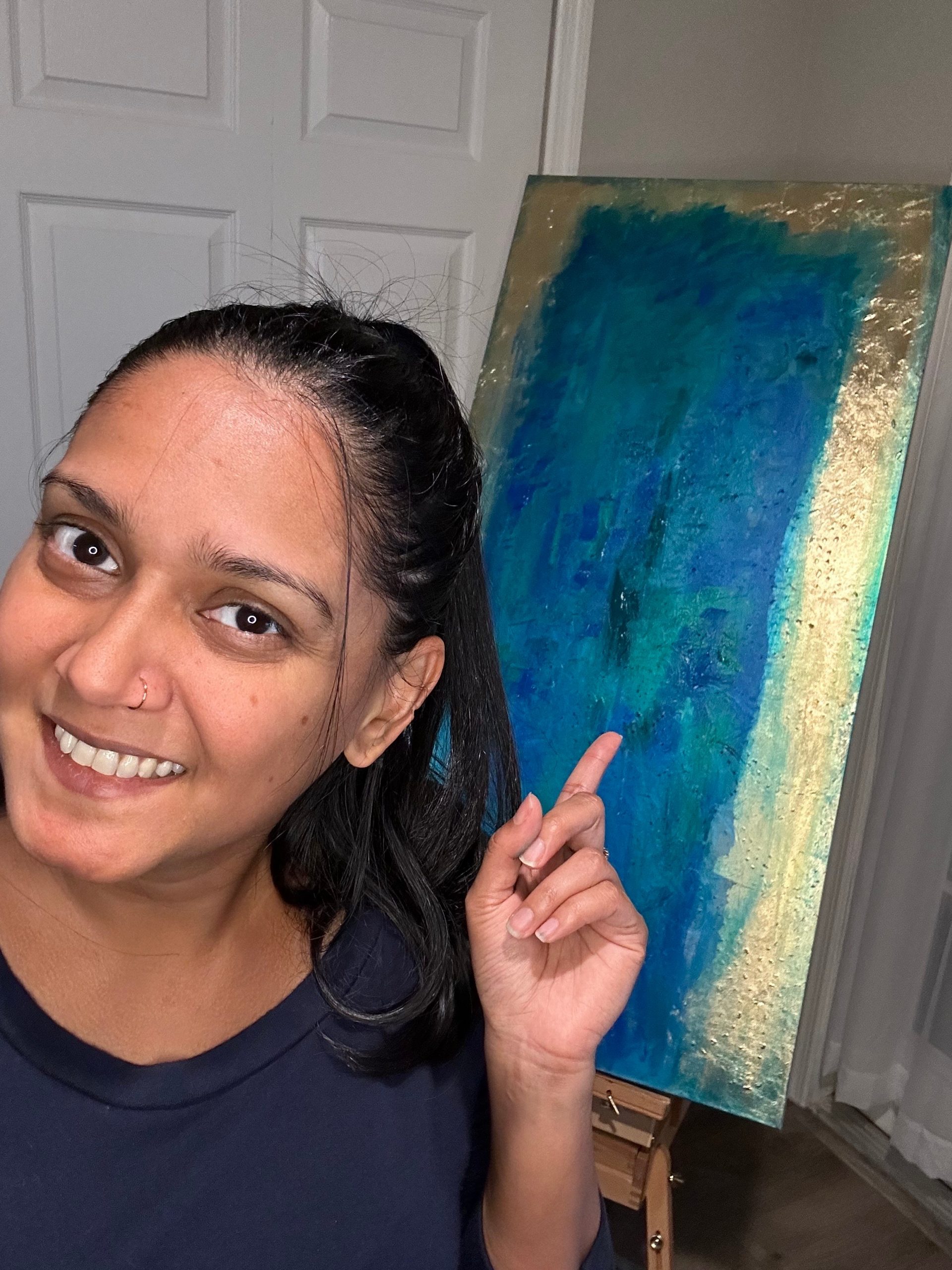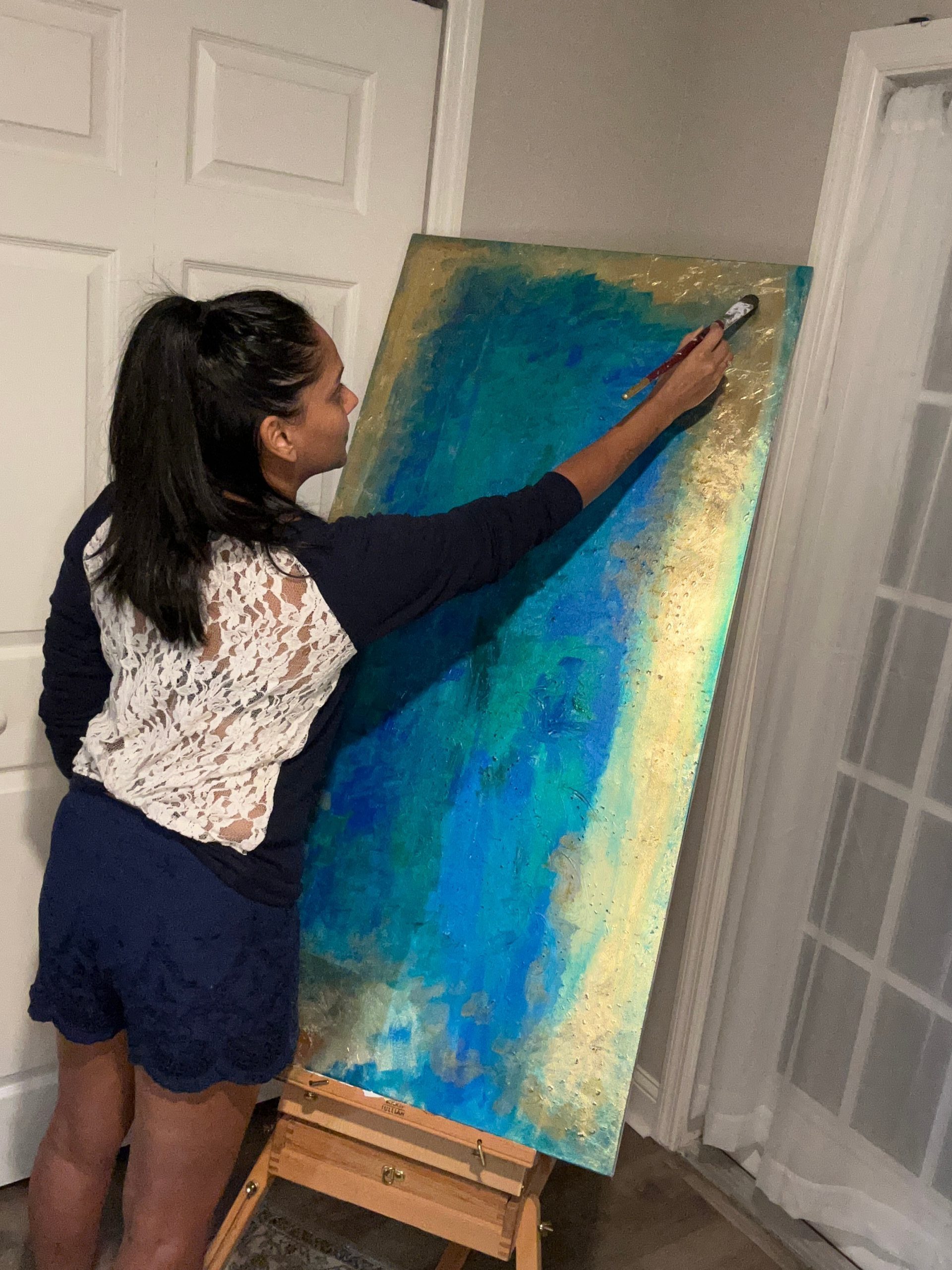




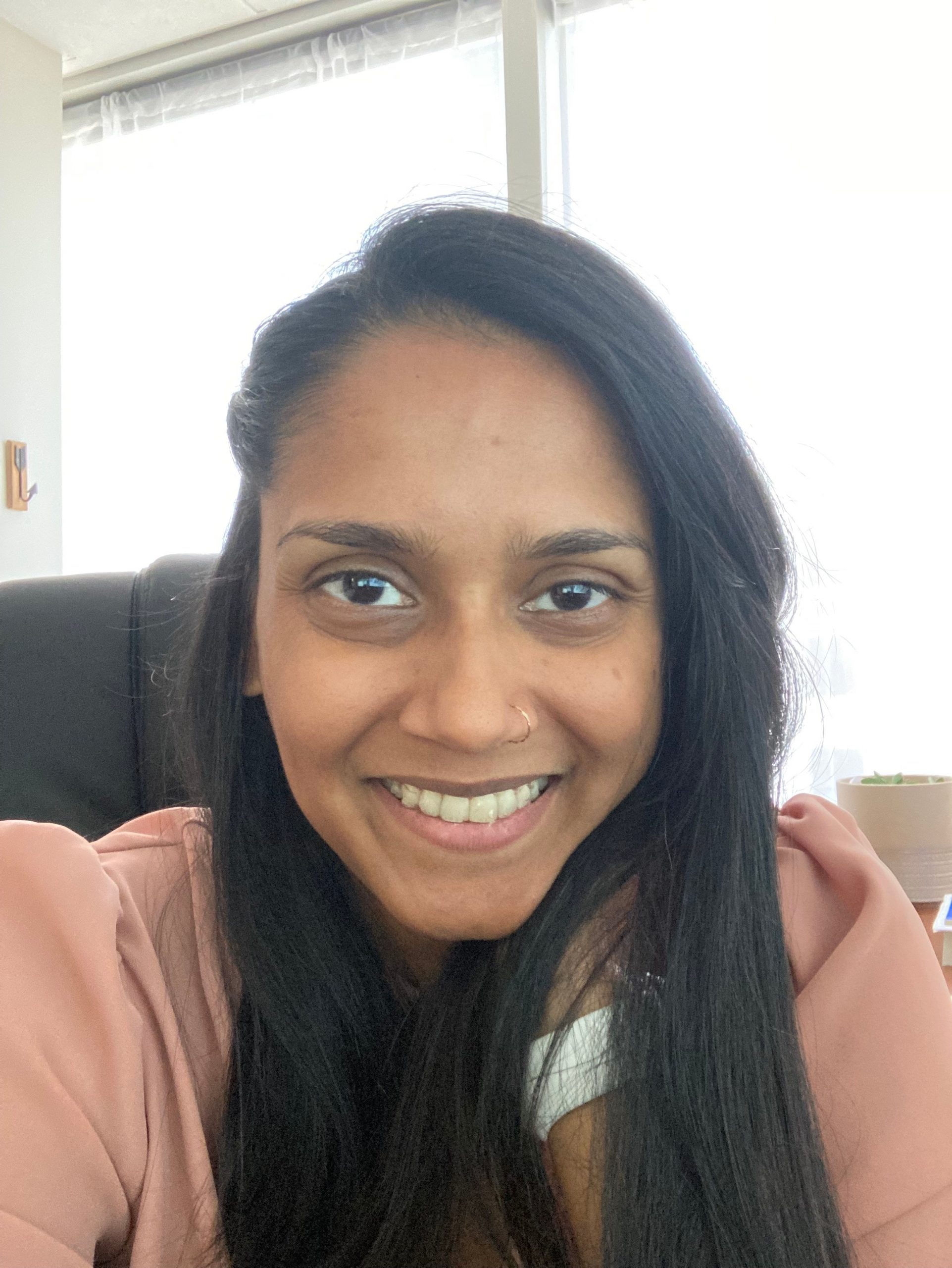
Today we’d like to introduce you to Dini Maharaj.
Hi Dini, so excited to have you on the platform. So before we get into questions about your work life, maybe you can bring our readers up to speed on your story and how you got to where you are today.
When I was in kindergarten, I had an art teacher. She had long gray hair that she braided and wore big round glasses. She had a calming vibe and no expectations from any of the small artists that filled her classroom. The only objective was to create. One day, I walked into the classroom and saw a picture on an easel. It looked like a weird lady that didn’t look like a real lady. The colors were green and purple with a wide array of shapes – circles, diamonds, stripes, dots, and lines.
We all took our seats and waited for an explanation as to why this image sat in front of our class. Calmly, my art teacher – whose name I never really knew – began to pass out sheets of paper and crayons. She told us to draw the image that sat on the easel. I looked at this image and decided I did not want to draw an ugly lady surrounded by weird shapes. But I was an immigrant child, so I did what my elders said.
I took the green crayon and drew a circle. I added curved horizontal lines above it and then two additional small circles. Then, I grabbed my purple crayon and started drawing a face that appeared to be the reflection. Half of her reflected face was purple while the other half was black. The forehead was red with some hints of blue on top.
The woman’s face was a light pink hue and she had blonde hair. Her hand lay horizontally across the picture, reaching to touch the mirror. I completed the rest of the drawing by adding the yellow diamond shapes in the background. And then I handed my drawing to my teacher. I could not be happier that it was over with. Throughout my years of learning art, I realized that the picture I drew in kindergarten was Picasso’s Girl Before a Mirror. That art piece became very special and a symbol of my beginning as an artist.
Throughout middle, high school, and college I was the recipient of many trophies, medals, certificates, and scholarships. My work was displayed in community centers, government buildings, and museums. I would love to say that I continued creating every day or even every month. But I did not. I took long breaks and even years off from creating. Between finding my career and giving my all to move up the corporate ladder, I sacrificed creating. It wasn’t until COVID hit that I found myself, along with everyone else, trying to prioritize my happiness.
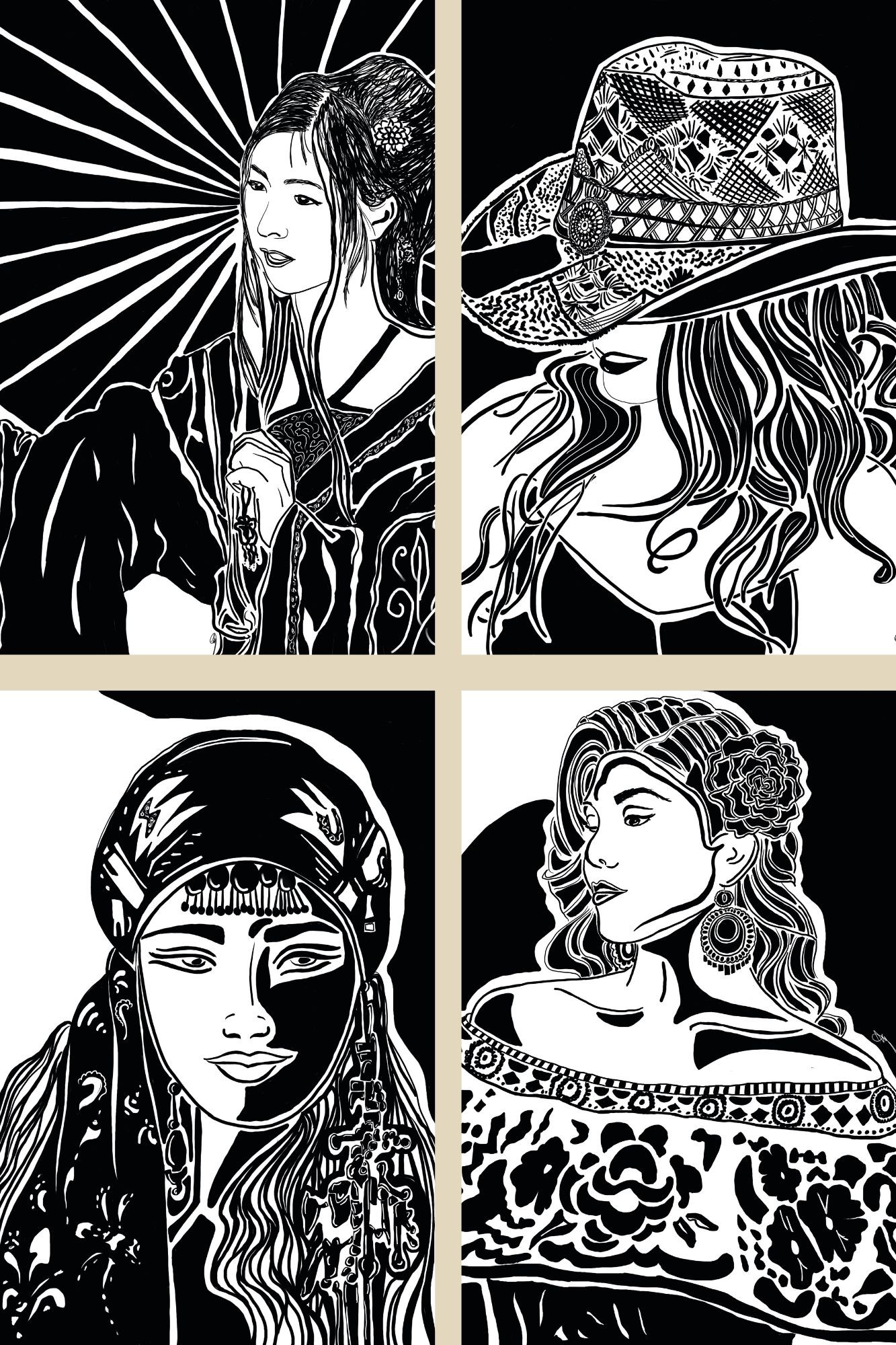
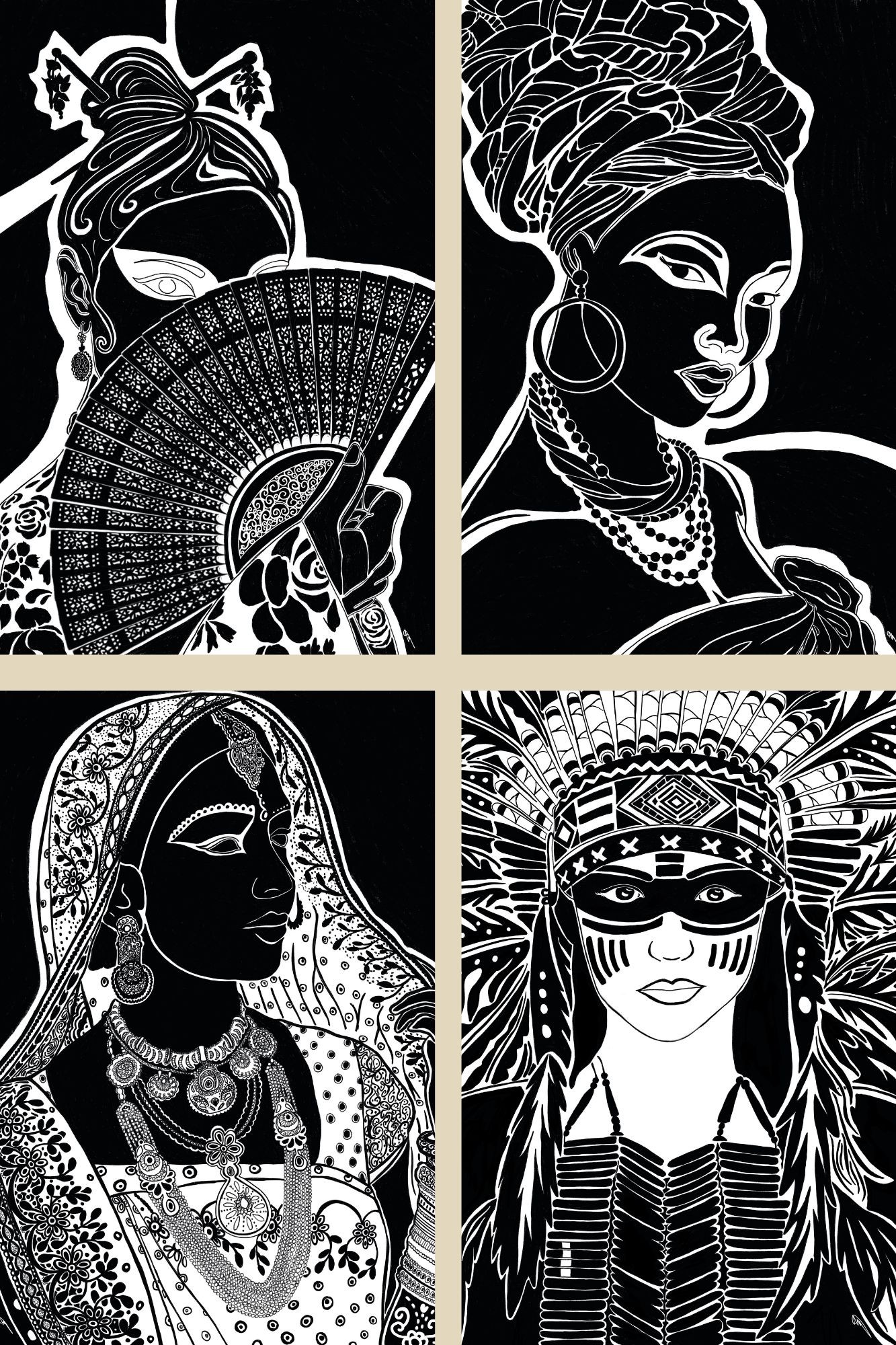
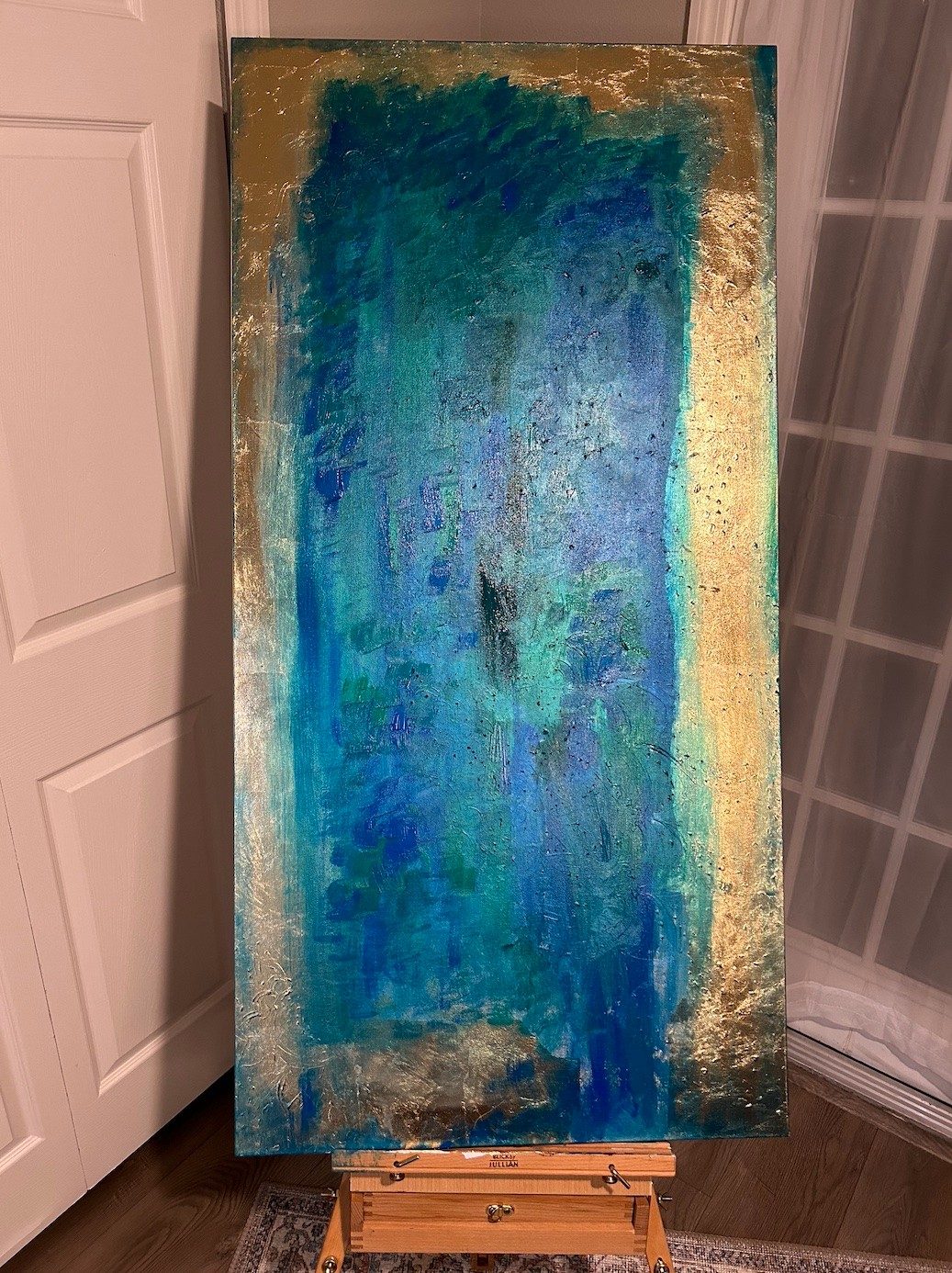
Unsurprisingly, this led me back to art. I started painting more consistently. From there, I started entering my art pieces in different exhibitions, entering art contests, and creating different types of art pieces – from digital, block prints, gold leaf, mixed mediums, oils, acrylics, and more. I enjoyed the changes and challenges of learning a new technique for expressing myself. My art had changed all these years later.
The biggest change, though, was me. I changed the way I saw my art. I started believing I could be more than an artist who hid away from the world. I could be an artist who shared my expression of the world with others. And this is what started my small art business, Simply Intricate Art.
I’m sure it wasn’t obstacle-free, but would you say the journey has been fairly smooth so far?
No. It has not been a smooth ride. My biggest struggle is social media. Between an algorithm, the magnitude of artists, and keeping up with the latest trends, social media upkeep is a full-time job. I love creating art. I do not like creating social media content. But in today’s world, it seems impossible to get a business going without social media.
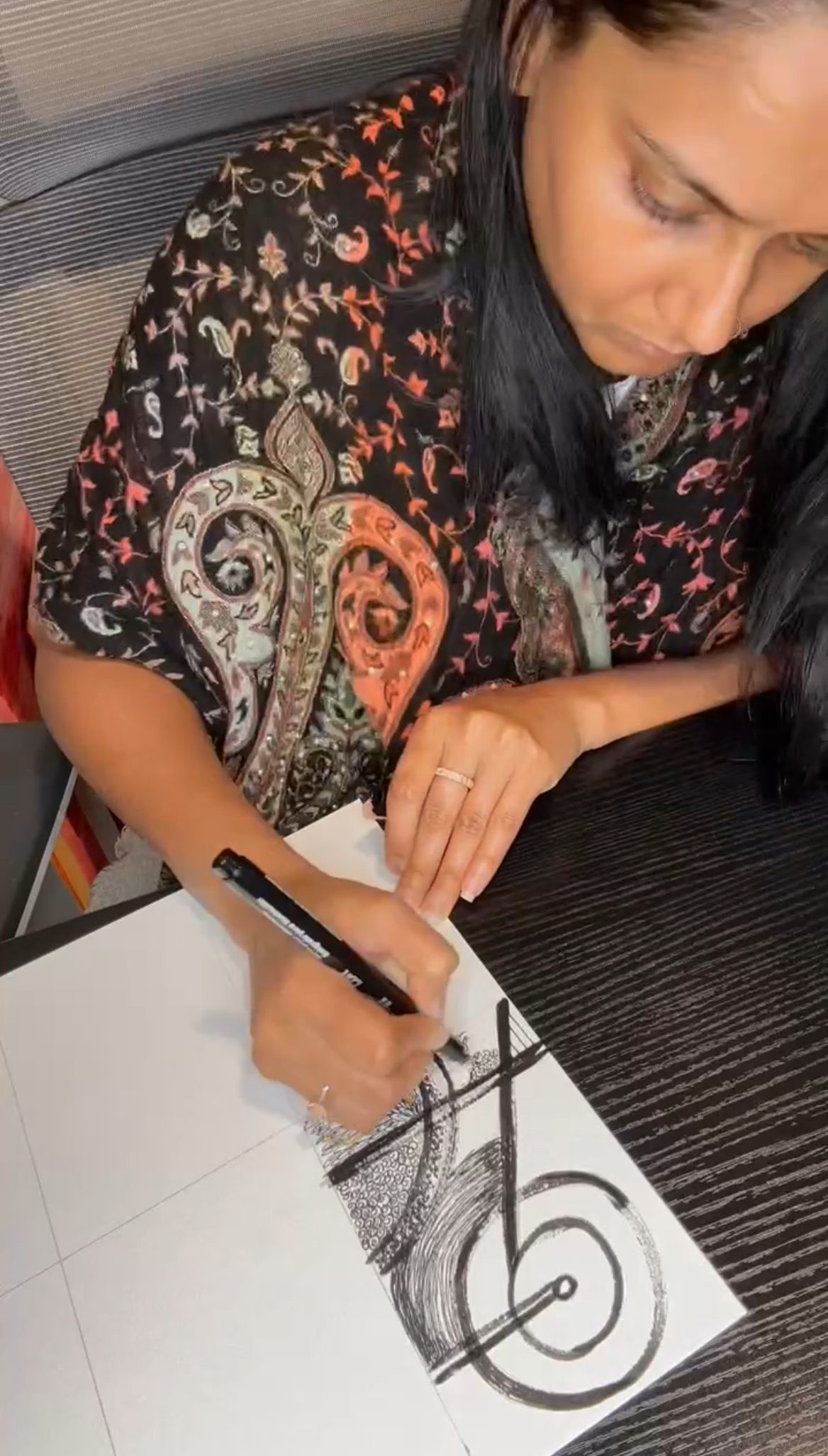
Currently, I have an account on Instagram, TikTok, and Facebook. I consistently post on Instagram, which pushes out to Facebook. I have a social media calendar that allows me to plan my posts for months at a time. In addition to the planned posts, I create original content as I create new pieces. I post those reels to Instagram and TikTok. I do not create art anymore without recording the process in some form.
I spend hours researching and creating social media content. Every day, I search for tips and tricks to encourage people to engage in my posts. The whole endeavor is exhausting! I am not the only artist trying to obtain success through social media. Because of this, I am but one tiny voice. By the end of the day, I don’t have the energy to sit down and create new art pieces. For this reason, this is the biggest struggle – not being able to create because it seems, all my time revolves around trying to help build my business.
Appreciate you sharing that. What else should we know about what you do?
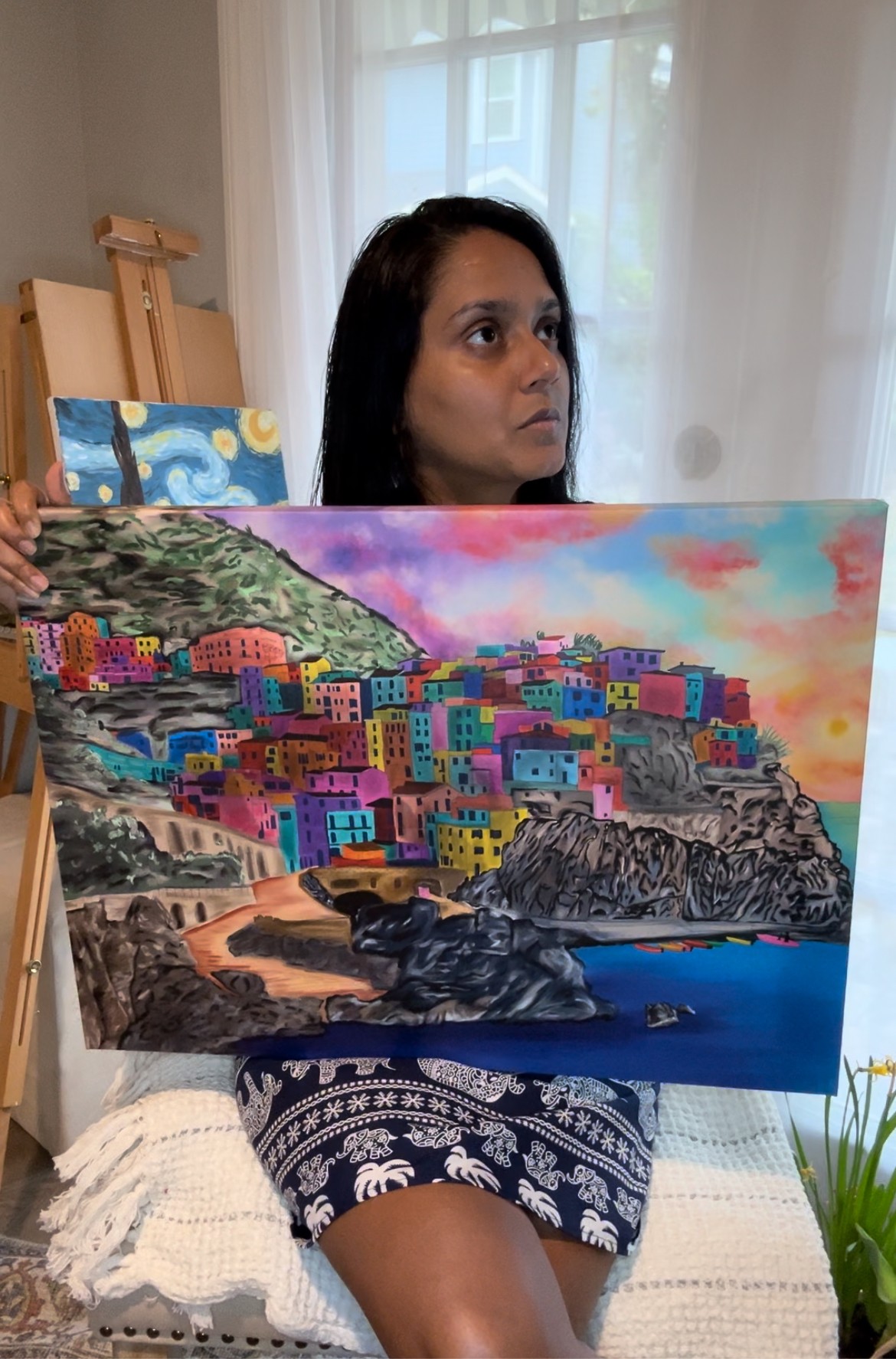
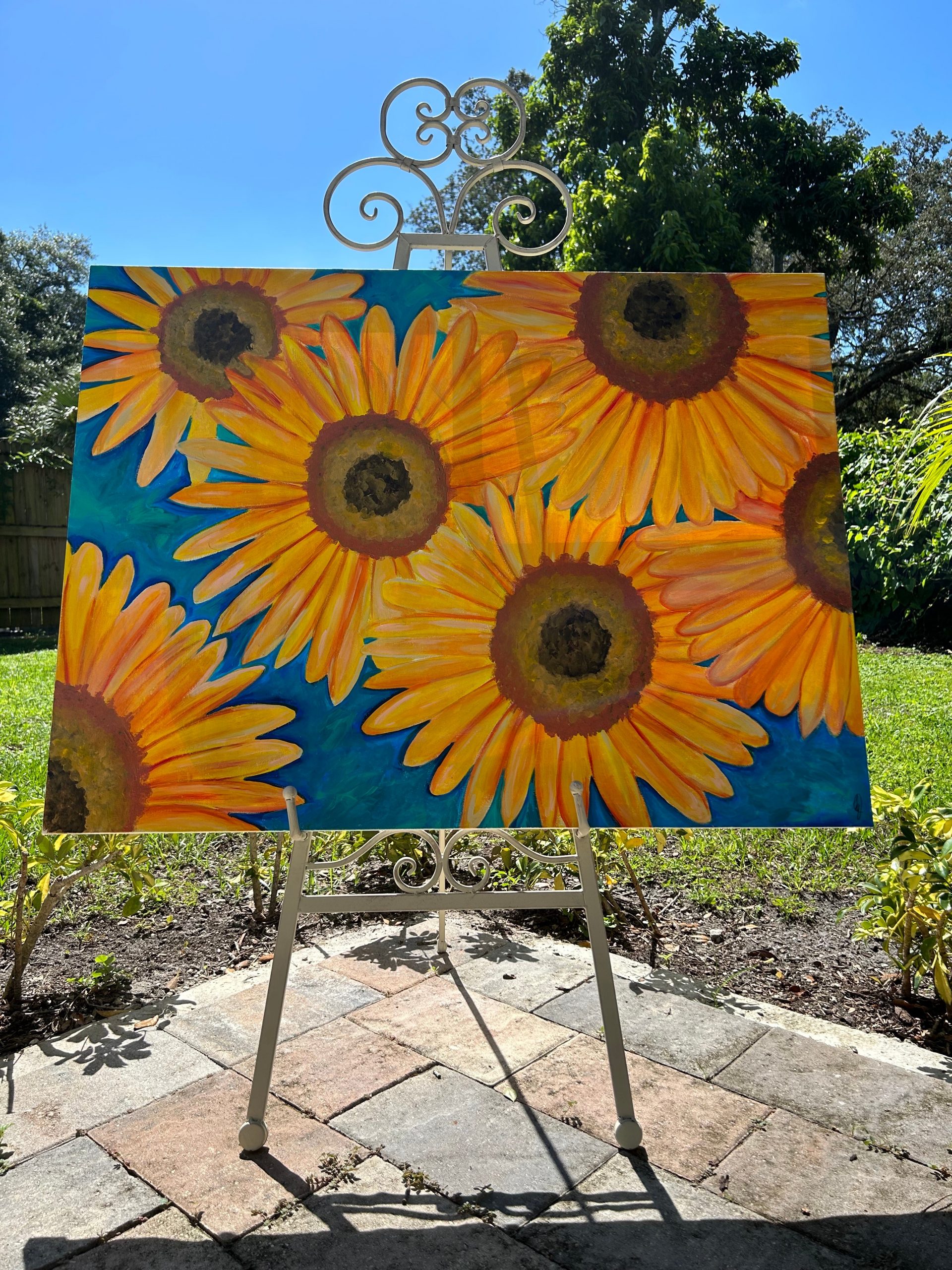
The short answer is that I create art. The longer answer is I express myself – my feelings, thoughts, intellect, and moments – through visual means. I use a series of different mediums from acrylics, oils, block print, mixed mediums, gold leaf, pens, inks, etc. I also use natural elements, for example, I use ocean water from the beach to create watercolor pieces. My beach days are very different from the average beach day.
When I have a beach day, I pack watercolor paints, paper, and paintbrushes. I soak the paper in the ocean water and allow the watercolors to dance on the paper. Later on, I add details with Indian oils. The results are unique and beautiful. I also use coffee – pouring coffee directly on paper – to create unique pieces. Techniques like using salt water and coffee allow each piece to live in the moment. I never know how these pieces will end up and that, to me, is the exciting part.
The arguably most important part of creating art is displaying your pieces. I create reels and post them on social media. But the other unique thing that I do is create an online exhibition. I create online museums that display my art and describe each piece. Currently, one room is dedicated to a collection called, Expressions. This collection was a series of oil paintings that I painted to help heal myself after a rough breakup.
I also update my blog frequently. I write blog posts about the meaning behind art pieces, branding topics, art talks, and personal stories. Each topic allows me to share what I’ve learned and the struggles I’ve had while being a small business artist. I love creating art and talking about art. I love displaying my art at coffee shops, museums, and online. I love writing about it and teaching it. I create detailed art videos on how to paint. My latest video teaches people how to paint Starry Night.
As an artist, I don’t stop with just painting. I write about art, create with as many different mediums as possible, make training videos, create online exhibits, display art locally and in fairs, and so much more. Art has found a way into every part of my life and I have found a way to spread my art in every possible way!
How do you think about luck?
I don’t know if I have lady luck on my side. What I do have is true grit. I have this tunnel vision and drive to create and explore every avenue to get my art seen. I often write emails to multiple businesses and ask if they would be interested in working with me. I write hundreds of these emails. Sometimes I get a response and then sometimes I get the opportunity to display my art at local coffee shops and smaller businesses.
Every potential opportunity I see, I take it. Even if this means that I have to create the opportunity myself. My drive has made other companies successful and now I find myself wanting to use that drive for myself and for my art successful.
Pricing:
- Original one-of-a-kind ranges from $200 – $1200
- Prints (canvas) range from $80 – $160
- Block prints range from $25-$20
- Digital downloads range from $3-$8
Contact Info:
- Website: https://payhip.com/SimplyIntricateArt
- Instagram: https://www.instagram.com/simplyintricateart/
- Facebook: https://www.facebook.com/profile.php?id=100094969945398
- Other: https://simplyintricateart.wordpress.com/