



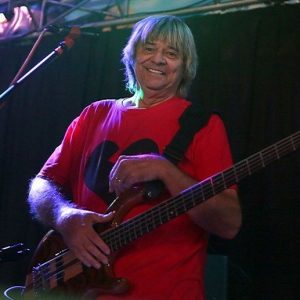
 Today we’d like to introduce you to Charlie Souza.
Hi Charlie, we’d love for you to start by introducing yourself.
Hi, VT! First, thank you for having me. I’m using a couple of chapters from my book to help your writers with content to answer your questions.
These chapter snippets should answer your interview questions fully. I’ll begin with an article I published in my book, that was published first by the Tampa Bay Times.
It’s written as follows:
Last week, nearly 13,000 people voted online to pick a city song for St. Petersburg. With 5,553 votes (about 43 percent), Charlie Souza of North Redington Beach was the winner. His tune, Carry Me Back to St. Petersburg, beat out two other finalists. Souza wrote the song, which he performed with his band the New Tropics, years ago.
It’s about his own experience as a local boy who ran off to Hollywood in his 20s and returned home years later after a frightening experience with an earthquake. Souza is no stranger to music. He has worked with Tom Petty and others. In the 1960s, he and his band became one of the first Tampa Bay area groups to make it big, winning the International Battle of the Bands. He’s currently touring with the New Rascals. Souza, who was to perform the song Saturday at Ribfest in Vinoy Park, chatted with the St. Petersburg Times about his life and anthem for the Tampa Bay area.
What’s the story of you and St. Petersburg? I was born on MacDill Air Force base. I came to St. Pete a lot. I was a senior when I joined a band, the Tropics. I moved to St. Pete as soon as I got out of high school. The Tropics were pretty popular. We played at a place called the Surfer’s Club on Madeira Beach. I lived in several places in St. Petersburg. It’s just home to me. Even being in Los Angeles for 20-plus years, I felt like an alien. Not enough pelicans for me.
Why did you decide to enter the contest? I didn’t know about it till my wife showed me the paper. She said, “Read this.” Mind you, this was three days before the deadline to enter the contest. I quickly filled out the application. And I made the top three and I was floored. I was hoping to win, and, by golly, I did.
How did you get the idea for the song? About 15 years ago was the Northridge earthquake. It scared me so much that all I wanted to do was come back to St. Petersburg. The white sandy beaches, the pelicans… I missed that. That emotion went into the song.
How does it feel for it to be the city’s song? It’s like the reward for everything. I moved home, I love the place, I wrote a song about it and now they want to use it for the city. Now I know I’m home. I feel like I’ve won a million dollars.
What’s the best part of St. Petersburg? The worst part? I think the best part is all the water that surrounds it. There’s always something going on, always an event. There’s just a happy vibe about the town. It’s the Sunshine City. This is just a beautiful, beautiful city. I still play with my band down at the Pier sometimes because I just love the view. I don’t see any negatives. You don’t realize how nice it is until you’re here. I took it with me to Hollywood and held it with me.
What do you hope happens next with the song? Have you heard anyone humming the tune? Not yet. It’s too new. I’m looking forward to playing it around home. I sure hope there will be some events where the city will use it, though. Maybe some advertisement for tourism and hearing my little song in the background. That’s going to be cool.
Kameel Stanley, Times Staff Writer City song – To hear, Carry Me Back to St. Petersburg, visit charliesouza.com. The song is also available for download at iTunes and Amazon.com.
Read the full story at http://LiveYourDreamBook.com.
Listen to St Pete Music City Radio Show on Tuesdays at 4 pm EST 1 pm PST 10 pm London.
I’m sure it wasn’t obstacle-free, but would you say the journey has been fairly smooth so far?
My journey was anything but smooth but music smoothed it out in the years to come. Here’s some of the roots of my story.
Daddy bought us a house in Port Tampa. Mama’s days were spent around the house and we kids played in the neighborhood. My father, however, would hit the American Legion Post 138 quite often. Weekends occasionally found us singing around the piano as Mama played and sang like an angel. Sometimes she would play the ukulele.
Music struck a chord with me at an early age in this classic small town. Mama and Daddy surprised me on my fourth birthday celebration with four flaming candles on a small square cake. My mother’s voice was heavenly and amazing to hear as she sang Happy Birthday to me. That was the very first time I remember hearing music and feeling the love only music can convey. I was enchanted and hooked on music from then on!
My parents’ relationship became strained when Daddy was diagnosed with cancer of the larynx. The combination of alcohol and nicotine deteriorated his health and their marriage. He became abusive and distant. A laryngectomy ended his career with the Air Force—and his ability to express his feelings. His anger, resentment, and rage were released physically towards the family, which unavoidably led to their separation.
My father disappeared and I wasn’t clear on where he went until months later when he returned for a few days with his larynx removed by doctors at Walter Reed Army Medical Center in Washington, D.C. His speech was a whisper and he had a rubber tube-looking contraption that he held up to the hole in his throat as he sang Popeye the Sailor Man. I was shocked right out of my brain with the sound and am still haunted by it to this day. That is one of the last times I remember seeing my father.
About a year later, by fate, he drove by the corner up the street while I was on my way to V.T. Clark’s store to pick up cigarettes for my mother. He spotted me from his car and had his girlfriend in the front seat. I was walking around the corner. He stopped the car and called out to me on the sidewalk, handed me fifty cents for myself and fifty cents for my sister Ruthie, and then sped off. I was seven then and that was the last time I saw him until I was 25!
My parents’ separation in 1956 brought tough times to Mama as her health began to decline in the wake of an unknown neuromuscular disease. Daddy left Florida and moved to Massachusetts, communicating infrequently with only an occasional birthday card and some spending money for us kids every couple of years around Christmas. Mama was left with raising us until my older sister, Sylvia, was old enough to work.
Sylvia’s job as an operator at the General Telephone Company in downtown Tampa helped the family become a little better-taken care of, especially at Christmas when she made sure there were gifts under the tree for both Ruthie and me. I was learning life’s lessons about growing up without a father at an early age. We were poor—real poor—and my mother sometimes accepted boxes of food from the local church and borrowed money from Uncle Charlie.
A single mother again, Mama still managed to bring some brightness to her children with her light wit and good humor. However, there were many times when she felt emotionally down and often brought to tears by the realities of poor health and being alone in the world. There were many nights when supper meant tuna fish on toast and the big Sunday dinners would sometimes find fried chicken on the table.
I knew and lived with grief very early in life while growing up with an absent father. The feeling of sadness was ever-present. Relief came with visits by Mama’s brother, Charles Harrison, and my Uncle Charlie. He was the only man in my life that I had as a male role model. He’d bring his kids, my cousins Mary, Chuck, and Bea, maybe once a month with their musical instruments and sing-along songs. We made hand-cranked ice cream on lazy Sunday afternoons. It was the most fun time I had as a kid, and I would always want to show Uncle Charlie some of what I had been doing as he always seemed to care about me.
A family favorite song was the standard I’ll Be Seeing You Sung by Uncle Charlie. He had a great big voice and I always loved hearing him sing. The Harrisons lived in Titusville, but they would drive to Port Tampa on occasion. Although our families lived miles away from each other, we were very close in a loving and supportive way. We always had music around. It’s part of the family. It’s in the blood!
Our life as a family on Fitzgerald Street was at that point about living hand to mouth, but Mama, Sylvia, Ruthie, and I became very close as Sylvia worked to support us. I played basketball at the playground with Ruthie. Spelling out the letters, H-O-R-S-E, she kept me honest for not sneaking a shot, while teaching me to spell most subtly.
At six years old, I attended my first day of school escorted by my mother to first grade at Westshore Elementary. This red brick schoolhouse was where, in the following years, I was soon to become very popular with all the young school girls and also began playing the clarinet by the third grade while Ruthie took up the violin.
They crowned me a King in the fifth grade and made me a band leader in the sixth grade as Mr. Interlocutor, the leader of the minstrel shows in the school pageant. School music programs were very alive back then.
Ruthie & Charles. Mr. Interlocutor.
Being popular in the sixth grade, my classmates voted me to be Patrol Captain—not a popularity contest, but rather a serious position given to the more responsible students. I didn’t check in with the teacher in a timely fashion so he made me the Sergeant of the School Patrol and gave the captain’s badge to a more studious kid who wasn’t quite as popular as me. My cousin Chuck still teases me about that to this day!
As my mother’s health continued to decline, a family friend drove Mama out to the MacDill Air Force Base hospital for doctor appointments in her 1956 Studebaker, and I would tag along, too. I’d stand up in the back seat of the car on the way to the hospital and listen to the big bass speakers in awe of the bass sounds pumping out of the speakers from Elvis, Dean Martin, and Sinatra. My mother was a gentle soul and playfully protective of us children. We were told not to cross the highway without an escort. I remember Mama hiding behind a tree by the big road at Interbay Boulevard one day when I was on my way home from the Tuckers’ house, friends of the family. When I was standing at the curb waiting to cross, she was silently watching over me—and jumped out from behind a tree to surprise me.
While Mama was somehow putting dinner on the table, she broke the monotony by playing some great music on the piano in songs like Clair de Lune.
She was good at keeping smiles on our faces and at cooking a gourmet meal out of beef chips and toast. Mama taught me how to play Chopsticks at an early age, sharing her passion and passing on to me her love for music. Music to me meant hope when I was young. We didn’t have much when I was growing up but we had music—and Mama made sure of that!
The school orchestra, I’m on the far left in front with the clarinet Sylvia gave me.
As a 10-year-old kid, I’d ride my bike around the neighborhood and go down to the docks in Port Tampa to visit the ships from other countries, which is where I tried raw squid with a Chinese crew.
At age 11, I sold newspapers at MacDill which is now the headquarters for the war on terror. That is where I learned to shoot pool. Learning how to gamble with the soldiers, I traded my newspaper money for a few lessons in billiards during the time I was selling papers. Learning quickly that entertaining people gave me a feeling of satisfaction, I kept the men stationed there amused by pitching the papers with my Donald Duck voice. I would end up back at the base commissary for the ride home but not before I had spent most of my money on the jukebox and playing pinball.
My boss, “the paper lady” Joan, would pick us boys up in her ‘52 Chevy and drive us out to our routes on the base. She had a stick in her hand while driving and would occasionally whack one of us if we were acting up. But I maintained my attention to the music coming out of the back speakers and there again, the bass was the prevalent instrument for me.
Fitzgerald Street was a small, quiet, brick-paved road, lined with unique old two-story wooden houses. On the south side of the railroad tracks, crossing Westshore and just south of Interbay Boulevard, stood the Souzas’ modest home. With my friends, Kenny Foote and Vernon Clark, I played baseball in the field next to the Catholic church on the next block down from the elementary school. Sometimes the ball got fouled off through one of the beautiful stained-glass windows. We lost the baseball we were using, and I’m sure that someone inside the church on Sunday took it home with them. It happened more than once until we noticed a protective screen was installed.
Just about every kid in the neighborhood had to be home before supper in the evening. One Saturday, I had to stay inside to do chores and was given a major life lesson in the face of tragedy in my own home that day. What happened turned my world upside down.
Less than two months after my 13th birthday, while cleaning up my room with the radio blasting, I was unaware of the commotion going on upstairs. One of the neighborhood kids, Sammy, came for a visit. On a customary Saturday, he would stop by to see if I could come out and play. Mama was taking a nap upstairs so I told Sammy I couldn’t go out because I had to clean my room. He asked, “Can I go up and ask your mother if you can?” Of course, I said “Yes” and continued to run the vacuum cleaner in my little room under the stairs as Sammy climbed the stairs and went up. I thought nothing of it at the time, but it ended up being one of the biggest mistakes in my life. Sammy found my mother in the upstairs bedroom where he attacked her, physically knocking her down to the floor. Being in a weakened state due to her prolonged ill health, she was unable to fight back when Sammy beat her and stabbed her repeatedly with a knife, leaving bloody footprints as he disappeared out the upstairs window, down a tree next to the house, and up the back alley to his home just down the street.
I heard a thump while cleaning my room and ran upstairs only to discover my mother lying on the floor in a pool of blood next to her bed. I was shocked by this horrific sight and didn’t know what to do. All I could think of was pulling her robe over her to cover her half-nude body. She was only asleep I thought, but she wasn’t answering me. Then I realized my mother was dead! Right then, the phone rang. It was my sister Ruthie calling. I frantically shouted, “Mama’s dead, Mama’s dead!” She thought I was kidding for a moment, asked a few questions, which I was unable to answer, and then after a few short words, we hung up. This event was all so very shocking to me and traumatized me my entire life until I finally sought counseling in my 50s. Writing about it even now seems to help, but I will never forget it, never!
All I can remember is running down the stairs, outside to the backyard screaming, “Mama’s dead, Mama’s dead!” I found my friend Vernon in his backyard behind our house, feeding the family parakeets which were in two large outdoor cages. His dad used to sell parakeets at their store, V.T. Clark’s General Merchandise. Vernon went into his house and got his father. V.T. was a large man with a serious look, but when I escorted him into our house, up the stairs, and into my mother’s bedroom, the look on his face turned even more serious. I distinctly remember him exclaiming, “Oh my God!”—and he immediately told me to come with him. At that point, I remember being ushered across the street and into a neighbor’s front room where I waited for a while.
When I was finally taken out and accompanied across the street to our front yard, there were people everywhere, gathered in awe and disbelief of what had happened. Police cars were parked out front and one of the officers took me up on the front porch and questioned me. He asked me about some details which I really couldn’t cope with. It seemed to me as if they suspected I had done this horrible crime. One of the questions was if I knew anyone who wore basketball shoes. My answer was, “Yes, Sammy.”
As I came back out to the front yard, Sammy was lying on the ground, his head down, covering his face with his arms with all of the other people standing around watching the activities. Much later, it seemed my mind just shut down completely, and after a long period that was blurred, we all learned who the murderer was. It was Sammy. The detectives had discovered his bloody clothes buried in his garage down the alley where he lived. It was also discovered that he had used a small pocket knife to do the stabbing.
Life was confusing and all sense of normalcy was gone. In a state of disillusionment, pain, and heavy grief, I woke up from this nightmare in a small room of my sister Sylvia’s house in Lakeland, where her husband had recently gotten a job through a distant relative. The home was partially surrounded by an orange grove which became a refuge for me during these times. Above the sound of Sylvia’s crying and moaning in distress, I remember hearing music. She played a particular album constantly, day in and day out. The music we were listening to was a gospel album by Elvis Presley, and one of the songs was burnt into my brain, a memory I will keep until I see my mother again in the hereafter. It was the song How Great Thou Art.
Mama was laid to rest at Lakeland Memorial Cemetery. However, at the time it was something I wanted to block from my memory, so I didn’t even know where her grave was, until years later.
Shortly after that, in the eighteen or so months to follow, while still traumatized and grieving the loss of my mother, I was sexually molested by a person close to me—my legal guardian and new brother-in-law. While living with Sylvia and her husband (who, when I was a paperboy at MacDill, had pressured me to introduce him to her when he found out I had an older sister), I lovingly helped watch over my two nieces, Sheila and Beverly. But, during this time, with no regard to what I had just experienced, I was forced to have to deal with being manipulated into situations that were scary and demeaning, and all the while were kept secret from my sisters and other family members. I would be cornered when no one was around and forced into humiliating acts with him. This was certain sexual abuse! These unthinkable, reoccurring experiences gave me such low self-esteem that I never thought I would make it out of the pain that lived inside me for many years to come.
As an eighth-grader at Lakeland Jr. High School, I can remember some special times, though. Anything that would raise my spirits, like a simple boomerang that I learned to throw in the schoolyard across the highway, brought some happiness because it always came back to me. Also, once during Phys-Ed, while running around Lake Wire behind the school, I threw some rocks at the ducks. Unfortunately, I was reprimanded by one of my teachers and Coach Mullin. It was then that I had to make a definite “attitude adjustment.”
I was on the varsity basketball team that year with a new friend, none other than Lakeland’s Johnny Rhodes. We were good friends and enjoyed playing basketball practice and games together. On game day at school, all of us on the team wore a black tie, white shirt, and our satin Lakeland Hornets jacket. Johnny eventually went on to become a drummer in a well-known band back then, Power, with Danny Roberts (who I’ll talk more about later).
Eventually, I wound up going to live with my Uncle Charlie and his wife, Jewel (who I then realized was an alcoholic), in Titusville for a brief period—maybe only for a few weeks. I don’t remember things very well during this time of grief accompanied by abuse. But I distinctly remember Uncle Charlie asking me if I needed any smokes when he first picked me up in his car. That took me by surprise! Then I knew it must be okay or semi-cool to smoke; after all, I’d already been sneaking cigarettes for a couple of years.
Not too long after, Sylvia and her family moved back to Port Tampa, where I went to live with them again. The secret remained as the trapping, cornering, and molestation continued. I told Sylvia I could not live with them anymore. At that point, during my sophomore year in high school, right after President Kennedy was assassinated, I found a great friend and buddy, Tim Cleary. After telling him what was happening at home, he said to come and stay with him and his family at MacDill. He said one more kid in his family of twelve wouldn’t matter. I earned my keep on the paper route with him. I didn’t know it then, but he saved my life.
Tim’s mom (“Maw” as they called her) permitted him to bring me home, and they put me on an upper bunk bed in the boys’ room with Tim, Tom, Terry, and Mark. The other six siblings were distributed throughout the barracks like a military apartment building on Bridges Loop. Each morning Tim, Terry, and I would get up at 4:00 to deliver the Tampa Times to the barracks and hospital on the base. Maw Cleary taught me how to drive a stick shift in their Rambler station wagon.
Tim, Tom, Ted, Terry, and I would play ball and ride bikes together. As boys in their early teenage years, we played games and talked “down home southern folk” to each other. We used colloquialisms like: “Thay man, whadup wich you? How you be?” This was a strong put-on, southern drawl that Tim picked up from his Uncle Marvin who often said: “I may be crazy, but I am not crazy over you for which I am thankful”. And when he was ticked off, “I am browned out in full, if not in part!” We used to say these things all the time to each other. We thought it was hilarious!
Music continued to be a major influence and escape from all my bad experiences in my life and served as an avenue for hope and escape. I joined the Robinson High School marching band, playing clarinet. I also had my first guitar, a used and battered six-string I had bought in Lakeland, and I learned to play bar chords by tuning the strings differently. Folk music was ringing in the school halls and on street corners – and “the times they were a-changin’.” I strummed Peter, Paul & Mary, and the Kingston Trio on the guitar and learned how to play with songs like Blowin’ in the Wind.
One afternoon Tim and I heard the Beatles for the first time on the radio. The song was I Want to Hold Your Hand. I knew right then where my life was headed. Tim and I went down to the Teen Center and started a band with the manager’s son, Paul, on drums and John Doughty on guitar. The Coachmen band was born! —though I think we only played one paying gig. I was destined to be in a band because the music made me feel good and that made me feel good about myself!
The seeds that gave me the dream of making music were planted—and I so wanted and needed to make that dream come true. Soon, I would be asked to play bass guitar with my first very successful band, The Tropics!
Alright, so let’s switch gears a bit and talk business. What should we know about your work?
My bio reads:
Charlie Souza toured, recorded and performed with Tom Petty, Gregg Allman, Fred Willard, Bill Champlin, Michel Colombier, New Cactus Band, Robin Trower’s drummer Bill Lordan, The New RASCALS featuring Rock and Roll Hall of Fame’s Dino Danelli & Gene Cornish with Bill Pascali of Vanilla Fudge, Gospel Artist Leon Patillo and began his career with Florida Music Hall of Fame Nominees the Tropics with Guitarist Eric Turner.
Souza has authored a Rock and Roll autobiography “Live Your Dream” and a local history book “Tampa Bay Music Roots” http://TampaBayMusicRoots.com
Is there anything else you’d like to share with our readers?
The music came alive in my dad’s first musical adventure. The Tropics were Florida’s best illustration of the beach garage pop music scene in the late ‘60s.
California had the bright sensibilities of the Beach Boys in all of their five-part harmony surf music glory, but Florida had a scene that was unique and all its own. And the greatest band to come out of that era was The Fabulous Tropics. There are some books out already with The Tropics story included, Florida’s Famous and Forgotten written by Kurt KOTO Curtis and The Heey Baby Days by Greg Haynes.
Here in his book, you’ll see some of the pictures from the album covers and newspaper articles. Groovy, man! I mean, did you see the stripes on those pants? And those boots—the haircuts?
Ah, the baby boomers—my favorite generation! Everyone who is a baby boomer has watched the band grow up in the spotlight. And grow up, indeed! Even though it took a lot longer to do that than some other generations, there isn’t a group more colorful and fuller of life. Music and love were the glue that held them together. Rebellion and revolution tore them apart. My dad was one of those guys on stage playing his heart out.
My father made a name for himself as a recording artist, musician, vocalist, entertainer, band leader, songwriter, and music producer. He has performed in the music business for more than forty years. The Tropics were quintessential in that time, but so much happened up to now. My dad’s success came with playing music, recording, performing live, singing, and playing several instruments including bass guitar, piano, guitar, and sax. He had songs released on Columbia Records, Atlantic, Polydor, Fantasy Records, Capricorn, Laurie Records in New York, Phoenix Records in Europe, and now as an independent publisher with Souzaphone Records.
It wasn’t all glamorous like they say. I remember watching my dad’s band, Fortress, lay down tracks for twelve hours in a Hollywood studio for an album they were working on. Perfection? No! That’s just the way the business goes. These guys work hard at what they do. People see the band up on stage, playing music, laughing, singing, and dancing around. Looks like a dream job but it’s not as easy as it looks. It takes talent, skill, professionalism, and intentionality—not only to write the songs but also to play them on stage, create the choreography and stage show around the music and make it entertaining for the audience.
Sure, it’s in the blood. I’ve been playing guitar all my life and was in and out of bands in my teens and twenties but every time I see my dad at a show, I always end up going back to school. You should’ve seen The Tropics do their thing! I was in awe at the reunion concert in ‘99 at the St. Petersburg Coliseum.
Throughout my dad’s career, I remember many times helping him push amps through the back halls of hotels and up the service elevators, loading my dad’s Datsun B210 station wagon in North Hollywood at three in the morning. We would drive home and be on the road for hours after packing up sweaty shirts and guitar chords, looking for some water in the dark of some cramped changing room backstage—coming home exhausted.
My dad has a passion for his music. He writes and records on some eight-track system at home and then shows me some cool things he did with the guitar on a song, the layers of instruments, and drum tracks. The finished product is some melodic and rhythmic energy that comes from the soul. It’s solid, timeless—and very good.
But who is the man behind the music? Every kid who was born had a mom and dad, so we begin at the beginning. To dig into my dad’s life, we must start with his mom and dad and talk about the music that carried him through to now. He’s had a wild ride! Get ready for a truly creative journey!
—Charles Jesse “Chip” Souza, Jr. LiveYourDreamBook.com
Contact Info:
- Website: http://charliesouza.com
- Facebook: https://www.facebook.com/CharlieJSouza
- Linkedin: https://www.linkedin.com/in/charlesjsouza/
- Twitter: https://twitter.com/charliesouza
- Youtube: https://www.youtube.com/charliesouza/videos
- SoundCloud: https://soundcloud.com/charlie-souza-band
- Other: https://en.wikipedia.org/wiki/Charlie_Souza