



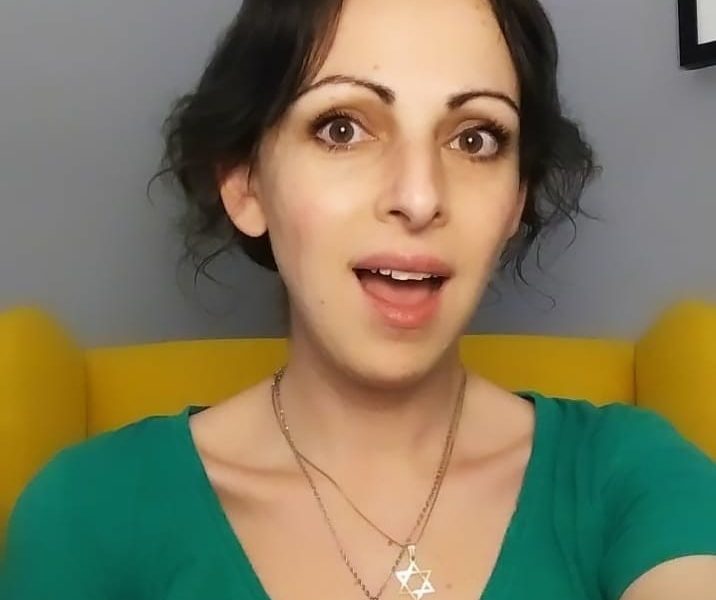
Today we’d like to introduce you to Koura Linda.
Hi Koura, we’re thrilled to have a chance to learn your story today. So, before we get into specifics, maybe you can briefly walk us through how you got to where you are today.
I first got curious about the world of film when a friend had worked as a PA and was telling me about all the different things she got to do on set. I was not familiar with anything in the film industry and had never even thought about what when into the whole process of making movies or just A/V properties at all (commercials, T.V. shows, etc).
A few summers later I had the opportunity to work as a PA myself and fell in love with it! Over the years I would work as a PA around a few different projects, then I started working in Event Production (for live shows and events).
About 5 years later I got to work with a renowned Art Director in Los Angeles and spent that summer working with her and her team, which lead to the next 10 summers working with her, and deciding that I more than anything was the line of work I wanted to get into.
I started in Art Dept mostly in Set Construction, and through that became a certified Set Rigger. From there I started working with Grip & Electric, rigging lights and getting into Lighting Design, I learned a little bit about Camera, and worked as a Stagehand, Stage Manager, and Spotlight Op, and even got into a little bit of live sound mixing and on-set audio recording. I ended up traveling helping to build stages up and down the West Coast.
There was nothing I didn’t love and wanted to learn everything there was about everything I could. I did some apprenticeships with a make-up department, and even with wardrobe styling. I became an Event Producer myself, working with event planning and design, including budgeting and managing production teams.
Right as I was about to transition over into working in Film full-time, I ended up in the hospital. That is a bit of a long story, but the short version is that I spent most of that year either bed-bound or in a wheelchair, or in emergency rooms or hospitals.
About a year and a half later, I was rebuilding my life, and decided to go back to my roots in Art Department (specifically, Production Design).
I freelanced a bit, then in November 2013 I was starting on my first film project as a Producer/Production Designer, and started Space Dream Productions, named after an artist friend who I also had a huge crush on (though I loved the origin of his name – “Spaceship” by Sean Lennon). The song was inspiring to me and I used it as a base for the name of the company, plus I loved the idea of dreaming of space, shooting for the stars, and all of that.
The film was called “Two Soldiers” when it was started, and as it goes we hit many, many bumps along that road. Fast forward to May 2015 and we were on set, and I was married to Spaceship.
We ended up renaming the project “Names on The Wall” and it was released into festivals in 2016. At the first festival, it was accepted and we won “Best Drama: Short” and an award for excellence in filmmaking in a major genre. We were nominated for “Best Production Design” (which I would then be nominated for several times for many different projects but only won that award for the first time in November for our film “Look To The Sea”).
“Names on The Wall” went on to screen around the world, and won many more awards including “Best Director” “Best Short Film” “Best Actor” (for our lead actor, Brendan Healy), and “Best Original Score”.
Since that release in 2016, we have completed 27 other films, which have received over 110 award nominations, and taken home over 50 awards and special mentions.
In 2019 I was awarded the Mico Award for “Innovation, Courage, and Excellence in a Career in Film.”
As an artist through Joseph Gordon-Levitt’s hitRECord, I have been recognized as a contributing artist to multiple Emmy Nominations and 2 Emmy Wins.
In 2020 we formed Space Dream Productions into a full company (LLC), and I was working for the company part-time. By early 2021 I went full-time at Space Dream Productions as the head of the company officially,
We provide services to clients ranging from photography to film project consultation, development, production, post-production, podcast editing, graphic design and poster design, film editing, music composition – pretty much anything having anything to do with film or film production.
I also have a podcast called “Filmmaking (Actually)” where I share what I’ve learned over the years working in and around the film.
My husband is the Executive Vice President. My assistant works at the company full time, we have part-time admin staff, 3 interns, and a network of collaborators currently servicing our clients and working on our current film projects (multiple features and short films).
Day-to-day I oversee the running of the company and all the administrative aspects that entail overseeing all the staff and projects and everything that comes with running a small business,
On set, I work as either Director or Co-Director/Producer or Producer with Spaceship (my husband) as Director.
As the Producer of our projects I oversee the casting, work with the writers and the project development (or for some projects I am the writer or co-writer), option projects, design sets and create props (back to my Art Dept roots), work as Cinematographer or Camera Op with my husband.
Lately, we have done a few smaller projects for film challenges and as part of the challenge we (Spaceship & I) have worn all the “hats” on set – at times with me as an actress as well, with either 1 Production Assistant on set, or with 0 Production Assistants and just Spaceship and I doing everything, which has been both exhilarating and quite eye-opening!
Our short film “Gone Gray” won “Best Picture” at the Organization of Independent Filmmakers #Arise challenge earlier this year. As such it is now up for “Best Picture of the Year” out of 6 films from the year. Our lead actress who also won “Best Actress” in that film, and our other lead actress who won “Best Actress” from the #Jolt challenge (where our film “Look to The Sea” was nominated for “Best Picture”) – both actresses are up for “Best Actress of the Year” of the 6 nominated actresses. The winners will be announced at the year-end gala hosted by Full Sail University on Dec 2.
Our feature film screenplay “Nine Tenths of The Law” which I co-wrote is 1 of the 3 top scripts for the Silicone Valley International Film Festival. “Gone Gray” is also 1 of 20 selected films for that same festival.
I’m trying to think of other things to include here – my days are super full with lots of moving parts and I am just really thankful to work with the awesome people I get to work with and to make the art and tell the stories I get to tell while making a living as a businesswoman running an indie film production company.
It has been an insane amount of work, and it is full of a ton of challenges, but it is so worth it! I truly love it.
Can you talk to us a bit about the challenges and lessons you’ve learned along the way? Looking back would you say it’s been easy or smooth in retrospect?
The time I spent in the hospital left me with a physical disability that I have to manage working around. This makes me extra focused, and extra careful at planning and executing plans, as I have to be even extra careful to manage my time and resources.
I also took a bit of a non-traditional route, going from a Hollywood world into an Indie world, I never went to Film School (or College at all). Pretty much everything I have learned in Film has been through practical experience and very, very little theory.
Working in a professional world prior to getting into Film gave me a background in Marketing and Finance and Business Management, and I brought that with me to the company when setting it up and running it.
So I don’t approach Filmmaking the way most other Film School grads do. This might not seem like a challenge, but it means we don’t work the same way a lot of studios work, which can be a turn-off when networking at certain levels.
I have to let the work speak for itself and know that there is a method to my madness! But it would be way easier if we just conformed and focused on the page count of scripts and the number of rote filming locations and counting on name talent to carry a film without regard to the story or quality of production or any of the other sort of algorithmic methods of the Film Industry.
Sometimes I worry that sounds pretentious, but the truth of the matter is that Filmmaking does not need to be as hard or as complicated as it is, and we at Space Dream Productions really want to make it as straightforward, economical, equitable, and enjoyable as possible while telling impactful stories.
Can you tell our readers more about what you do and what you think sets you apart from others?
I am the President of an independent production company called Space Dream Productions.
I know being an independent filmmaker means different things to different people. For me, it means that my job is running Space Dream Productions and making movies.
There is a really bad reputation for indie film in that it is usually considered “unprofessional,” and I think that is a bit messed up because it shouldn’t be that way (and it is not always that way). I work through our company and through my podcast to try to share what I learn, set an example with our awesome team, and constantly learn and grow myself to be better and better at my craft. Sometimes it means failing forward. Sometimes it means huge success. But it always means not being afraid to try or to do the hard work involved with being a professional in this world. And it is a LOT of work!
Day-to-day, I run the company, and our staff, oversee our projects, ensure we’re delivering to our clients, and move our own projects forward. Running the company means making sure people are trained for their roles, established in what they are supposed to be doing, performing their jobs, have work to do, are following the strategy of the company (and coming up with strategies for the company with my partners), it means I oversee our marketing, make sure our clients are invoiced, and the invoices are paid, make sure collaborators are paid for their work, select festivals for submissions, coordinate festival strategies, pitch our projects, work with legal on contracts and funding and all that. To be clear, I don’t personally DO all of that, but as the head of the company, I am responsible for ensuring it gets done and managing it. And because we are a small business, I do a lot of it.
I originally started working in and around a film about 20 years ago, and have worked on the “Hollywood” side of things, and I value the artistic freedom in the independent spaces and know that indie films can be as awesomely made as the well-made Hollywood ones. There is this word on the street of indie films, “if I could just get funding!” But the truth of the matter is that money and name talent do not guarantee you anything. Big-name high-budget movies flop all the time. And no-name lower-budget projects become hits every year.
The budget and the name have nothing to do with why the film flopped or not. And as a filmmaker, I work to try to keep our films within parameters of things that hopefully will do well!
Look at “Everything, Everywhere, All At Once” – HUGE hit! No one expected that. This is weird because I would think if you read the script and saw how the film was being made it is kinda clear the film was going to do well. It is awesome! Then there are films like “Top Gun: Maverick” – it made over a billion dollars, without the Chinese film market, which is supposed to be basically impossible. But again, if you watch the movie, it is absolutely no surprise at all that it did so well – it is phenomenally made and well-marketed. Yes, that had a huge budget – but other movies made for that much money don’t always do well.
It isn’t the money. It is a movie. And the marketing of the movie.
So that is how I run the company. We follow a quote I love from Walt Disney “We don’t make movies to make money. We make money to make more movies.” To me, that keeps the true royalty on the throne, as it were: the story itself. The Director is the “keeper of the story,” and everyone and everything on set are there to serve the story.
And that is the mindset I use when I manage the company and our projects and our work for clients. What story are we telling? And how do we best tell that story both from a business efficiency side and from a creative artistry side?
As a creative, I write or co-write and often direct or co-direct our films, and work in many different capacities on set. Both my husband and I are very hands-on when it comes to our projects, so we will also be the Cinematographers, Production Designers, Set Dressers, Gaffers, Line Producers, or any other number of “hats” on set depending on the project. We also work as editors and on the post-production of our films, along with some awesome collaborators who we love working with.
In the last 6 years, we have completed almost 30 film projects that have now received almost 130 award nominations and special mentions, and won 51 awards internationally, which we are pretty happy with! So I stay busy.
What were you like growing up?
This is an interesting question for me to answer because I would say one thing now.
But you asked the younger me to tell you, younger me would say “a loser” – because I wasn’t very popular, got bullied a lot, and figured that was how everyone saw me.
I was the quintessential “unpopular girl” who didn’t have a lot of friends but, like, maybe a friend or two at a time, and who did a ton of after-school activities but never really fit in with any one thing. I was really active both in school and after school and on the weekends in different clubs and classes and things, but I wasn’t like Sharpay in “High School Musical” with a clear-cut niche more like a laser beam focus of who I was and where I was going.
I was more lost in the flowers and daydreams and seeing the world through my wandering imagination engaged in a million and one different things.
In my 20s, an actual bully from my childhood ended up randomly working with me. I hadn’t seen her in well over a decade and when I recognized her, I just avoided her as much as I could. I wasn’t sure if she remembered me, so I just didn’t say anything. She was super nice and seemed genuine and I just went with it and we became casual work friends. Eventually, I cracked and brought it up. Turned out she didn’t remember me…but she remembered how awful she was as a kid just in general! And she apologized if she hurt me at all. It was a weird way to resolve the echo of over 10-year-old emotional trauma, but we actually became really good friends after that and ended up getting a job at the same place later and working closely together, and it was awesome.
So I guess the answer to the question is, it depends on when you ask, who you ask, and what they are going through when they answer.
Contact Info:
- Website:www.spacedreamfilms.com
- Instagram: https://www.instagram.com/spacedreamproductions/
- Facebook: https://www.facebook.com/spacedreamproductions/
- Yelp: https://www.patreon.com/spacedreamfilms
- Other: https://www.tiktok.com/@spacedreamproductions


 Image Credits
Space Dream Productions, Jorge Barba, Anabelle Munroe, Bryan Redhead, and Amber Dawson Spaceship