


Mark Mitchell shared their story and experiences with us recently and you can find our conversation below.
Good morning Mark, it’s such a great way to kick off the day – I think our readers will love hearing your stories, experiences and about how you think about life and work. Let’s jump right in? Have any recent moments made you laugh or feel proud?
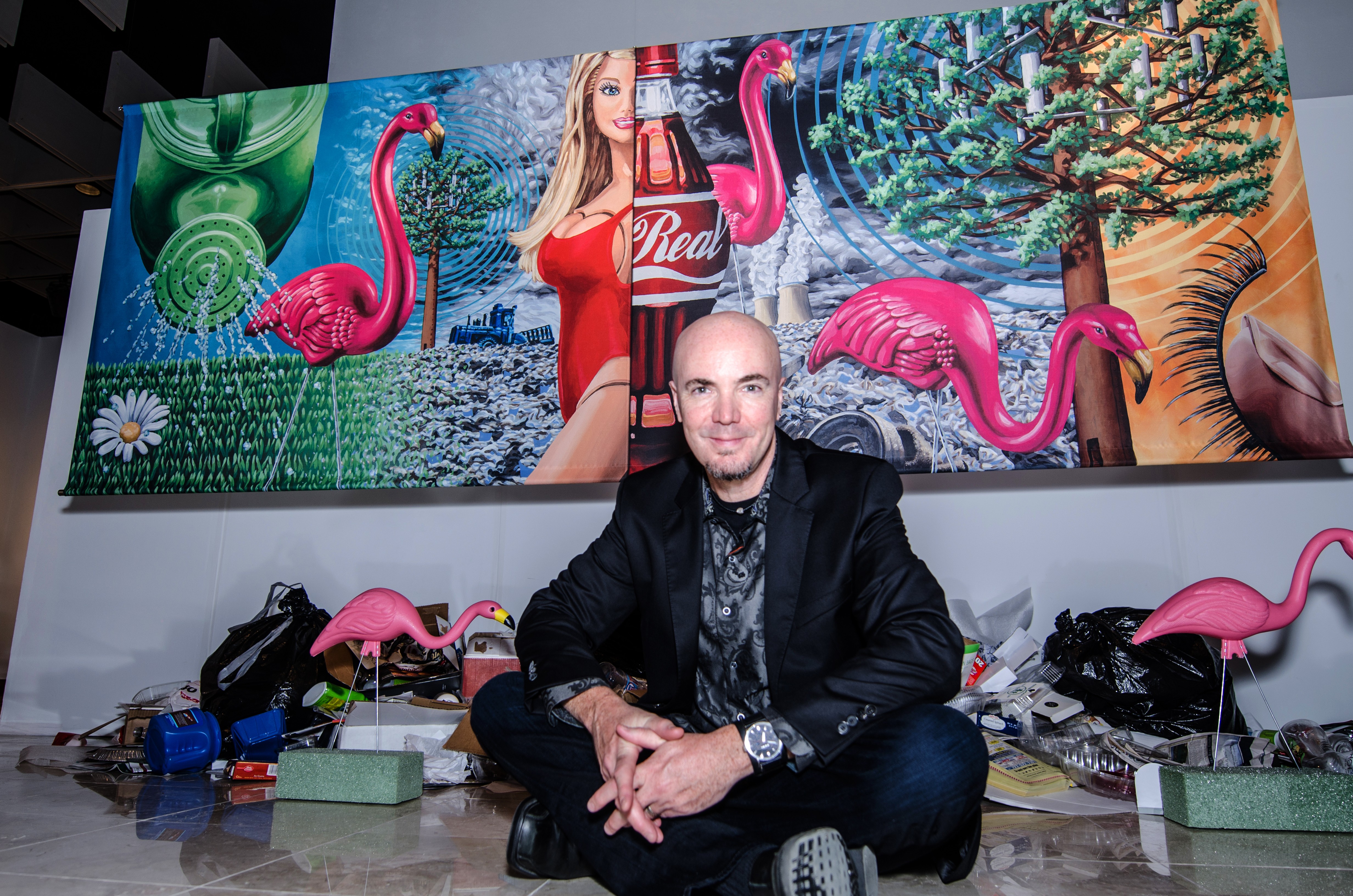
If you can feel both at once, then yes! I was honored to be asked to present a brief ten minute artist talk at a group gallery exhibition recently. I typically give a more formal hour-long talk, supported by a slide show with some multimedia content. I’ve gotten comfortable presenting that way, and have a good sense of how to pace it. But this was to be an informal chat in the gallery, standing in front of my piece in the show. I thought this should be a breeze, as I casually attempted to summarize my usual talking points within the ten minutes allotted. I was about 70% through my presentation when they told me I had just one minute left to wrap up! I had to laugh at myself, and quickly pivot to summary-mode so the event could stay on-schedule. It was a good lesson in focus, brevity, and humility.
Can you briefly introduce yourself and share what makes you or your brand unique?
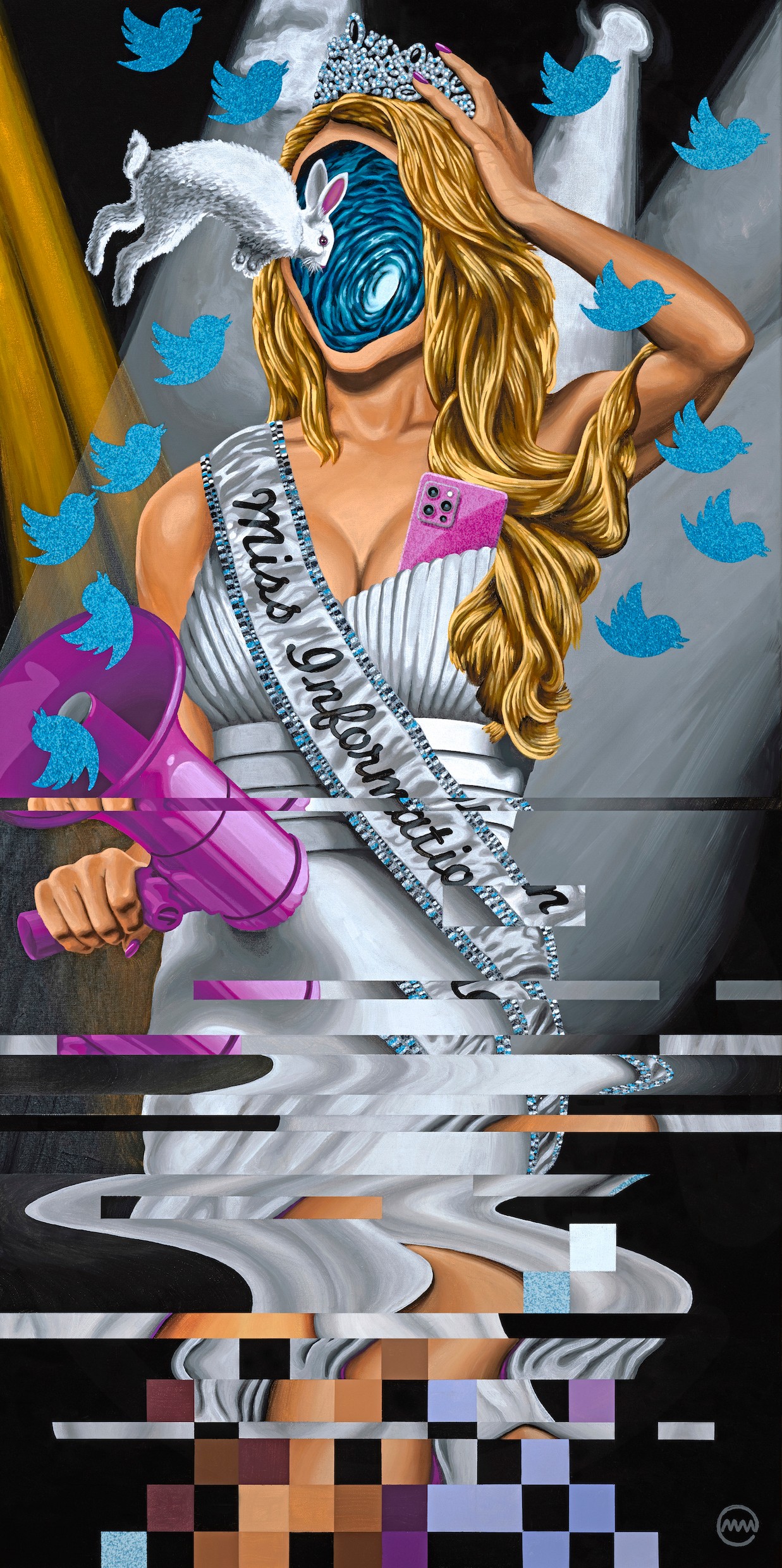
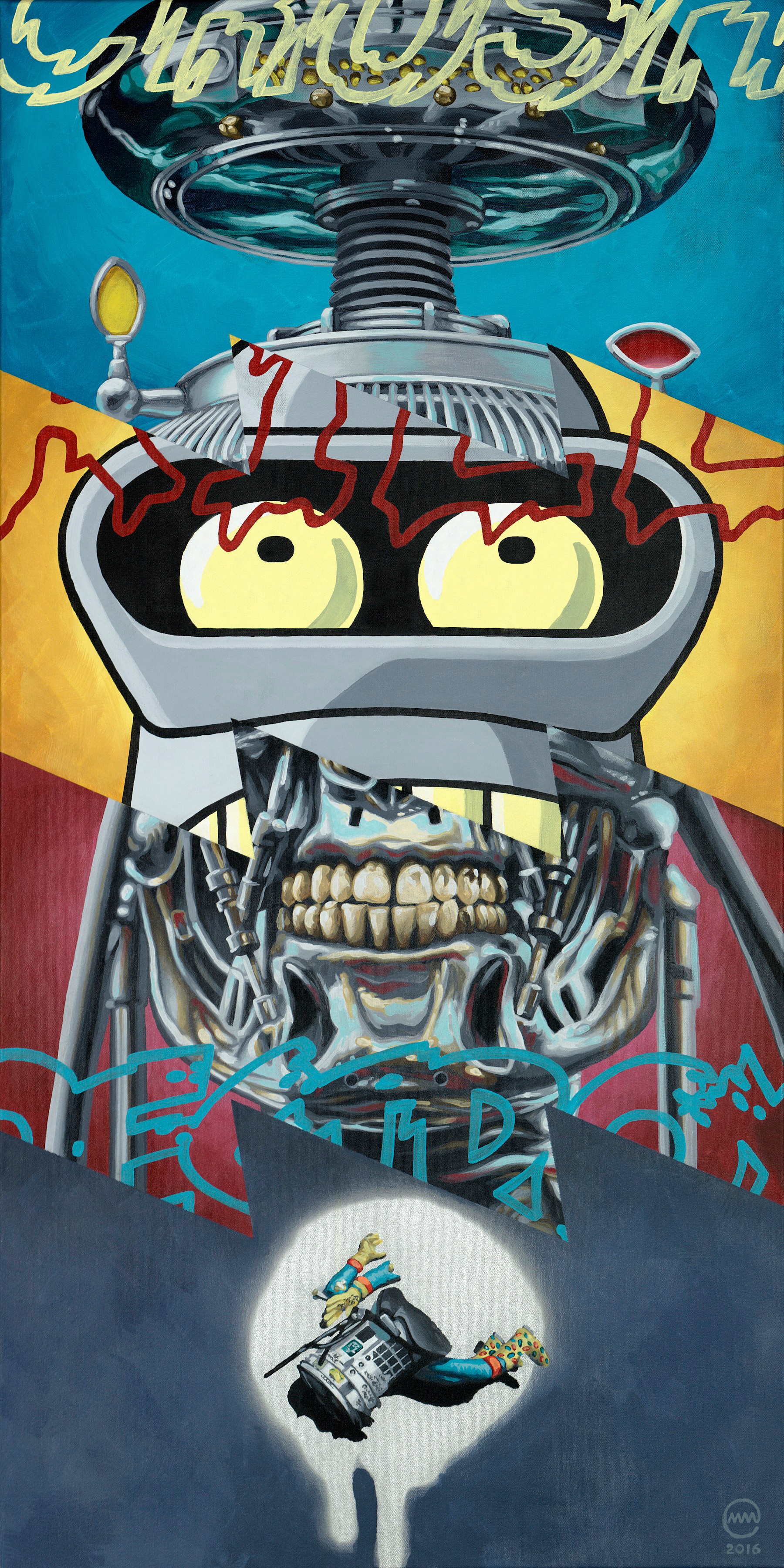
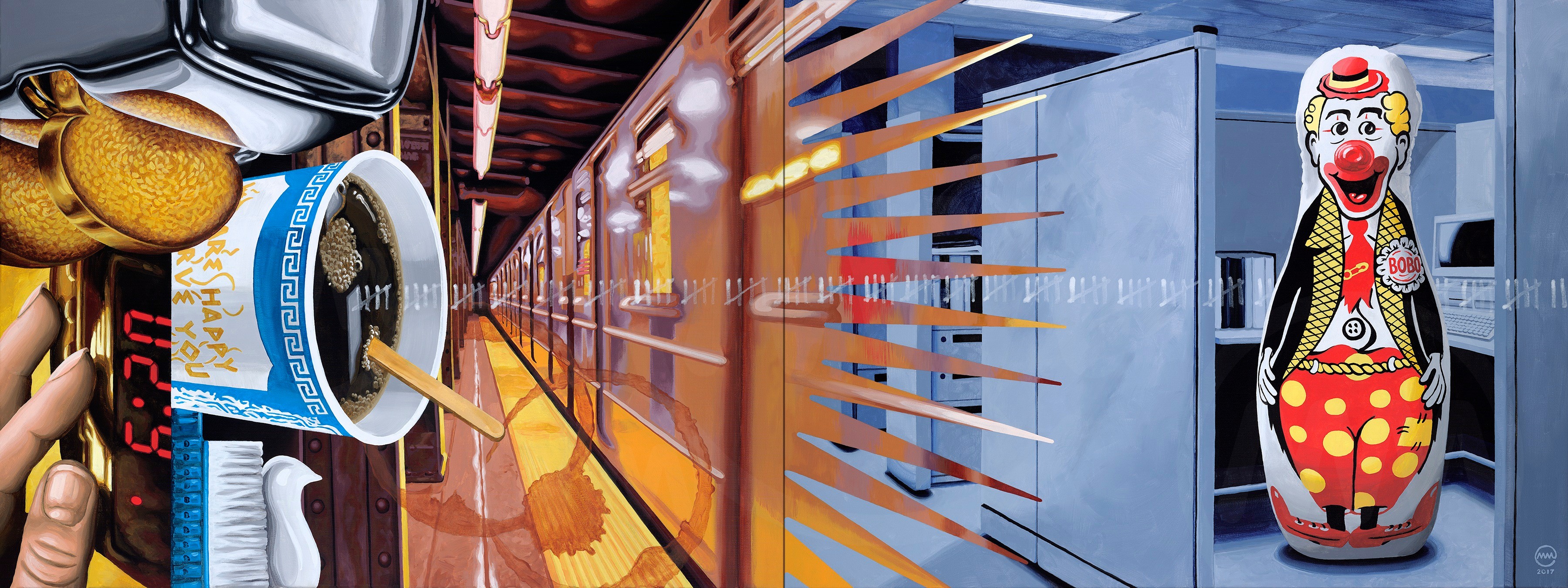
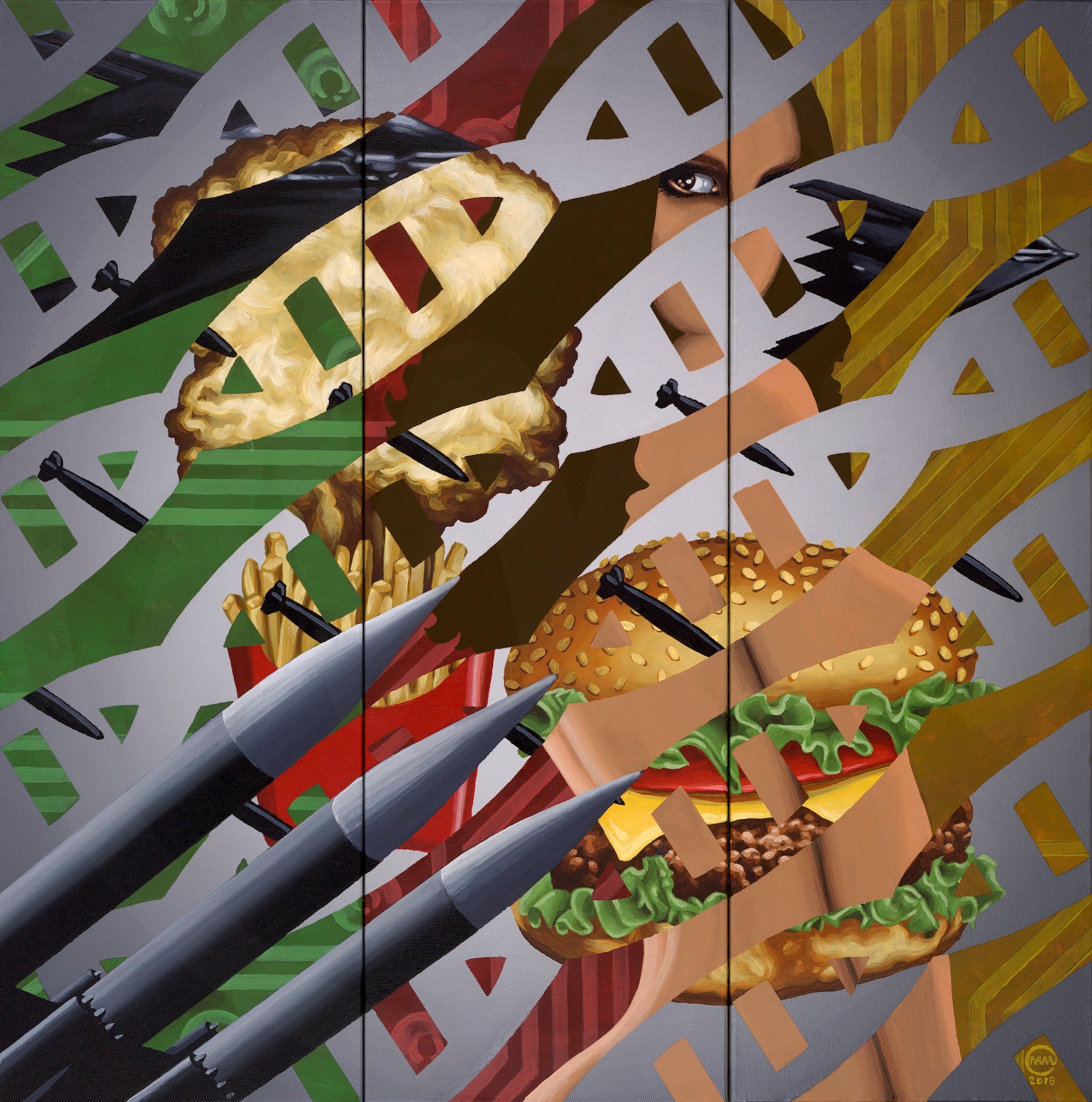
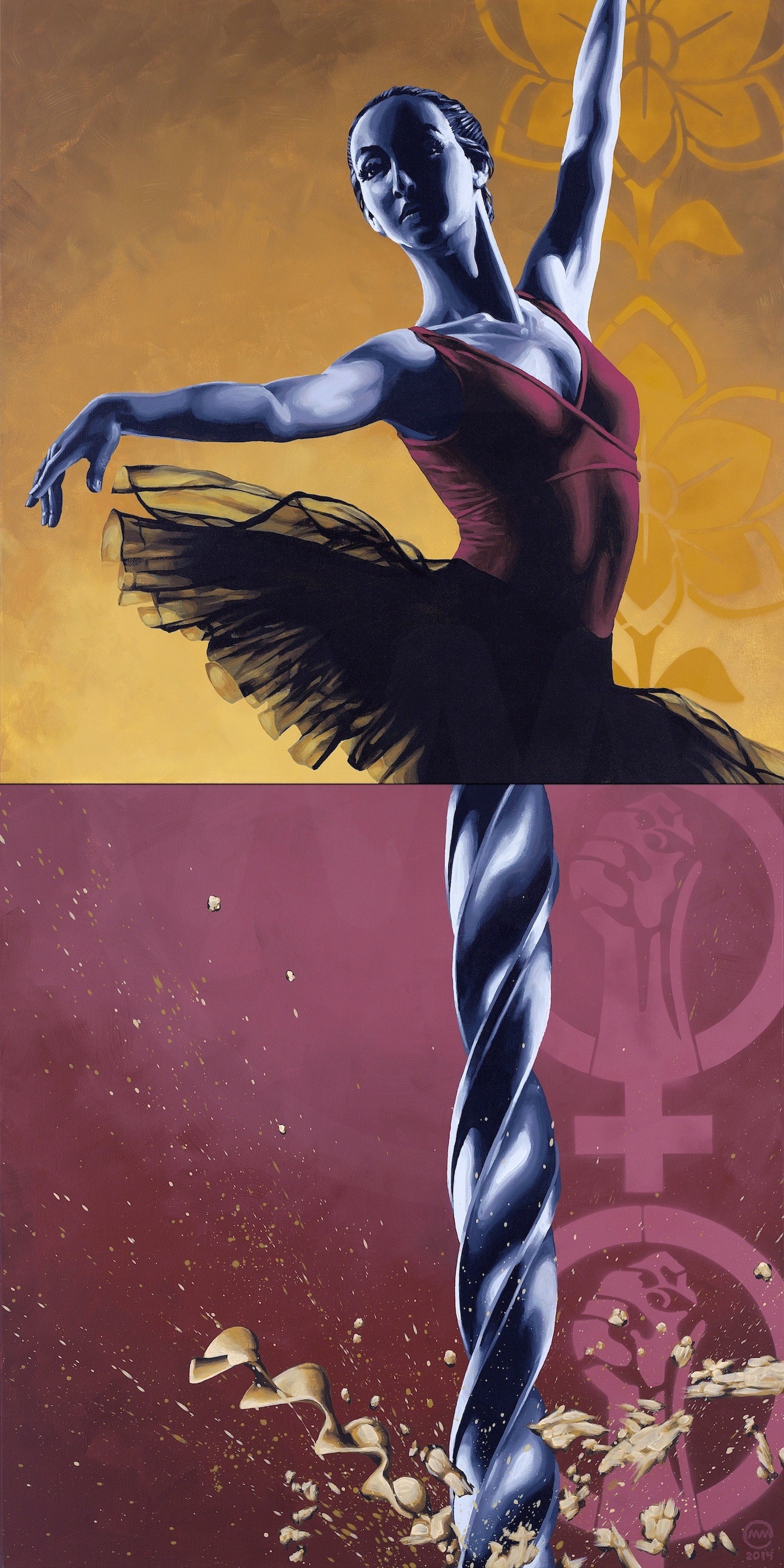
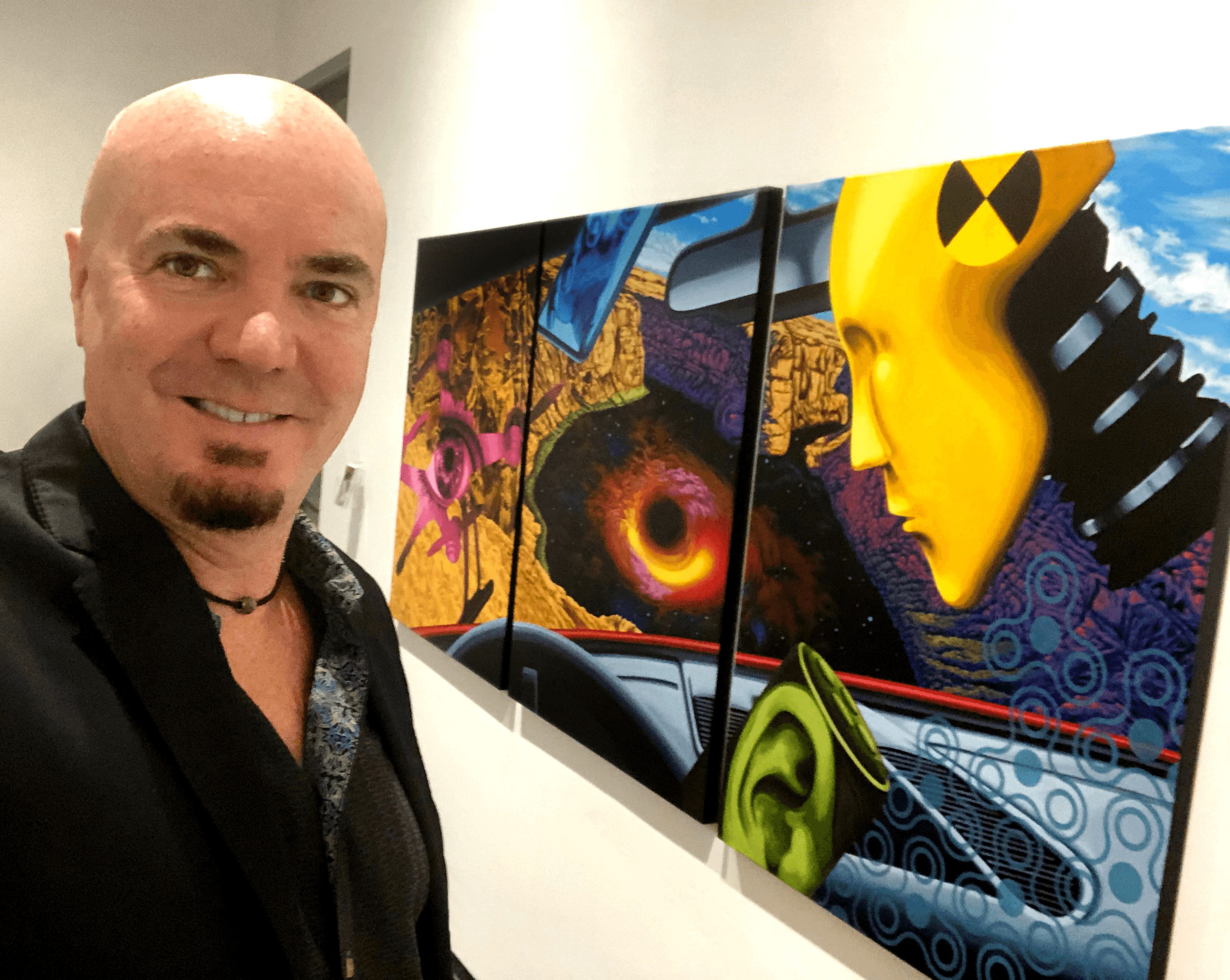
I call myself a Conceptual Pop Artist. I create bold, colorful work in acrylic on canvas. I follow in the tradition of classic Pop Artists like Andy Warhol, Roy Lichtenstein, and my personal favorite, James Rosenquist. And I attempt to build on that tradition by putting my own spin on the style, and help move it forward with a 21st-century edge—incorporating elements of urban art and social commentary.
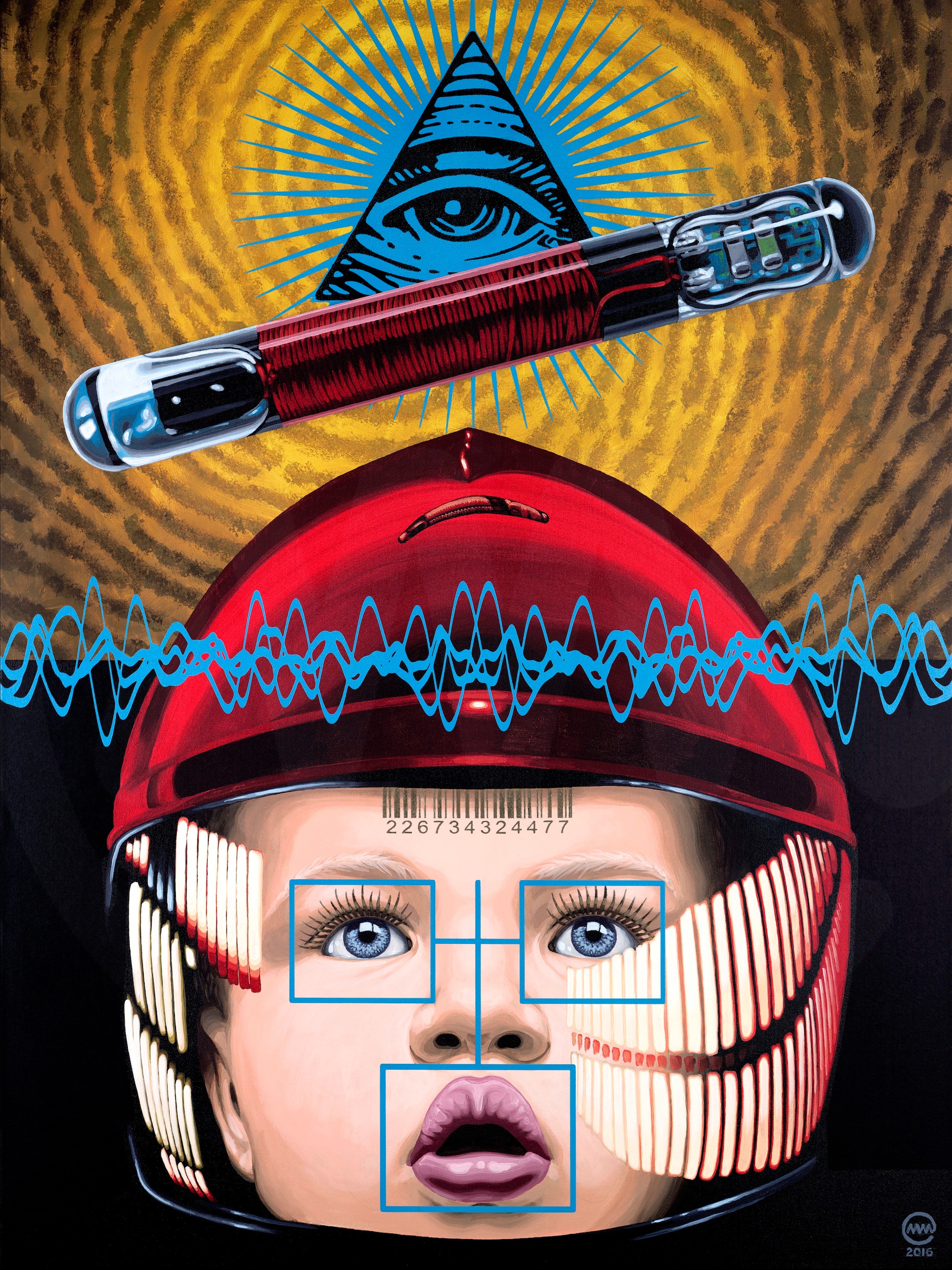
Because, I believe in art that conveys ideas. My process begins with an observation and a reaction. I explore symbolic and metaphoric visuals via a collage approach to create unique, often large-scale paintings. My art is intended as a wake-up call, exposing things that may be hidden. Each piece attempts to catch the viewer off-guard and challenge them to make connections, and ultimately see differently some aspect of the world.
Through meaningful juxtaposition and social commentary, my work is an exploration of the irony, contradiction, parallels and harmony to be found in 21st-century life.
Appreciate your sharing that. Let’s talk about your life, growing up and some of topics and learnings around that. Who saw you clearly before you could see yourself?
I guess I’d have to say my Mom. As a young kid growing up, I was living in the shadow of two outgoing older brothers. I was a bit different, a little shy and introverted. I was comfortable being alone, entertaining myself, and more often than not, that meant drawing, coloring, and creating. I was just drawn to it, pardon the pun, and my Mom saw that. She encouraged me. It became apparent that I had a real knack for it, a gift. The more I drew, the better I got. By the time I was starting grammar school, I realized my skill level was more advanced than most of the other kids in class. Something I naturally gravitated toward and enjoyed seemed to be a struggle for others. And so my Mom, along with other family members, teachers and friends would give me positive feedback and encouraged what I was doing, fueling my interest and enthusiasm to keep going. I feel fortunate for that kind of support back then. It helped establish my sense of self-worth and my career goals very early in life.
When did you stop hiding your pain and start using it as power?
The past 15 years have been a kind of personal rennaissance for me, as I discovered my sense of purpose as an artist. I left a respectable full-time career as an advertising Creative Director in New York, relocated with my wife to St Petersburg, FL, and embarked on a second career as a fine artist. This was a big leap of faith, but felt necessary as a way to refocus my energies on the skills and work that bring me joy.
As I dug in and explored the kind of art I wanted to create, I realized painting can be a very useful tool to express my feelings and views on a variety of issues—both societal and personal. And so, instead of going through life feeling frustrated by what I see in the world, I now have a platform to share my feelings in a creative and productive way. It’s become both cathartic and empowering to express personal pain, grievances, observations and triumphs, while creating something new and unusual that people can appreciate.
So a lot of these questions go deep, but if you are open to it, we’ve got a few more questions that we’d love to get your take on. Where are smart people getting it totally wrong today?
Our eager embrace of all the latest technology, without properly vetting each new development as a genuine benefit to our way of life. Shiny objects, new toys and our desire for pleasure demand our attention, as we unwittingly sacrifice essentials like privacy, safety, health, and empathy. It’s a theme I explore often in my paintings.
For example, it struck me as surreal and somewhat horrifying that we may soon be sharing our highways with an abundance of robotic vehicles with no one behind the wheel. And also that, over time, the population would eventually resign all of their driving responsibilities to computers and lose their personal driving skills altogether. I find this kind of creeping societal surrender to technology unnerving.
The latest and potentially most threatening advancement is the widespread implementation of artificial intelligence. Experts agree AI is bringing sweeping changes that stand to destabilize entire industries and undermine career paths for millions. And like most advancing tech, it will yield tremendous efficiencies and cost-savings for businesses, but at the expense of well-trained professionals who find themselves unemployed, essentially replaced by a robot.
And did the world really need AI “art”? Who benefits from this? Certainly not real artists—especially those whose work was stolen with no regard for copyright and used for machine-learning without their consent. The addition of this element into an already crowded marketplace simply muddies the waters for art buyers, and devalues the efforts of professional creatives across the board.
Before we go, we’d love to hear your thoughts on some longer-run, legacy type questions. Are you doing what you were born to do—or what you were told to do?
I’m doing what I was born to do. As I mentioned, I left a well-paid role in advertising to focus on my art. I was good at my job, and had prepared to use my abilities for commercial purposes since my training at Pratt. I grew up hearing my grandmother say, “Get a good job with benefits!” I took that to heart, as I needed to achieve financial stability in order to move out of my parent’s house and support myself as a young adult. And so, I was able to carve out a viable career for many years in graphic design and art direction.
But over time, I knew something was missing. I was using my skills, and honing new ones in my professional work, but was lacking the personal satisfaction that painting gave me. It was difficult to juggle both, with little free time to devote to personal work. It was then I knew I needed to flip the script. I still take on freelance design projects to help bay the bills, but I’m primarily engaged with my art. The balance is much healthier.
Contact Info:
- Website: https://www.markmitchellstudio.com
- Instagram: https://www.instagram.com/mmstudioart/
- Linkedin: https://www.linkedin.com/in/markmitchellstudio
- Facebook: https://www.facebook.com/markmitchellstudio
- Youtube: https://www.youtube.com/user/totalmitchart
- Soundcloud: https://soundcloud.com/markmitchellvoice/sets/mark-mitchell-artist